

.webp?language=en-US)

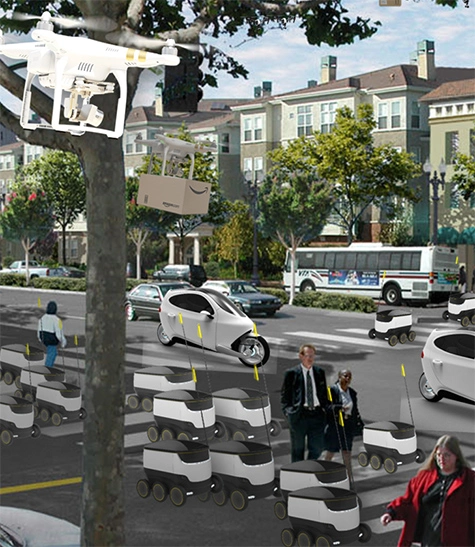
"Micro-mobility involves small, human-powered vehicles, such as dockless bikes and e-bikes, skateboards and e-skateboards, and scooters and and e-scooters," Davis said. In cities like Los Angeles and Washington, D.C., micro-mobile transportation, particularly e-scooters and dockless bikes, are now ubiquitous. In 2018, there were 84 million trips made with micro-mobile options, with e-scooters accounting for almost half of all trips.

Davis said the explosive growth of popular e-scooters raises questions about public safety. According to a recent study by Consumer Reports, e-scooters have been tied at least 1,500 injuries in 2018; another analysis found they caused 11 deaths over the same time frame. E-scooter users can injure both themselves and pedestrians who happen to be in the way on sidewalks. As a result, cities are attempting to limit their use to designated zones or to day times only. Other regulations aim to limit their use on sidewalks or reduce their speed. Like many major city governments, Davis wondered "should e-scooters be allowed on sidewalks?"
If cities relegate e-scooters to bike lanes, it will certainly increase traffic in those narrower corridors. As such, Davis called for bike lanes to be expanded into protected "personal mobility ways." Both micro-mobility users and bicyclists would then be protected from vehicles; and pedestrians would be protected from all of higher speed forms of transportation.
Davis also raised the idea of creating "micro-mobility hubs," perhaps around subway or bus stations, where these app-based on-demand transportation services could be clustered.
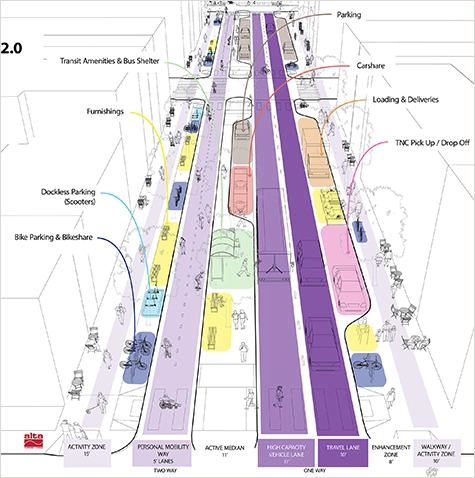
However, there is also a need to "spread or distribute access" to these services to ensure equitable access to low-cost transportation options. Oakland, California and Philadelphia have made strides in expanding access to new technology-enabled micro-mobile transportation systems.
Rutt Bridges, founder of Understanding Disruption, reiterated the need for Complete Streets 2.0 to include dedicated, protected two-way bike lanes with flex post or planted buffers, stating that 860 bicyclists were killed in 2016 because of collisions with vehicles.
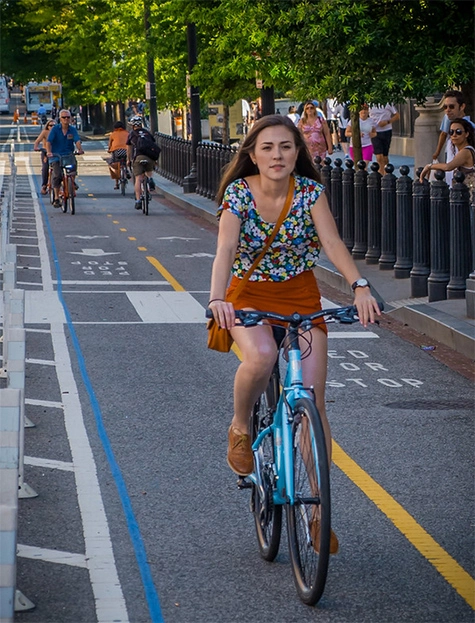
The percentage of trips by bicycle haven't increased beyond 10 percent in many of the top bicycling cities because of the still-widespread perception that bicycling near vehicles is unsafe. "The number-one concern is getting hit by a car."
Some 30 percent of bicyclist deaths were at intersections. Bridges believes many of these could have been prevented with the latest Dutch intersection design, which allows for clear sight lines for both motorists and bicyclists as they are turning. This model could also protect other micro-mobility users.
https://www.youtube.com/watch?v=FlApbxLz6pA
For Bridges, another reason we could need Complete Streets 2.0: autonomous delivery robots.
Instead of plodding down sidewalks, as they have been in London and Washington, D.C., delivery robots could be assigned to their own tight two-way lane, perhaps adjacent to bicycle lanes. "This would reduce accidents with pedestrians and bicyclists." Given they use LiDAR, 3D mapping, and artificial intelligence in ways to similar to autonomous vehicles, they would require very little space on either side to make their way. "They can lane keep within an inch," Bridges believes.
A surprising number of robot delivery vehicles are being tested in urban and suburban settings. On one end of the spectrum are the many small Wall-E-like robots that can make small package deliveries. Test robots by Starship Technologies have been awkwardly starting and stopping and looking a bit confused at crosswalks in the Dupont Circle neighborhood of Washington, D.C. for the past two years.
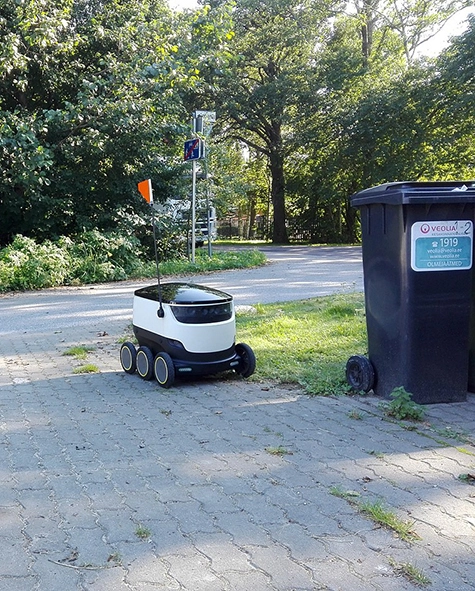
In the middle are a bit larger autonomous delivery vehicles like Cleveron's, which could deliver packages to a storage unit in a homeowner's driveway, protecting goodies from Amazon from thieves.
https://www.youtube.com/watch?v=jgBMMspyY0w
And at the other end of spectrum are van-like autonomous deliver vehicles, such as Stop&Shop's Robomart, which is like a mobile grocery aisle.
https://www.youtube.com/watch?v=srGGZqO3UbY
And there is also the "mothership" approach: Mercedes-Benz has partnered with Starship Technologies to create a system in which small delivery robots would be driven to a neighborhood in a van, otherwise known as a "mothership," then fan out to make deliveries. After the robots returned to the van, the mothership would then move on to the next neighborhood.
https://www.youtube.com/watch?v=lzwz1UsxYdk&feature=youtu.be
For many, micro-mobility represents more autonomy and freedom than slower, dedicated, shared subway or bus but they could also help speed the collapse of mass transit. Ubiquitous delivery robots could cause people to stay at home more instead of venturing out to grocery stores and local markets, putting more pressure on retail. These technologies may meet short-term, individual needs but further separate us from shared community infrastructure like buses and local markets where human connections are made.
In another session on how to create "'authentech' relationships in the smart city," Chandler Hogue with Gemdale, said there is a new movement underway to develop "human-focused technology, instead of technology that leads us." These technologies are aimed at tackling the epidemic of loneliness and depression correlated with increased social media use.
Chris Bledsoe, a founder of Ollie, which has built app-enabled "all inclusive co-living" facilities geared mostly towards Millennials, said there is a widespread feeling that "technology has connected our phones but not us." He said: "we are now more digitally connected than ever, but do we feel better off?" Residents of Ollie's 422-bed co-living building in Long Island City pay not only for rent but also an app that helps identify roommates they would likely gel with best, along with access to inclusive activities organized around topics such as "wellness, sustainability, and discovery." For example, Ollie organizes kayaking trips for residents, which could be tied to a beach clean-up, or a snowshoeing expedition, followed by a whiskey tasting event. "We are filtering human to human connections in order to foster community."
And urban planner Kevin Clausen-Quiroz explained how the Anaheim city government started Fran, a new free, app-driven ride share service that offers rides around its downtown. In comparison with the isolation of riding alone in Uber or Lyft, the service is meant to enable serendipitous meetings and help build community connections. During certain events, Fran operators host "Fran pool karaoke." Clausen-Quiroz was quite persuasive on the case for more free neighborhood rideshares like Fran. "These micro-transit systems serve a need: it's community-oriented transit." It's also technology that purposefully pushes people together instead of further into their own self-curated little bubbles.
https://vimeo.com/312829531