

.webp?language=en-US)

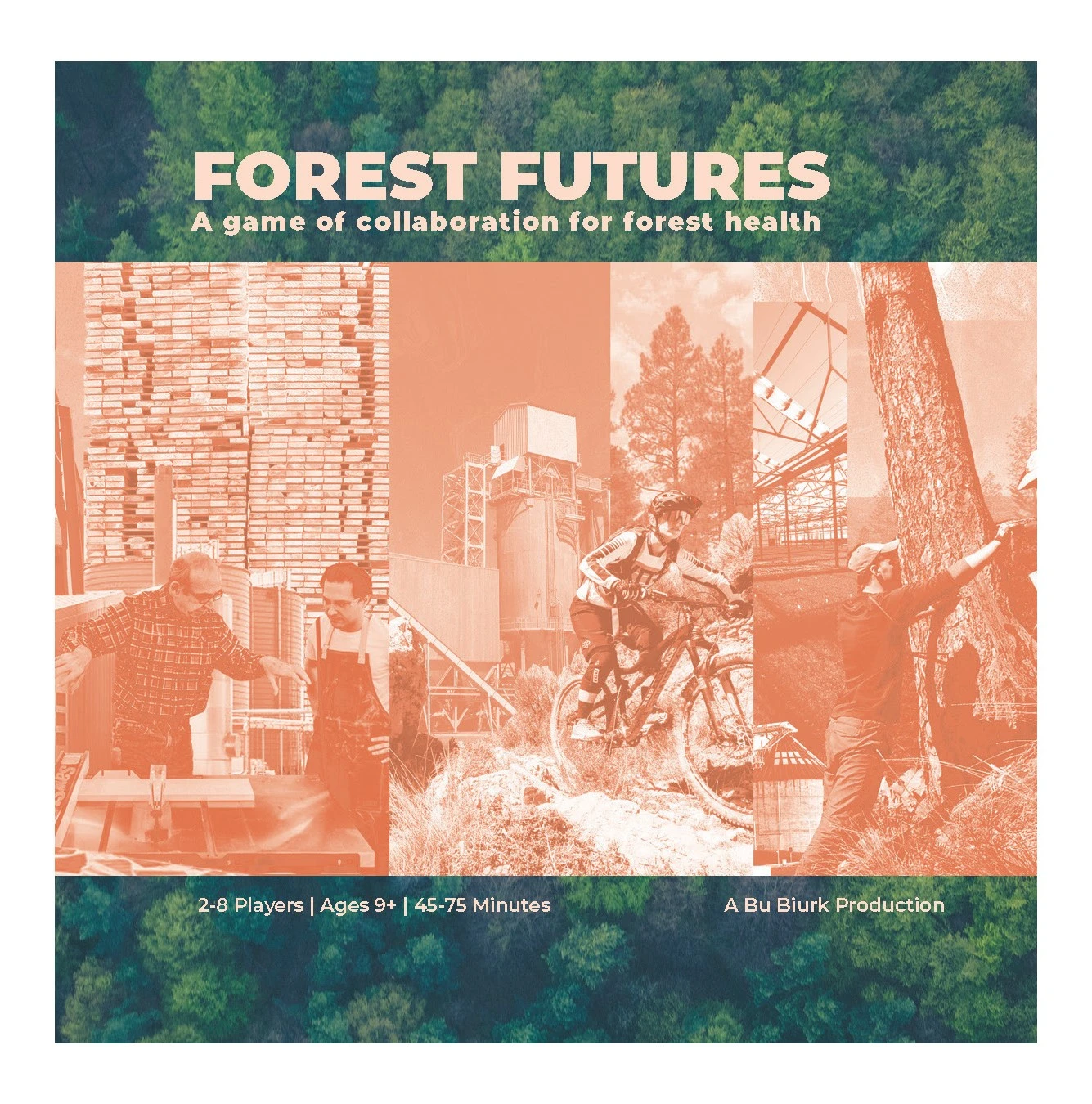
Forest Futures: A Collaborative Game for Forest Health
Oliver Atwood, Student ASLA; Caz Gagne; Elliot Bullen
-
Beyonds to the urgent need for forest fuels reBeyond the Boiler respduction in California. Once fire-dependent forests are now competition-dependent, overstocked, and vulnerable to catastrophic fire. The project proposes a community-scale biomass utilization campus that aims to accelerate fuel reduction and welcome in the public through co-located businesses, recreation, and educational spaces. The project also proposes a youth volunteer program and mobile forest thinning operation that incorporates recreation and career development. Finally, to engage decision makers and community stakeholders, the project team also designed a board game, Forest Futures, that synthesizes research around forest treatment and biomass utilization.
-
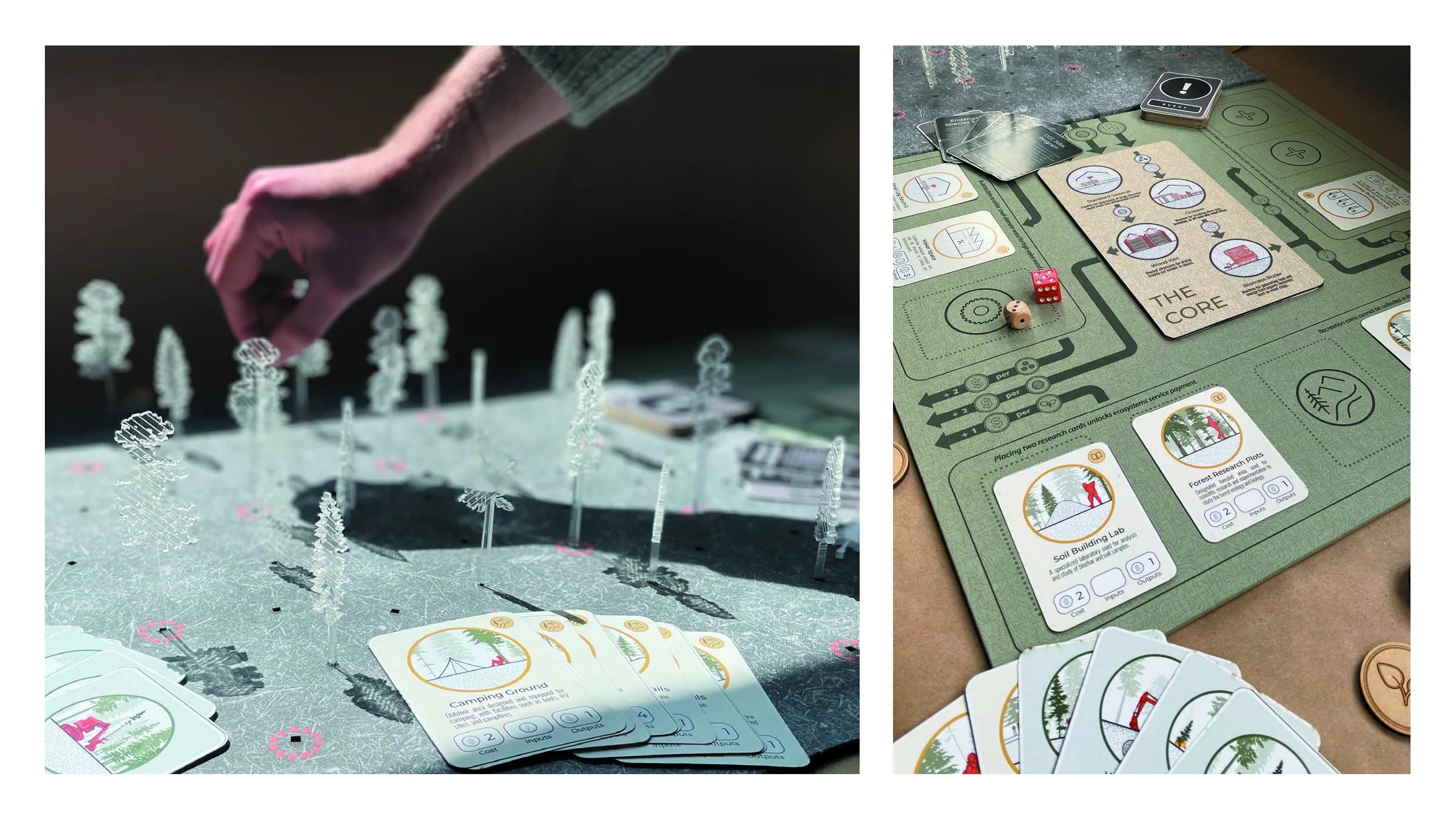
Our board game, Forest Futures, focuses on collaborative thinning of an overstocked forest to achieve historical stand density. The game was born out of the West Coast’s urgent need for forest fuels reduction to prevent catastrophic fire, as well as the relative lack of understanding and investment in forest resilience. Historically, regular fires emitted small pulses of carbon and kept forest stand density low. As priorities shifted towards logging, stand density increased and more carbon moved from the forest into wood products. Today, both logging and controlled burns have declined, resulting in large amounts of aboveground biomass. By constructing diversified biomass campuses, we can facilitate the processing of biomass into value-added timber products, reducing emissions into the atmosphere. These forest community campuses enable the processing of biomass, but also spur energy and heat co-generation and the provision of new services, which ultimately help to keep more money within the local economy to cycle back into forest treatment operations. By adding service-based facilities to the campus, economic output becomes less dependent on forest thinning operations, safeguarding communities against the “boom-bust” swing of natural resource-dependent industries.
The game’s goals are to synthesize our research, demystify the forest thinning process, build forest landscape literacy, and create a joyful collaborative (rather than competitive) experience. The game facilitates learning about forest thinning dynamics for students, but can also be employed as a tool to bring together a variety of groups, including forest community members, forestry professionals, and policy makers, in order to create a shared understanding of different stakeholder motivations and needs.
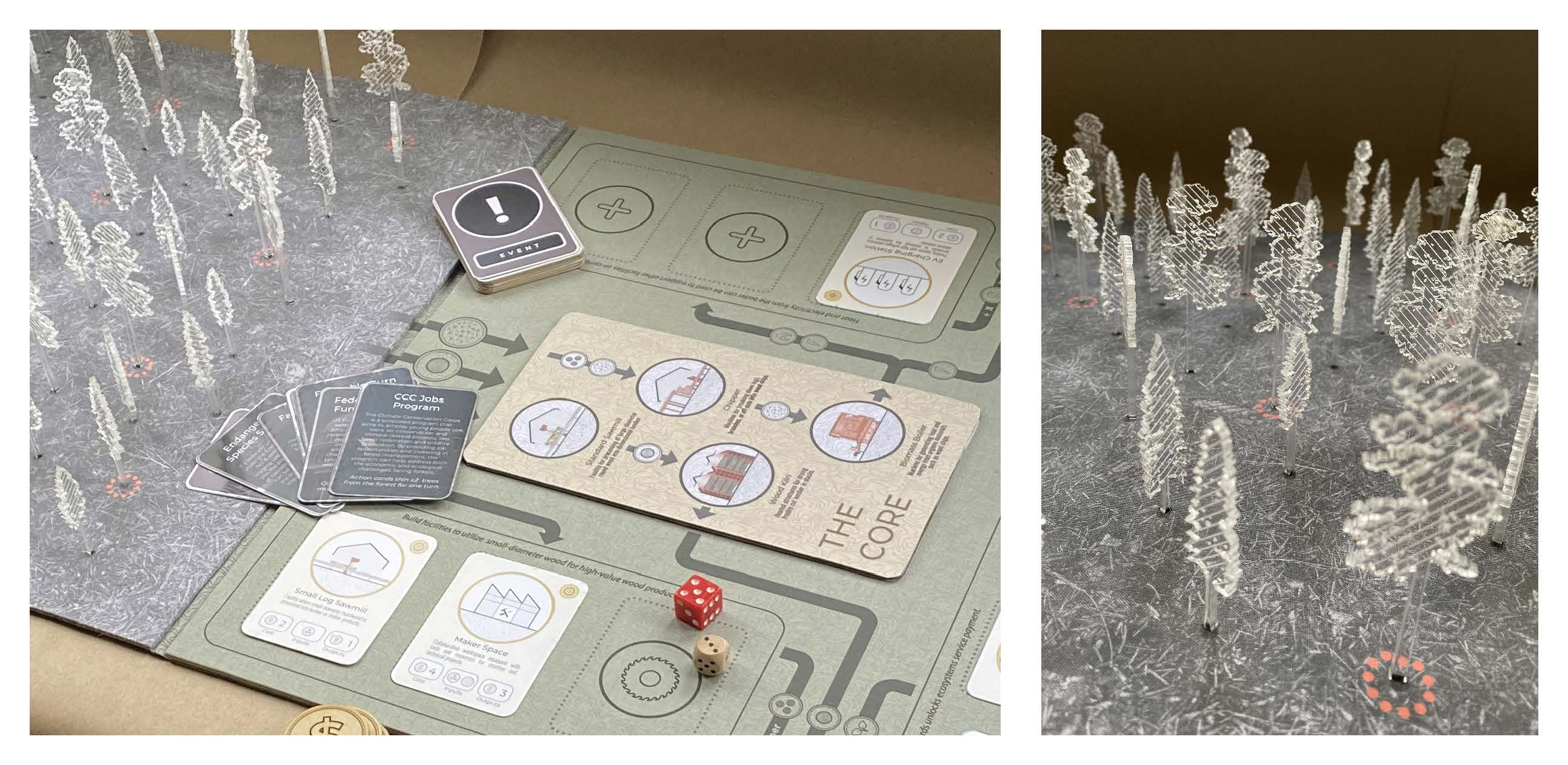
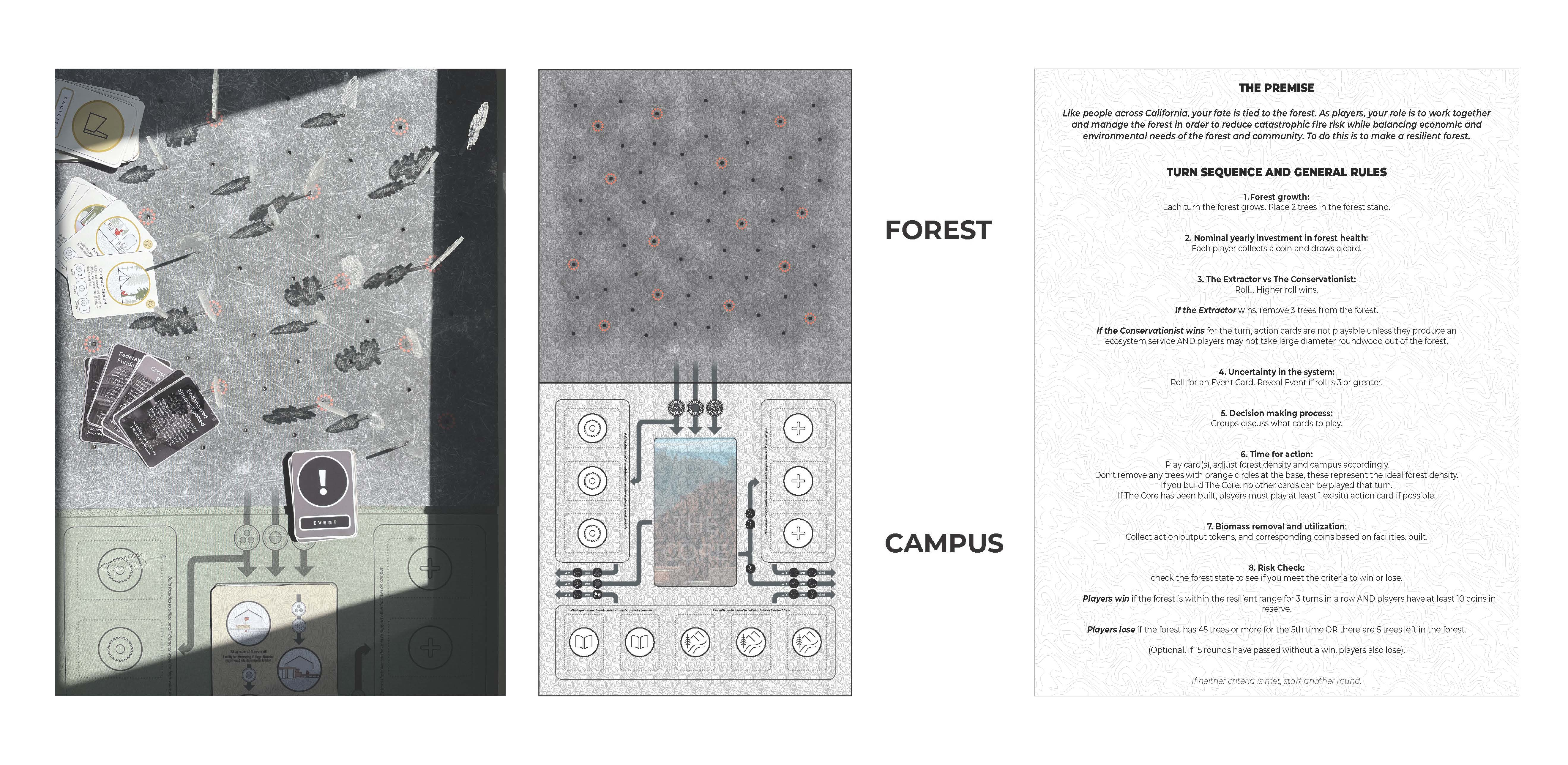
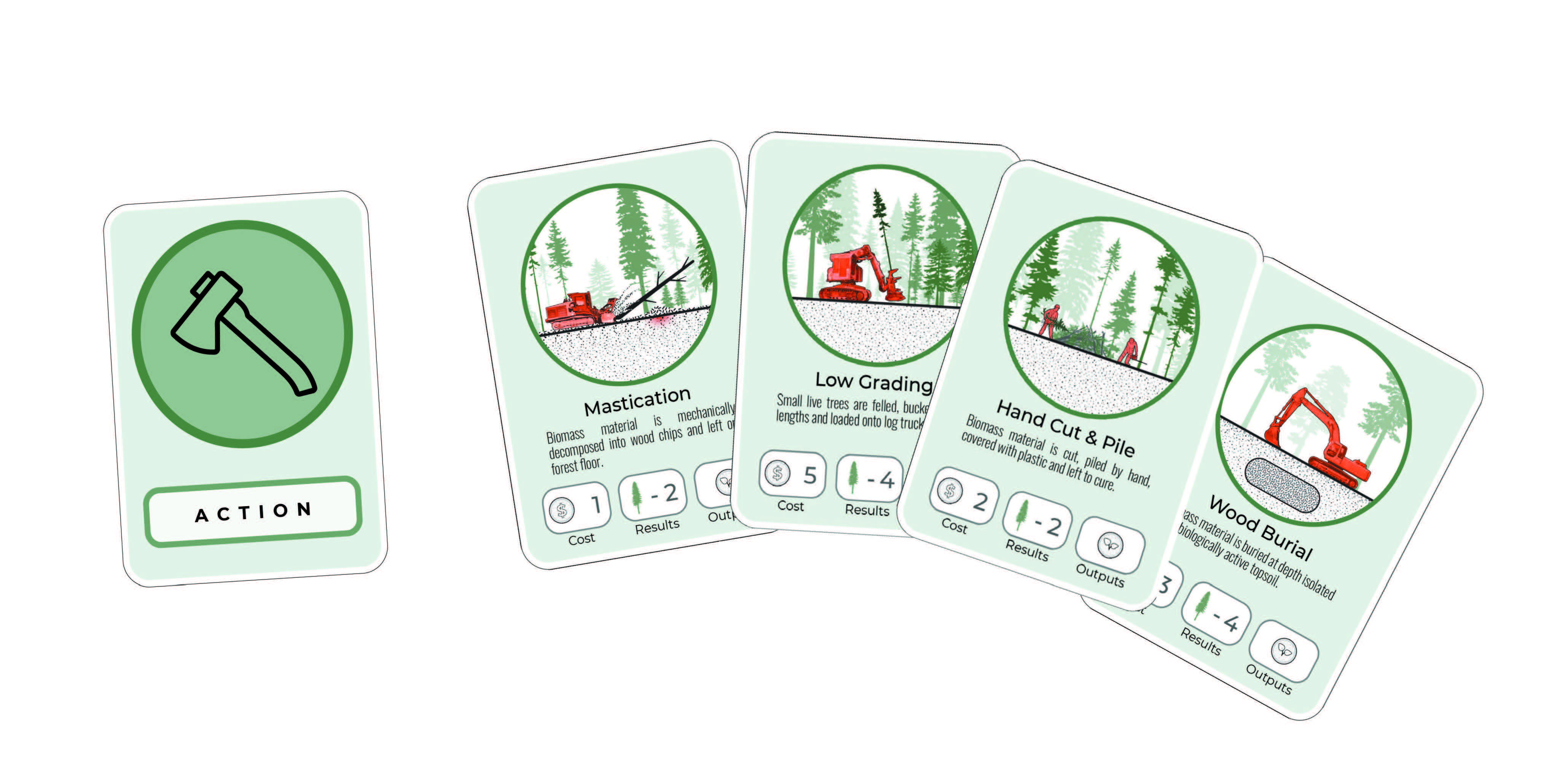
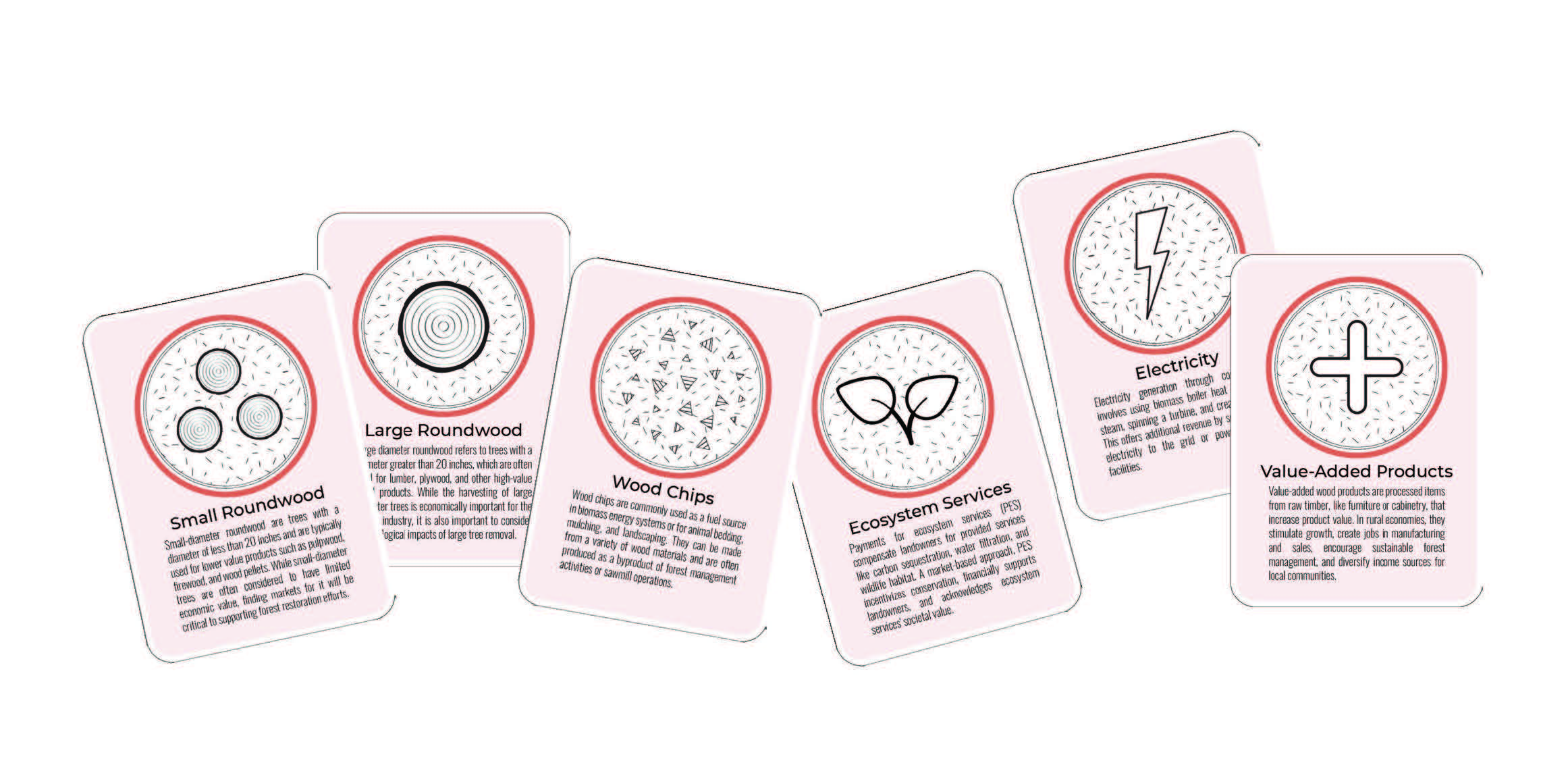
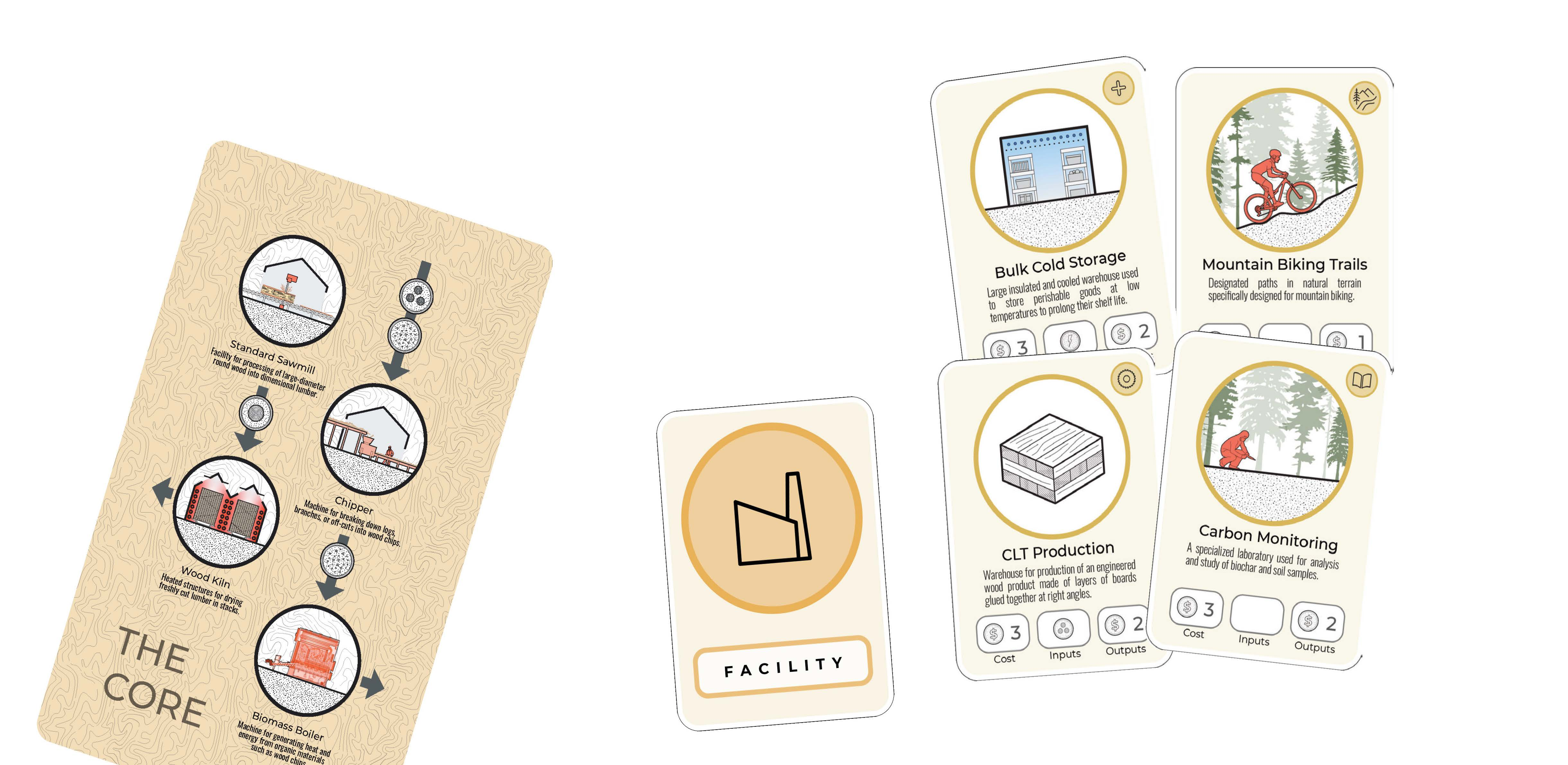
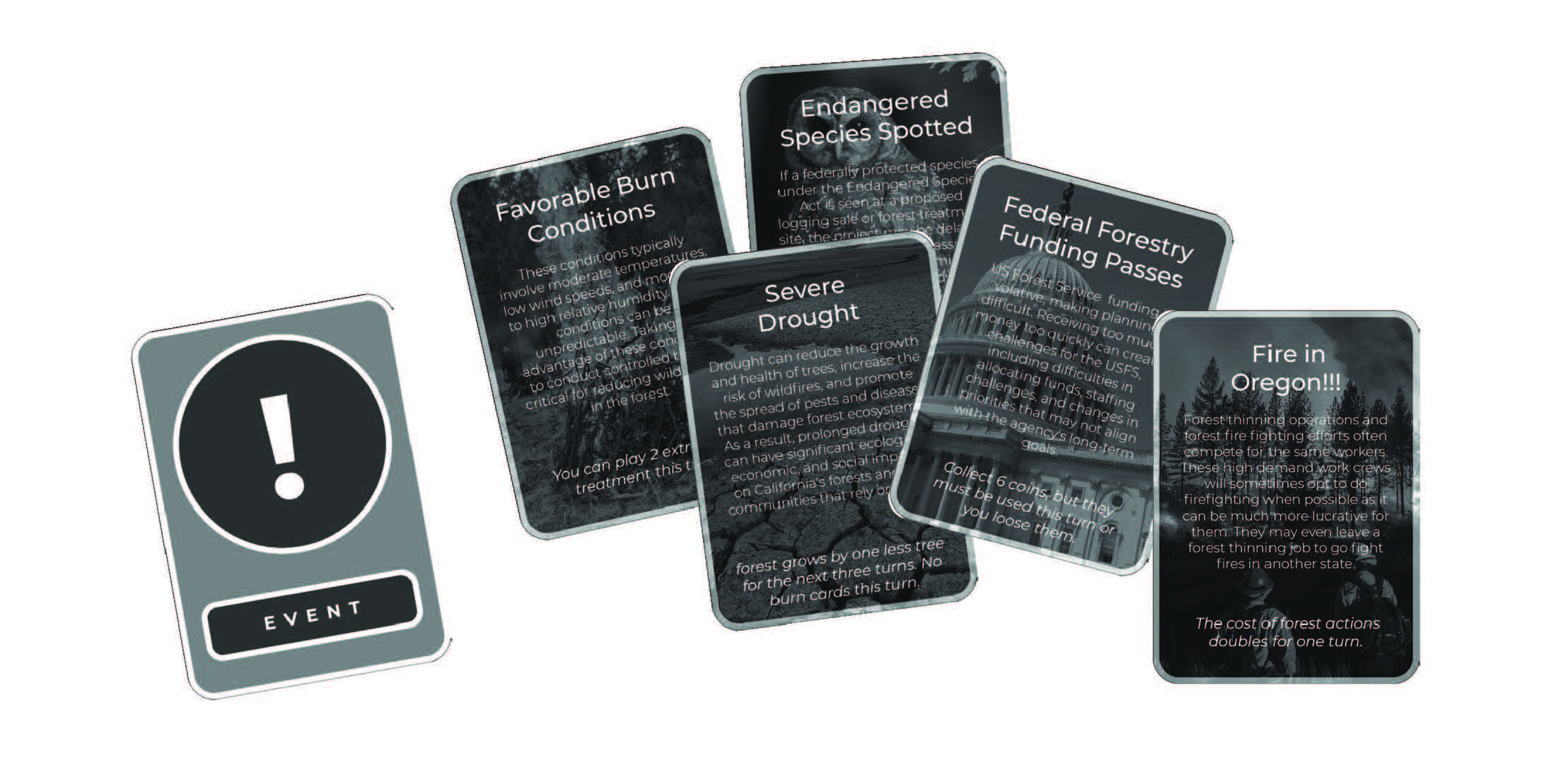
On one side of the Forest Futures board, players try to thin the forest by removing trees, while they build out the biomass campus to support those efforts on the other side of the board. Each turn, players play action cards to thin the forest, such as hand cutting and piling, low grading, mastication, chipping and hauling, and wood burial. These actions produce various product outputs such as small roundwood, chips, ecosystem service, electricity, and value-added forestry products. Players can invest in facilities cards to develop a diversified biomass campus that helps fund the action cards. Facilities include a biomass boiler, standard sawmill, wood kiln, chipper, CLT production, carbon monitoring, bulk cold storage, and a variety of campus recreational opportunities such as mountain biking trails. Lastly, there is an element of surprise with event cards, which impact gameplay each turn. Event cards include, but are not limited to, “Severe Drought,” “Federal Forestry Funding Passes,” “Favorable Burn Conditions,” “Fire in Oregon,” and “Endangered Species Spotted.”
Related Awards
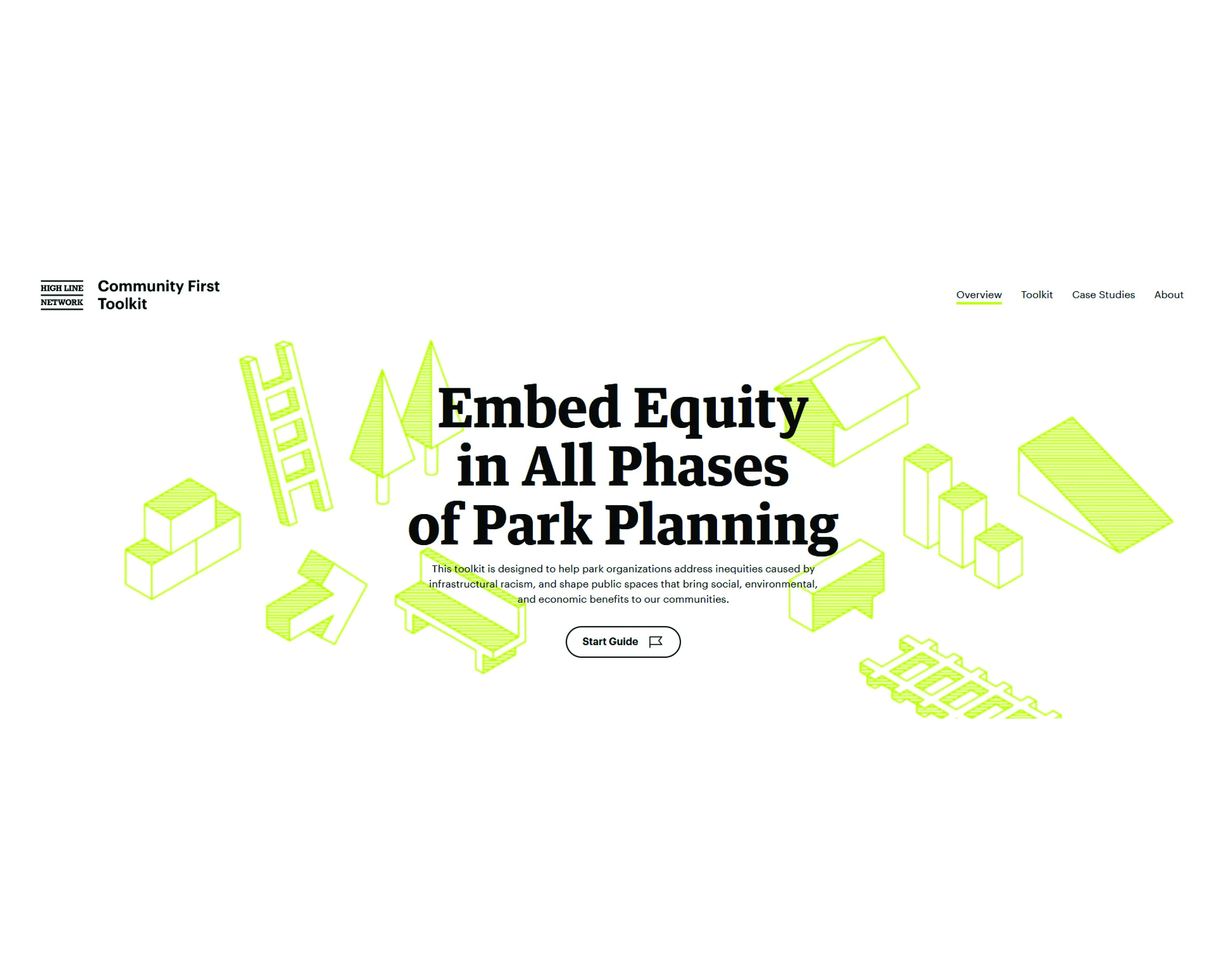
Honor Award, Communications
The Community First Toolkit: A Framework for Equitable Public Spaces
Communities across North America have faced uneven development for decades. The Community First Toolkit (CFT) provides a visionary, adaptable framework for public realm advocates to directly tackle infrastructural racism and embed equity at all stages of the design process.
Related Articles
Awards
ASLA 2026 Professional Awards: Early Bird Deadline Approaching January 9
Submit your best work by the January 9 Early Bird deadline to save. Get insider tips at the January 7 Professional Awards Webinar. Student and other professional deadlines follow in February.
Dec 16 2025