
.webp?language=en-US)


Olmsted’s Crown Jewel: An Exhibition Celebrating Franklin Park
Emily Siler, Associate ASLA; Anna Rader, Associate ASLA; Caleb Payne, Associate ASLA; John Kalamaja, Associate ASLA; Katherine Herrera-Lai, Associate ASLA
-
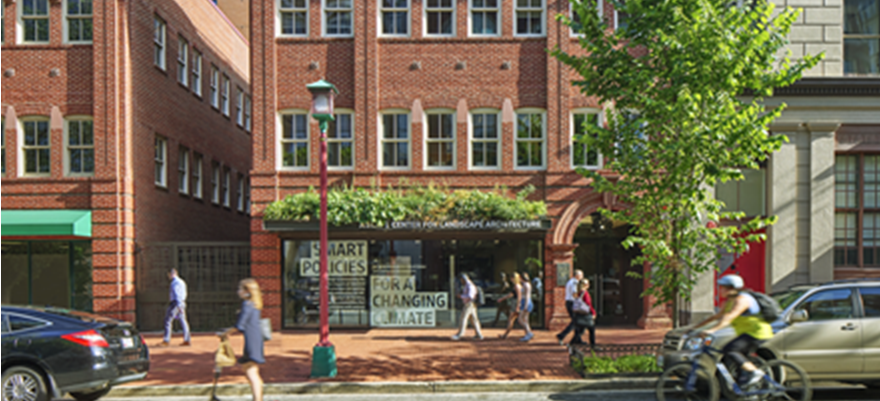
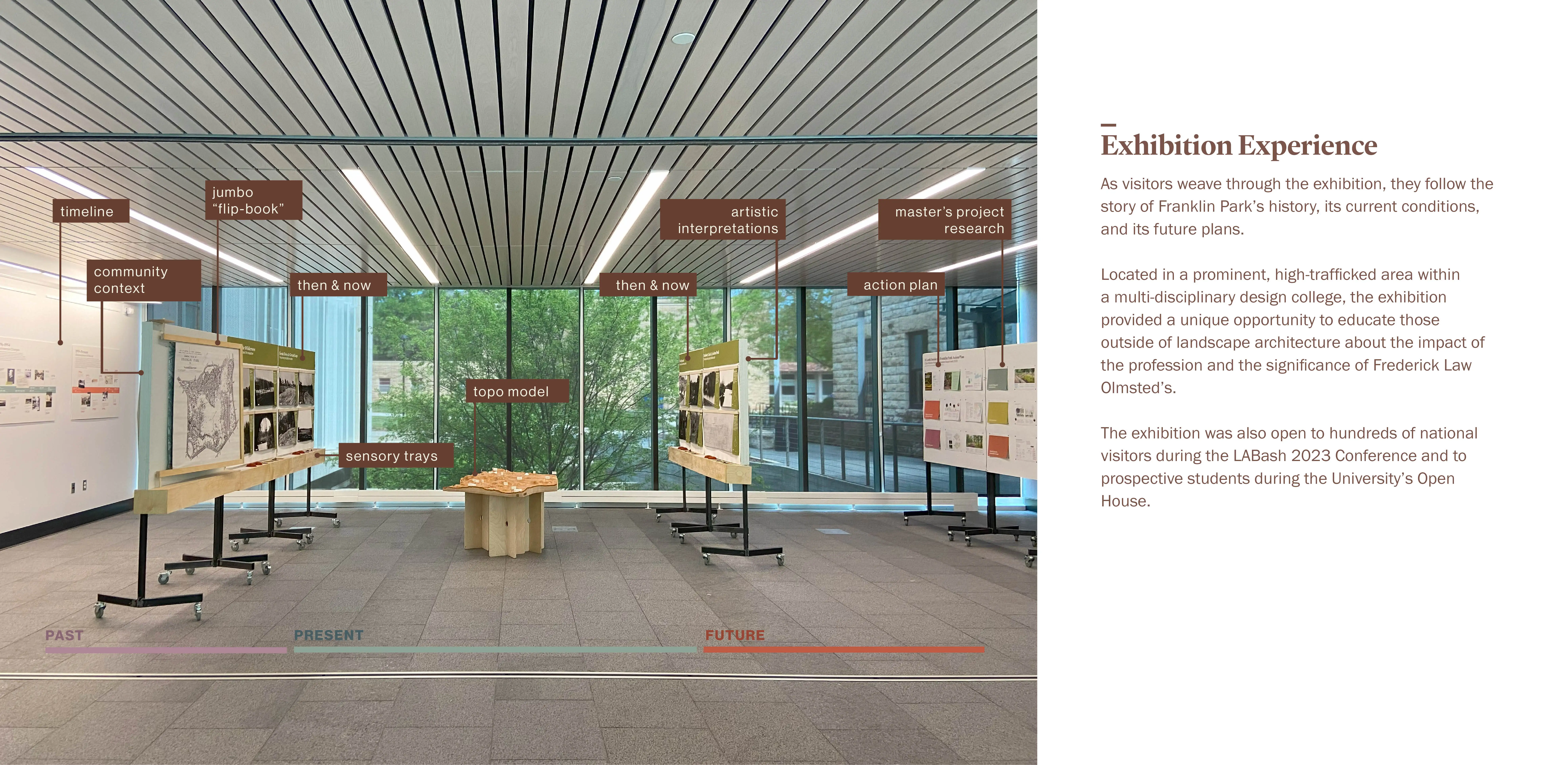
To learn how park planning, design and programming can more equitably and inclusively serve a diverse public, landscape architecture students in their Master’s Project Studio undertook a case study of Franklin Park in Boston, MA. The outcomes of the students’ collective work served as a foundation for an eight-week public exhibition, Franklin Park: Olmsted’s Crown Jewel. The interactive and multi-sensory exhibition features unique ways to experience the park’s history, its current conditions, and its vision for the future. Prominently located in a highly visible and accessible space, the exhibition received hundreds of visitors who learned about landscape architecture and the significance of Olmsted’s “forgotten park.”
-
Coined the “Crown Jewel” of Boston’s 1,000-acre Emerald Necklace greenway, Franklin Park is a 500+ acre urban wonder—full of opportunities to gather, recreate and connect with nature. However, years of overuse and disinvestment have left the park needing renewal; Franklin Park is often referred to as “Olmsted’s Forgotten Park.” To celebrate and honor the rich story of Franklin Park, Olmsted’s vision and the impact of landscape architecture, students in their Master’s Project Studio designed and fabricated an inclusive, multi-sensory exhibition.
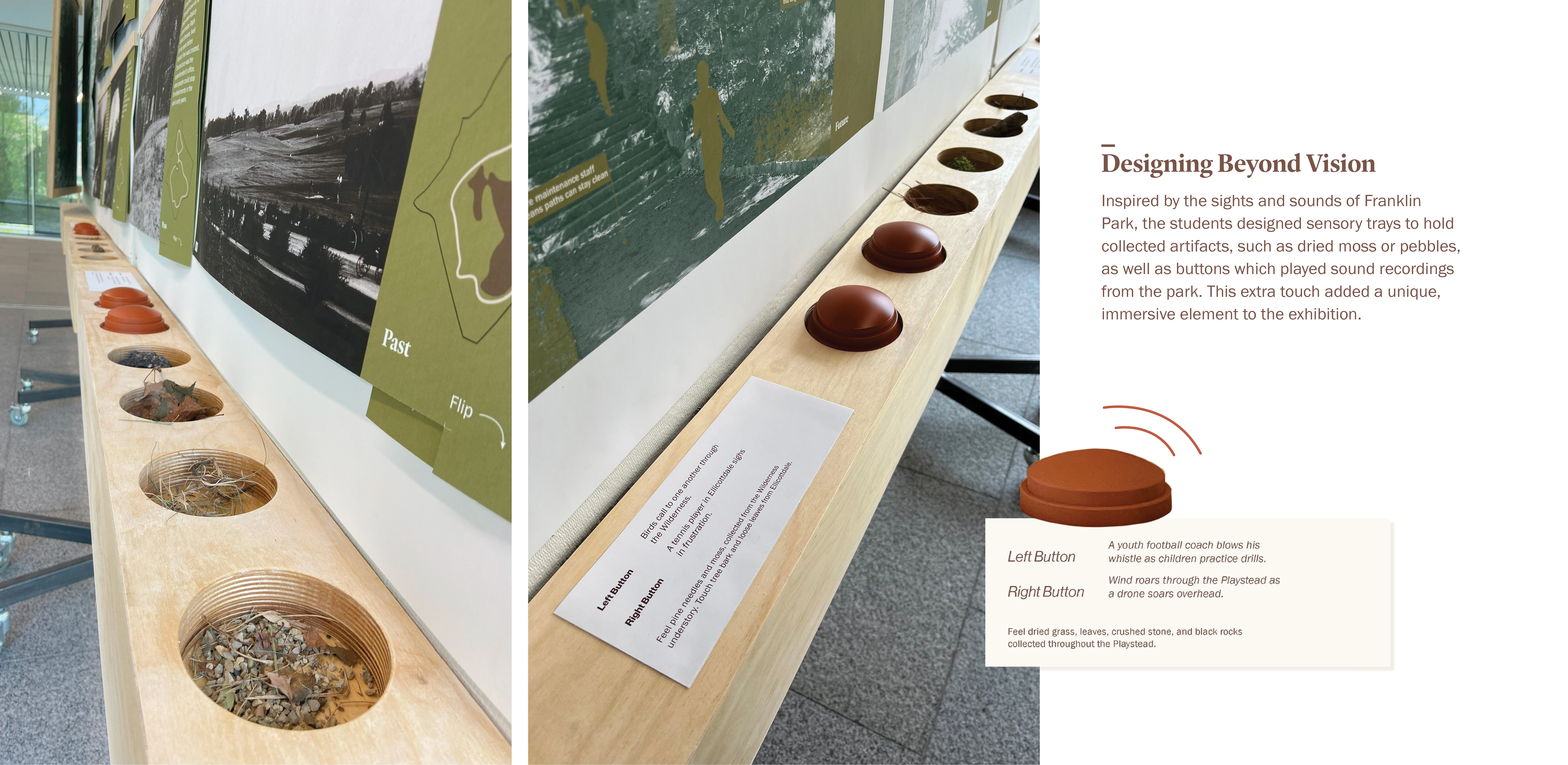
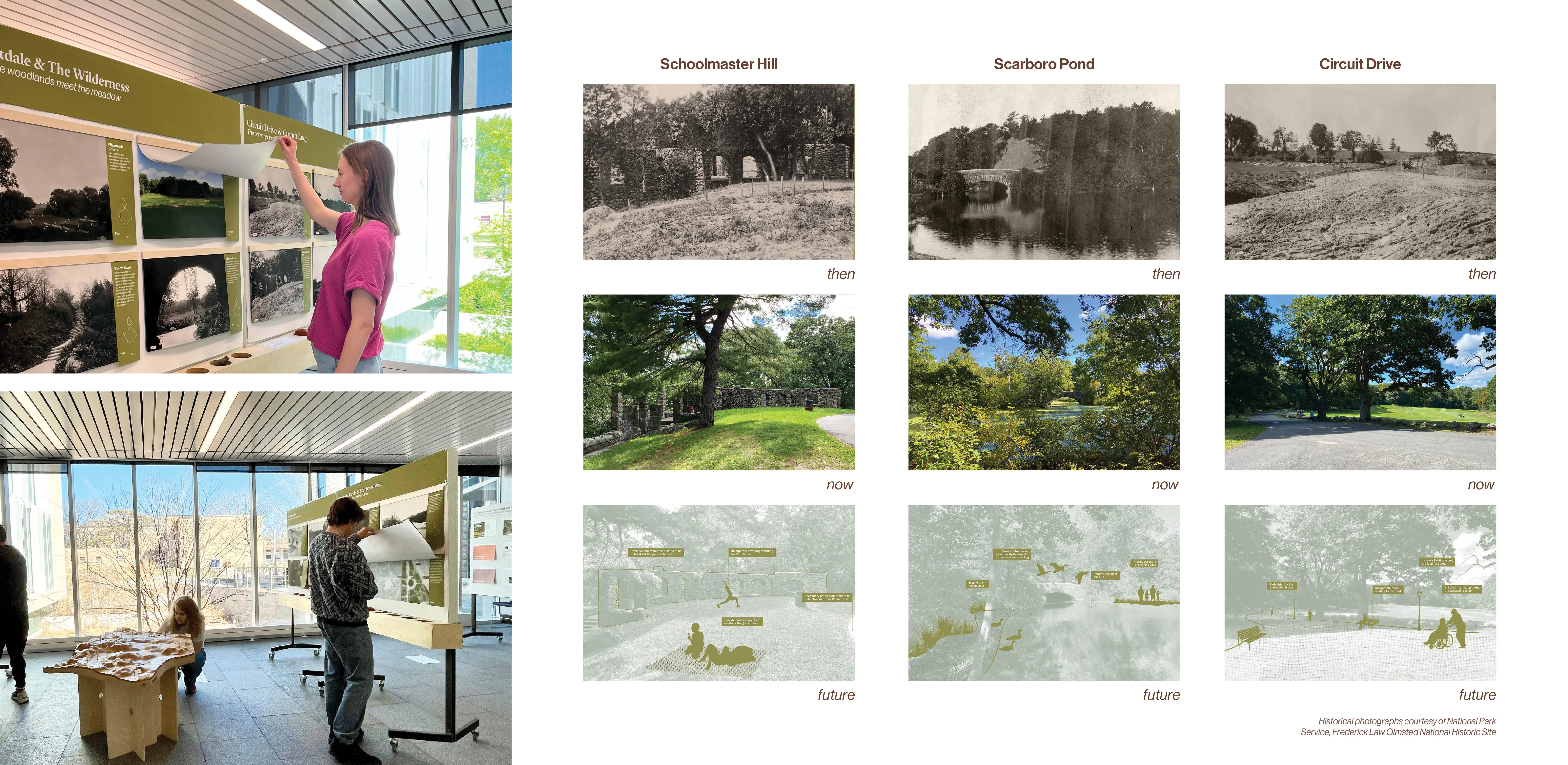
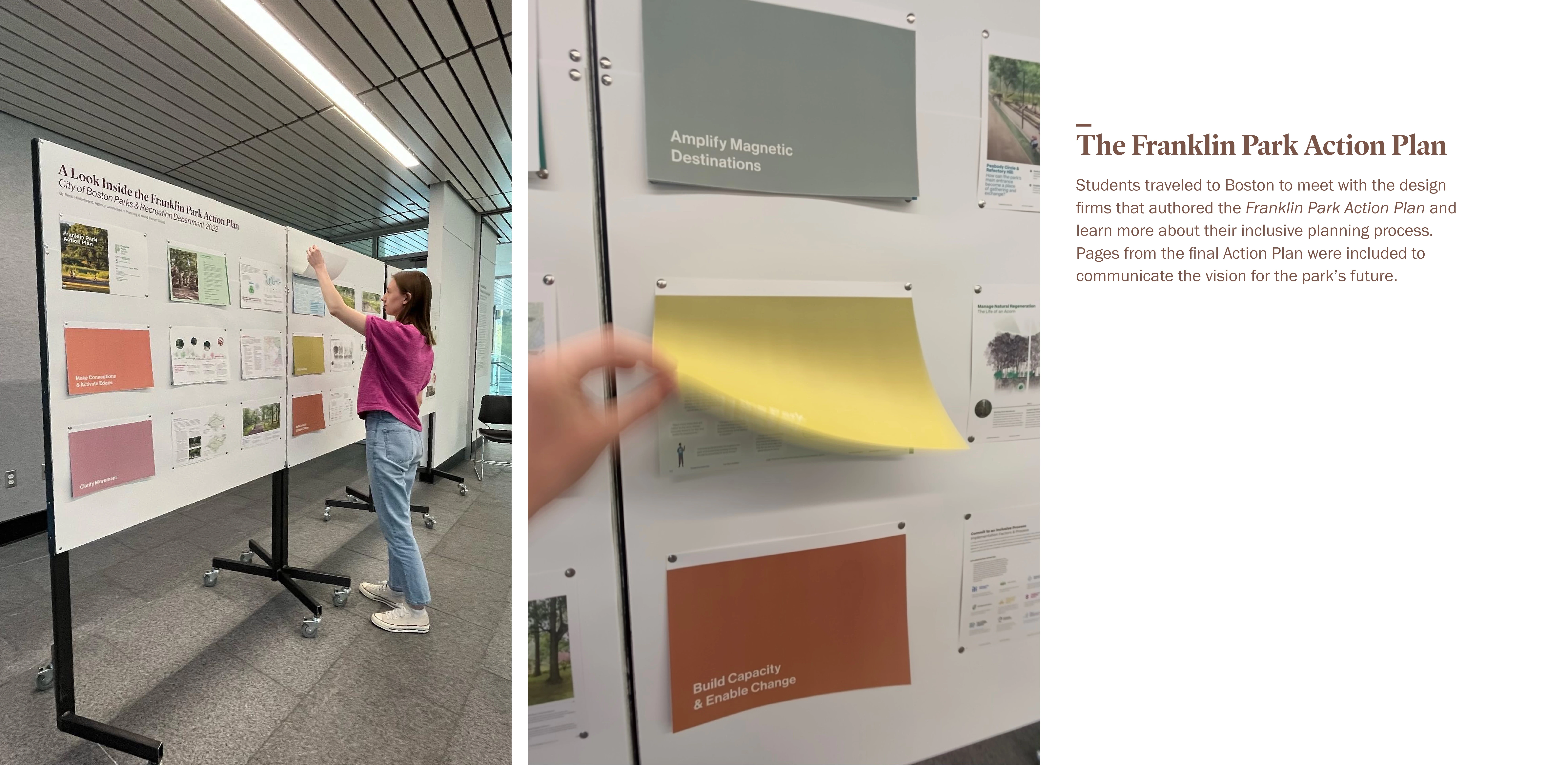
In the fall of 2022, a year after Olmsted’s 200th anniversary and near the publication of the Franklin Park Action Plan (FPAP) (Boston Parks & Rec 2022), students traveled to Boston to conduct onsite research and observational analysis of Franklin Park and to learn from the design professionals who authored the FPAP. Before visiting the park, students carefully planned information and items to be collected on-site that would later be incorporated into the exhibit. For instance, archival research was conducted to find historical photographs of notable areas throughout the park. Then, while onsite, students took photos from the same vantage point as the historical photos to show change over time in the exhibition’s flip-books. Using the same photos as a base, students created renderings inspired by the recommendations outlined in the FPAP. Additionally, students captured sound clips and gathered fragments of fallen leaves and twigs from prominent areas in the park. These materials were used in the exhibition’s sensory trays and added a unique tactile element to the exhibition.
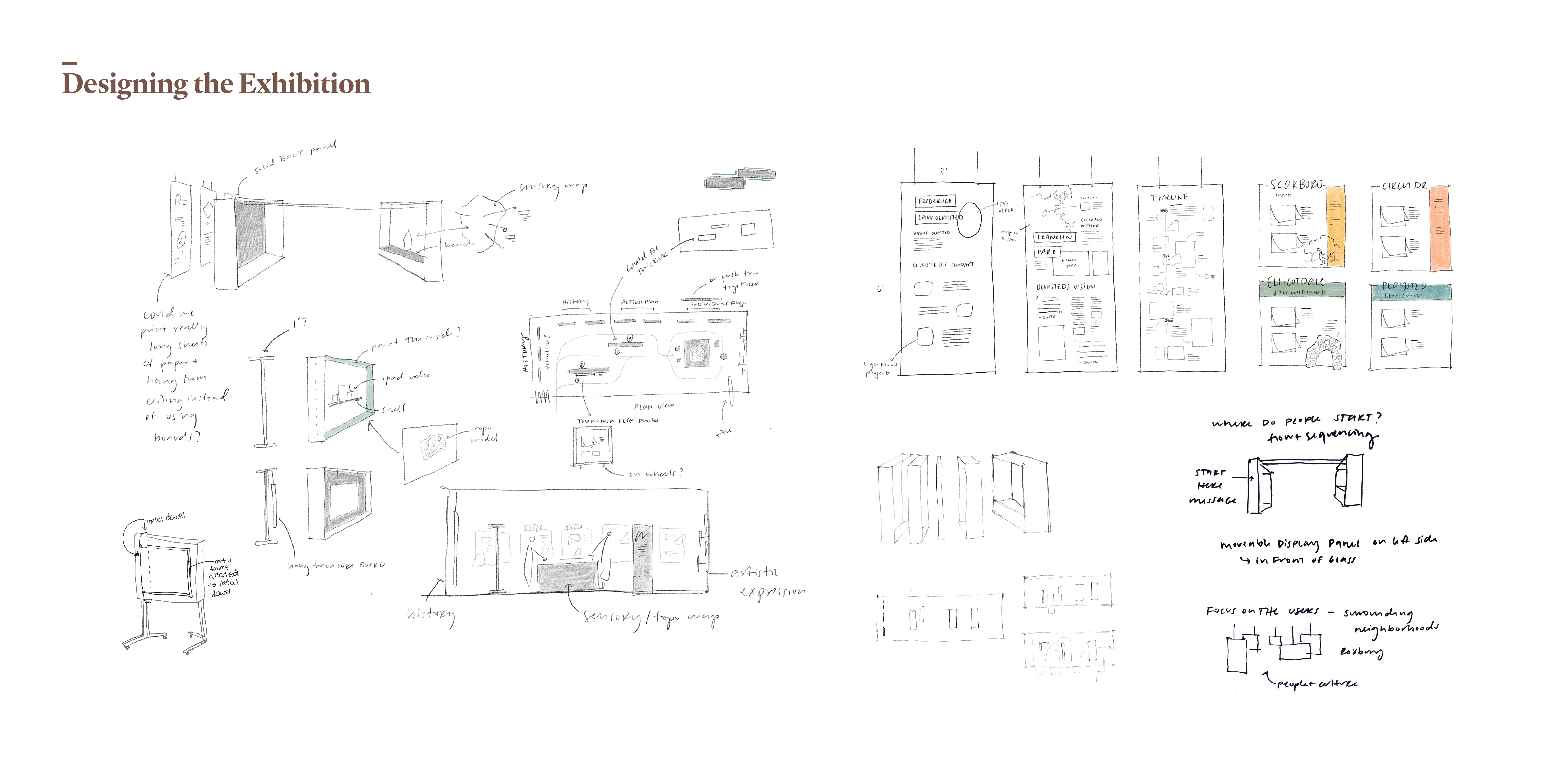
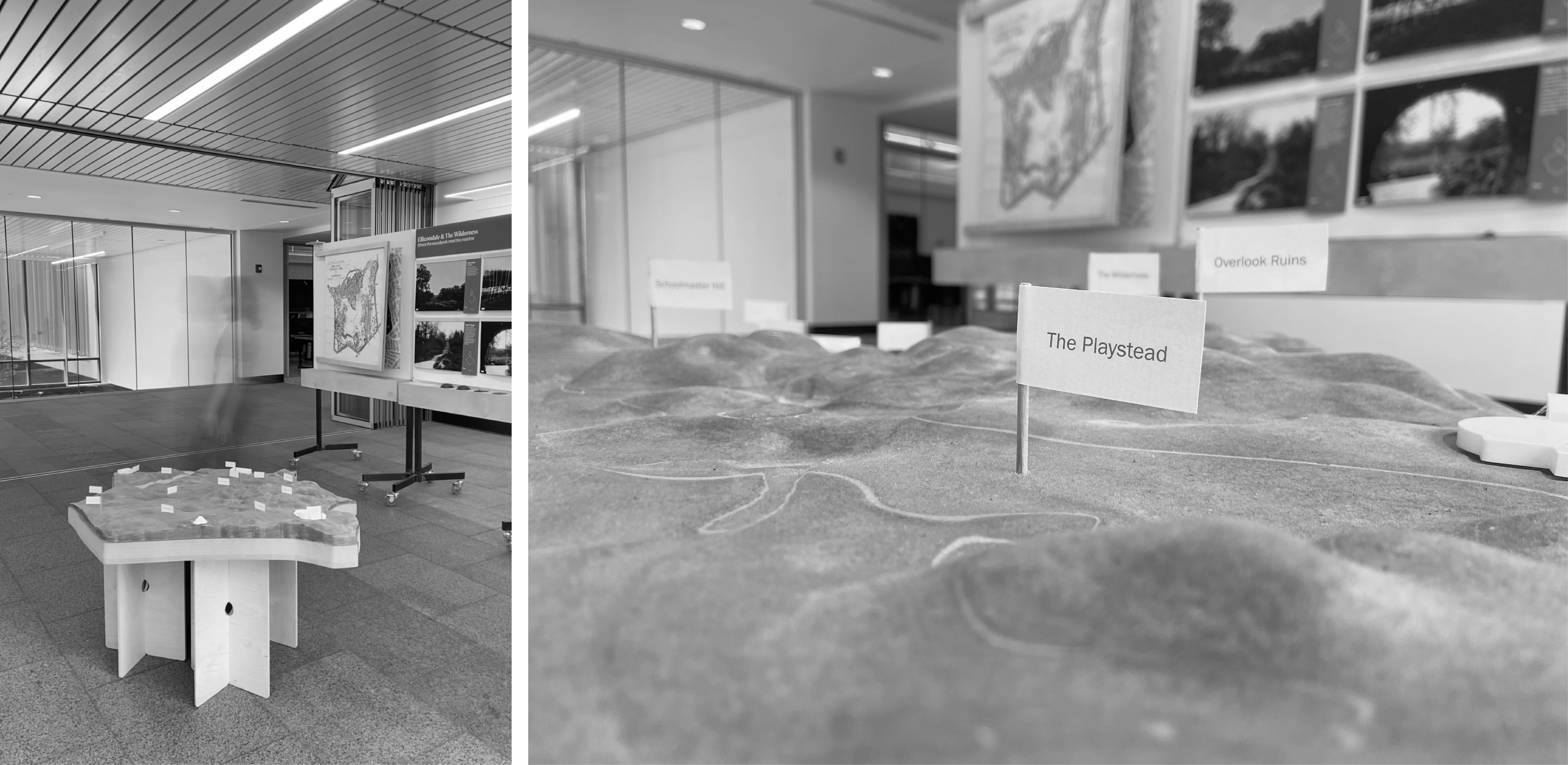
Too often exhibition design engages only the visual sense. The students felt it was important for the exhibition to be a welcoming and inclusive experience for all visitors. This required careful consideration for making it accessible and multi-sensory. All decisions were intentional, including the choice of font and size, the panel height, the colors used, the arrangement of the space, the use of sound and the provision of tactile elements.
The exhibition featured:
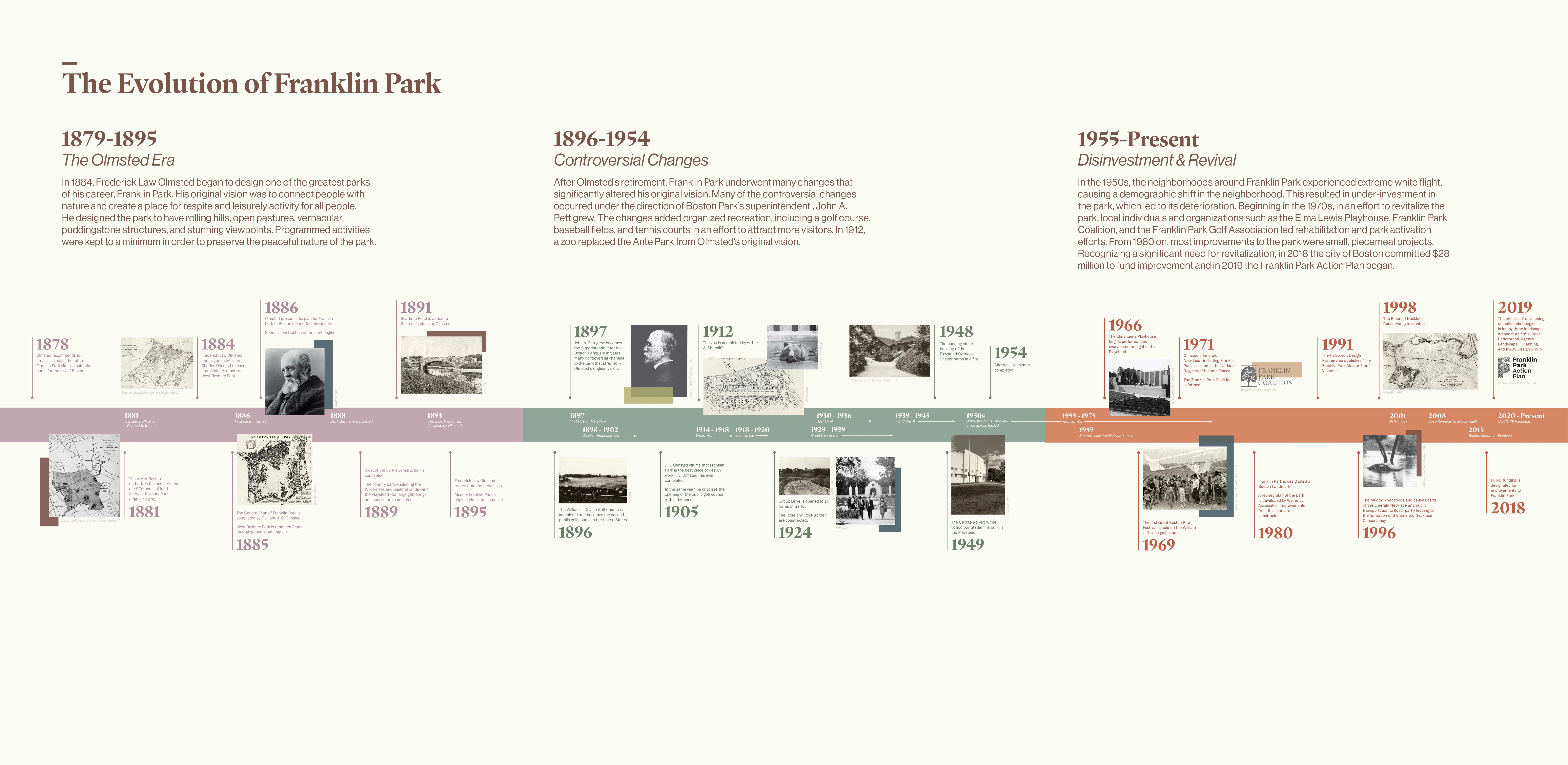
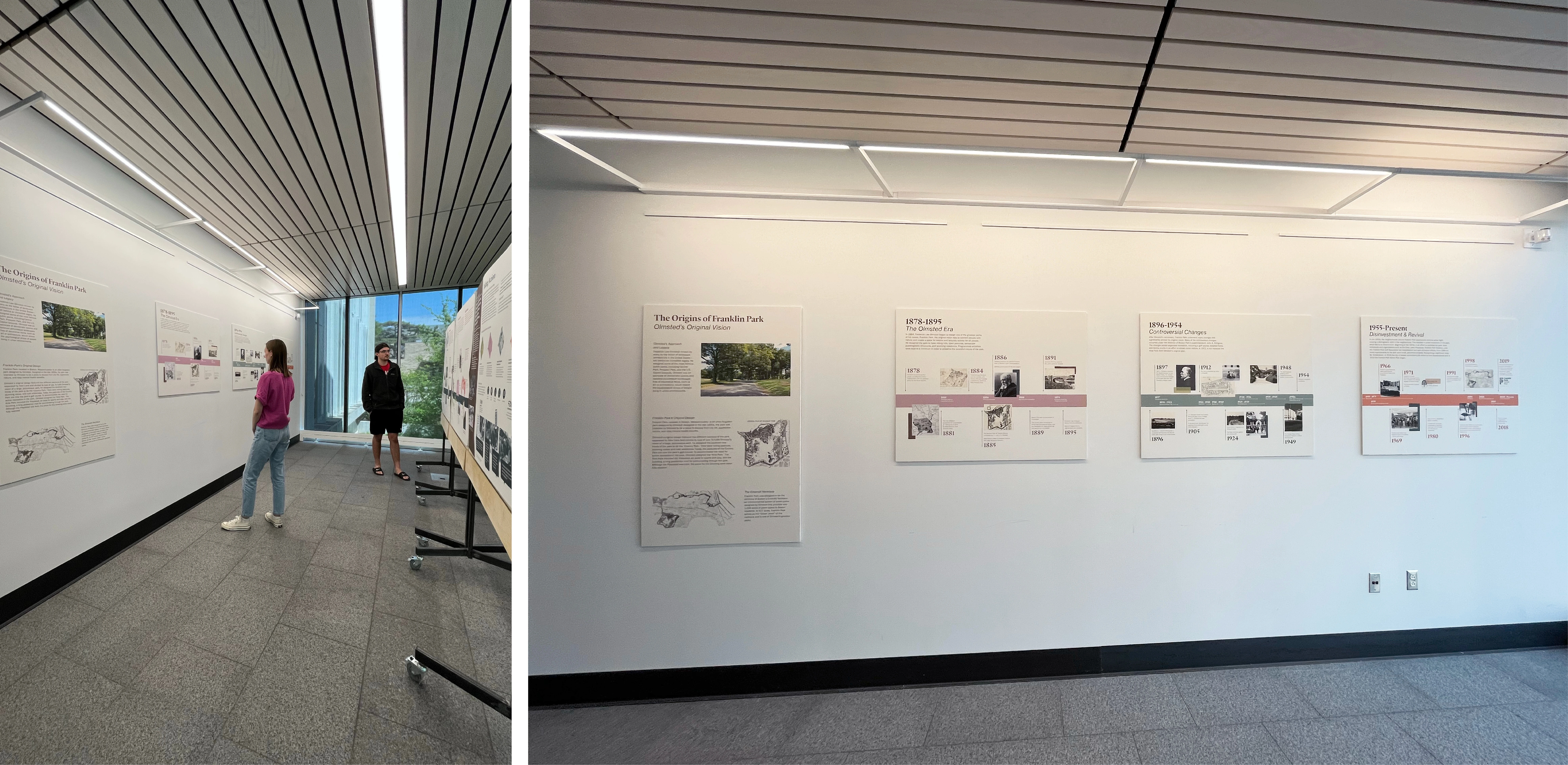
A timeline of Franklin Park that highlighted three significant periods in the park’s history: The Olmsted Era (1878-1895), Controversial Changes (1896-1954) and Disinvestment & Renewal (1955-Now)
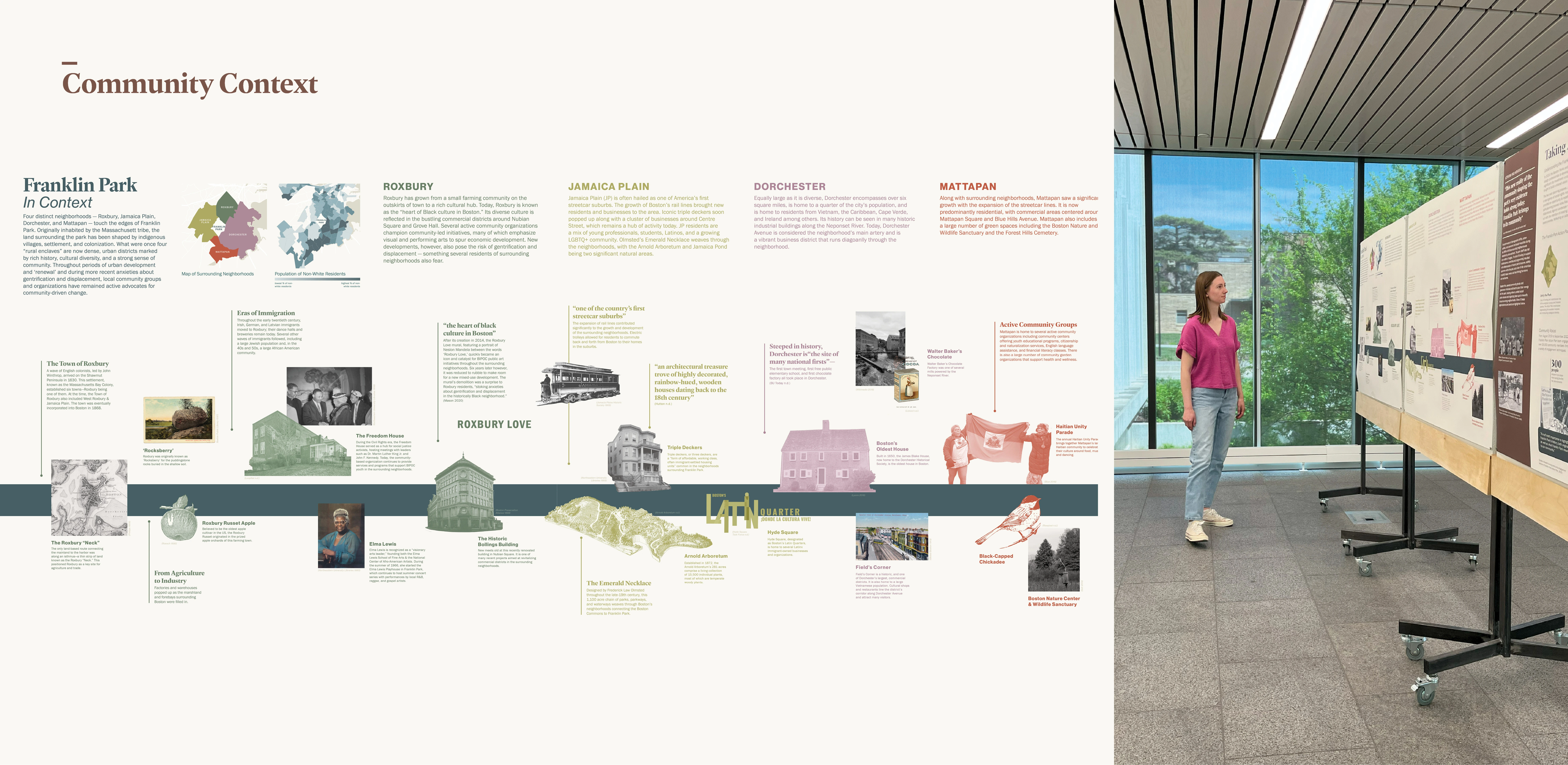
Neighborhood and community character boards that gave visitors a sense of the people and places that have shaped the park’s identity
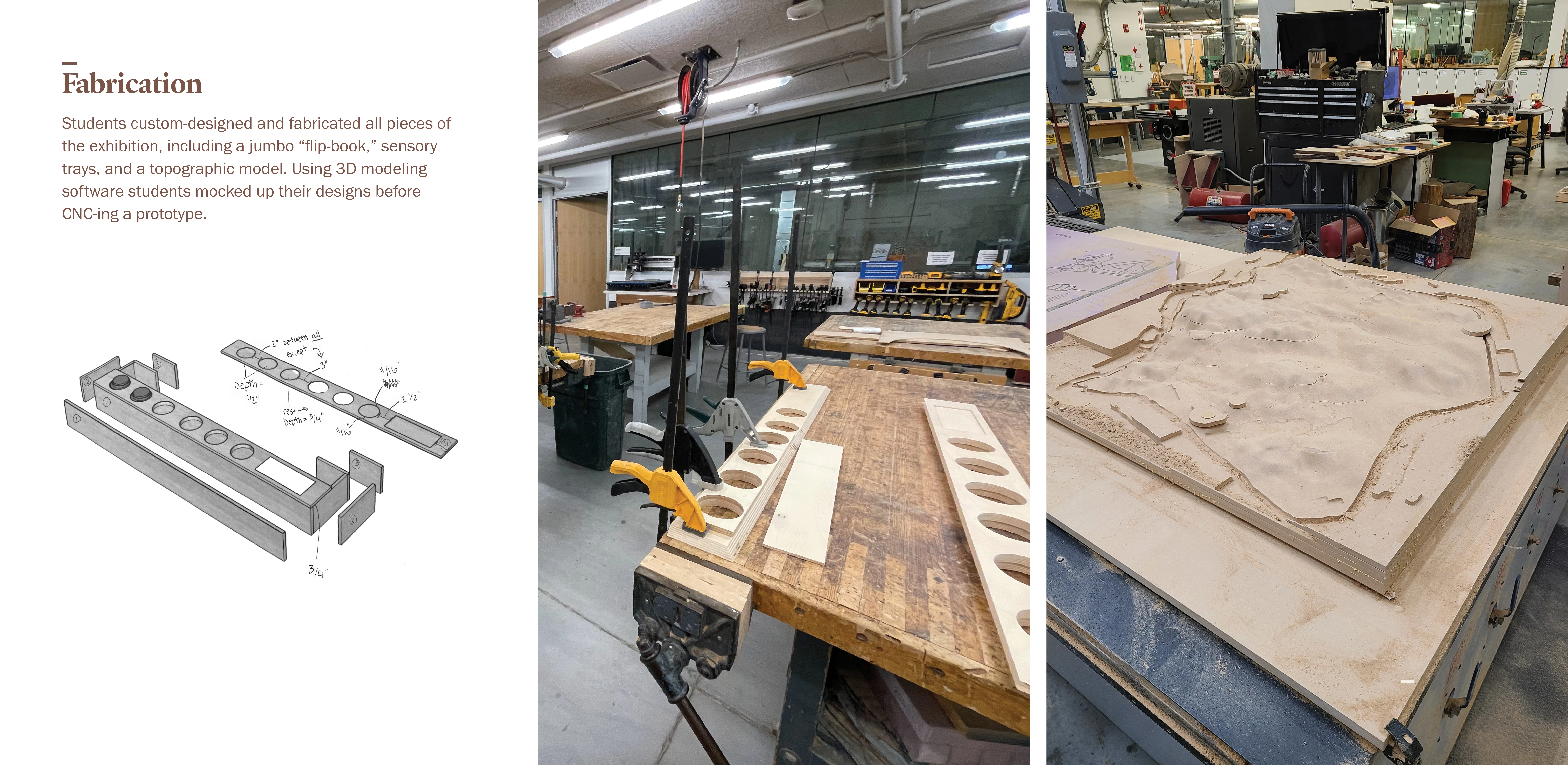
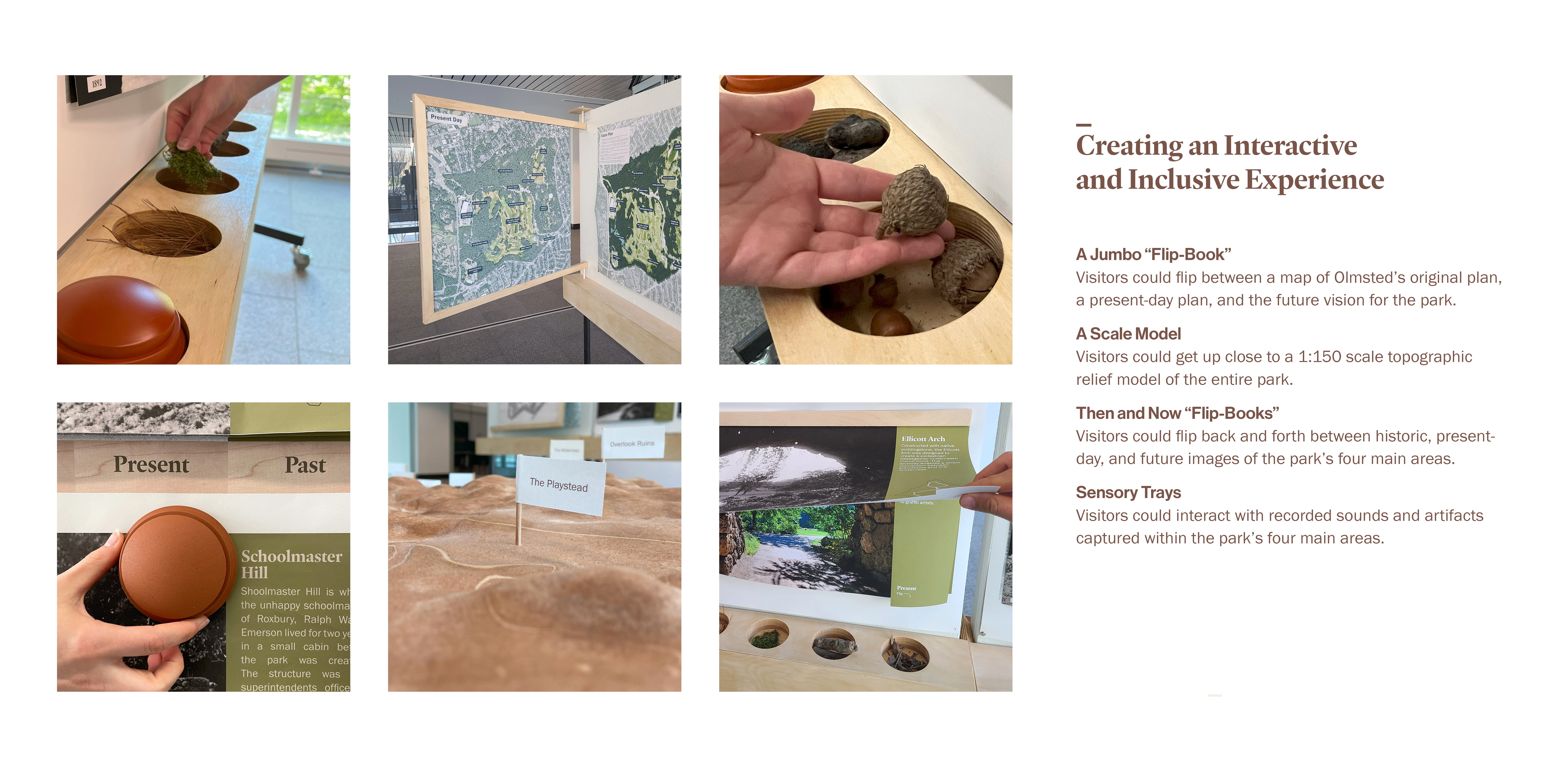
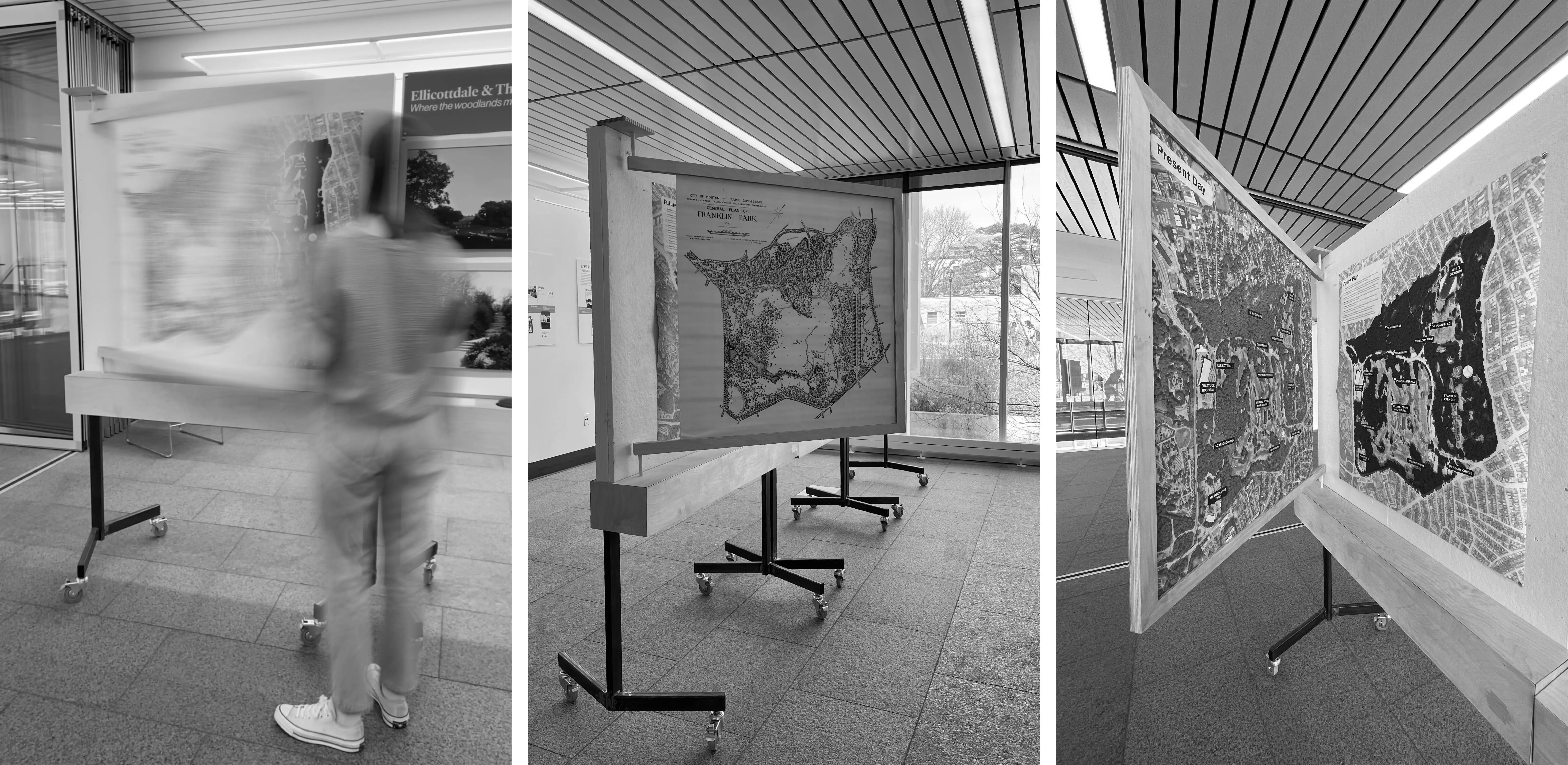
A jumbo flip-book that allowed visitors to compare Olmsted’s historic plan, the current plan and the future plan
Then & Now flip-books that allowed visitors to visualize changes in the park by flipping through historic and current-day photos and proposed renderings
Sensory trays with sound buttons and artifacts to provide an auditory and tactile experience
A display of key pages from the Boston Parks & Rec Department’s FPAP that illustrated a community-driven future vision
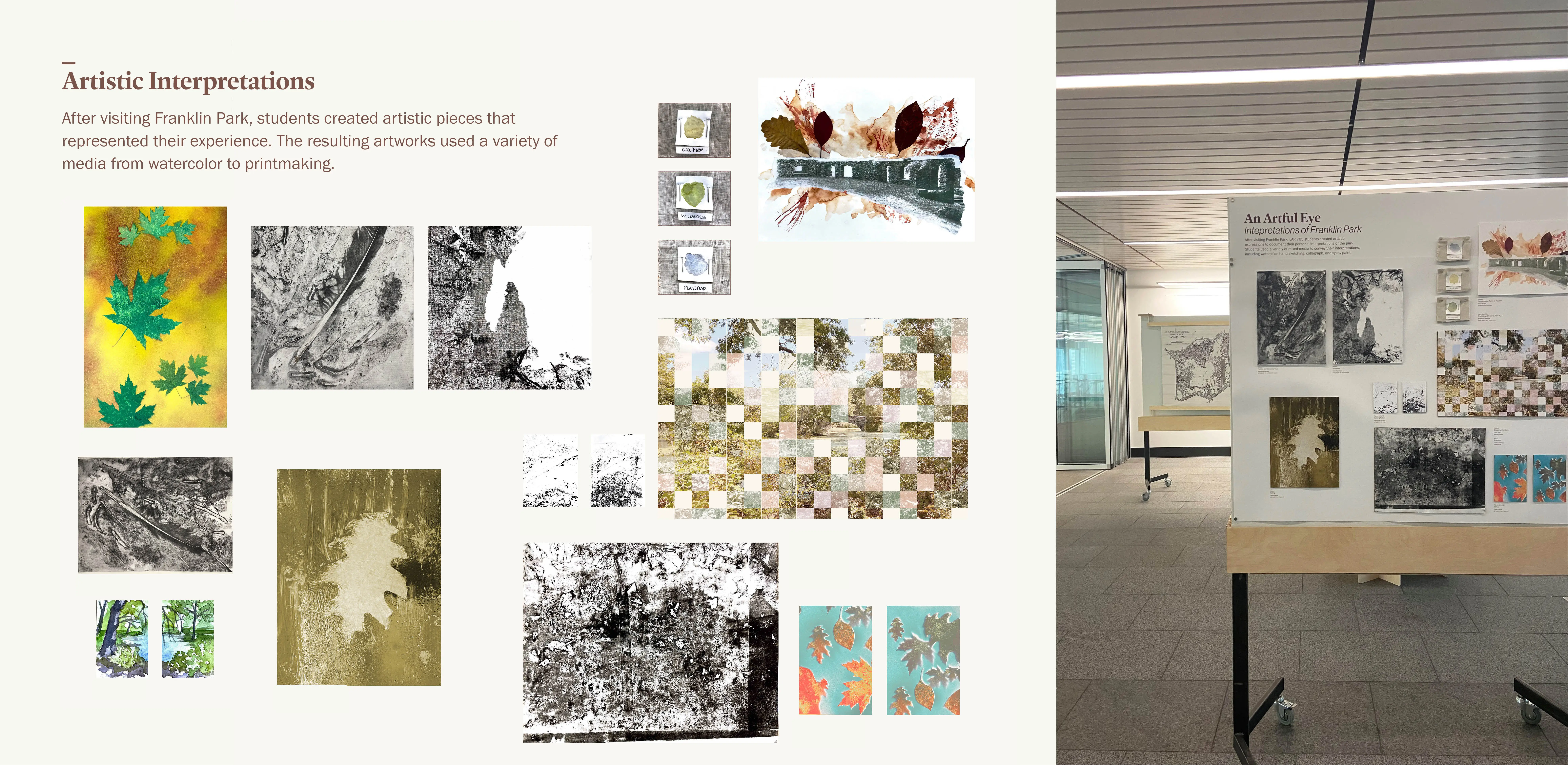
Artistic interpretations of the park created by the students
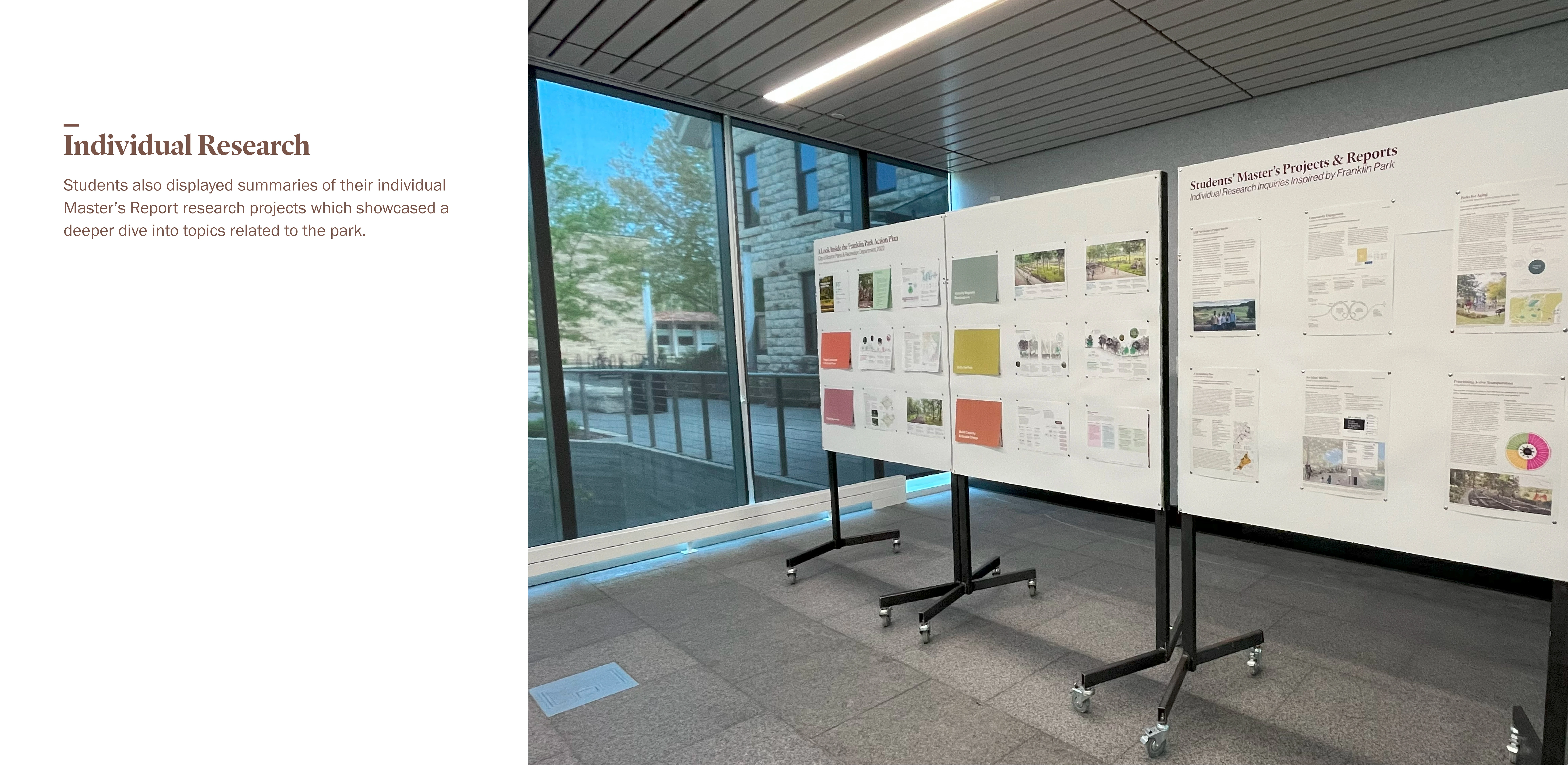
A summary of students’ individual research projects that showcased a deeper dive into topics related to the park
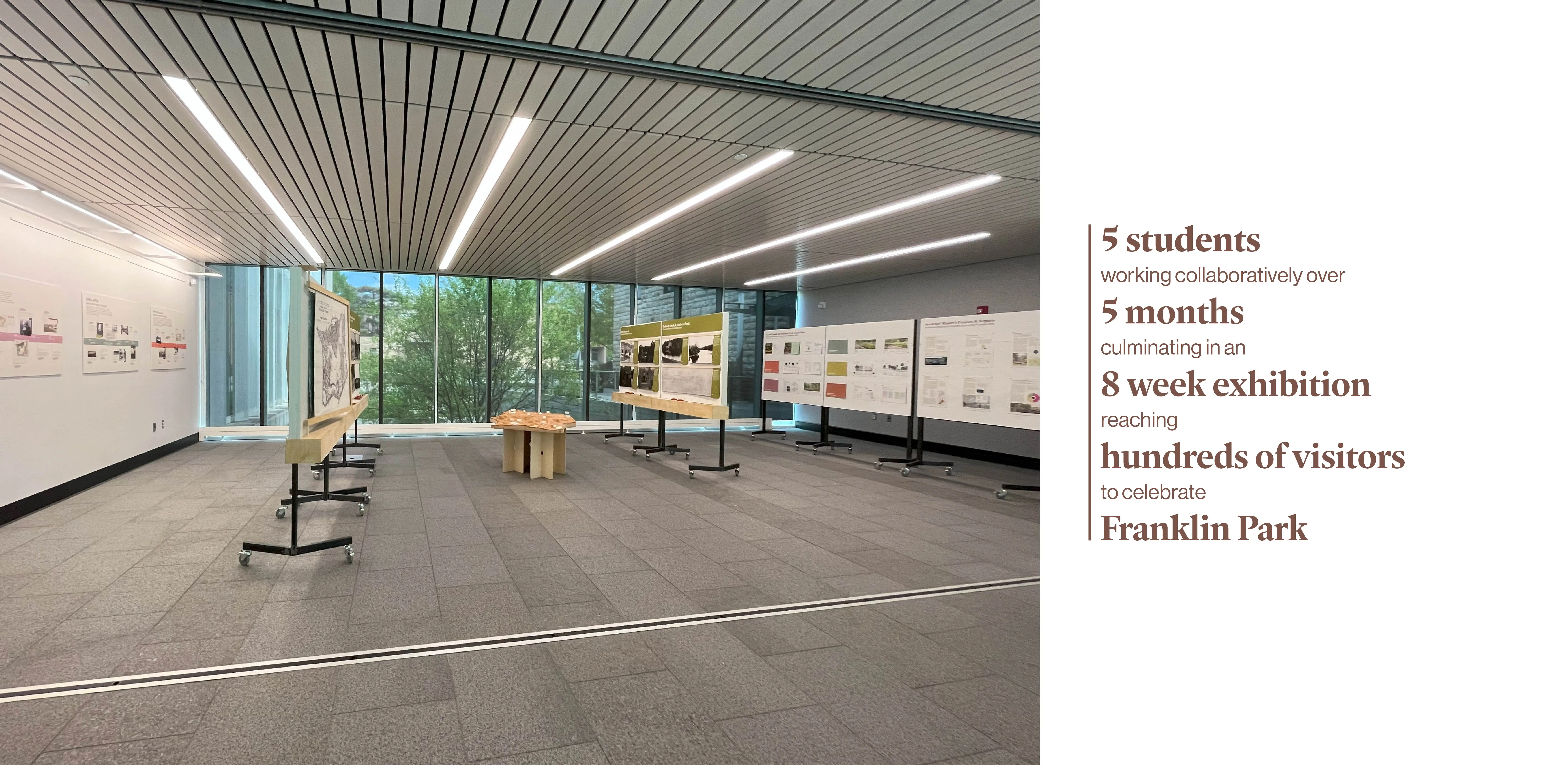
On display for 8 weeks in a multidisciplinary design College’s gallery space, the exhibition received hundreds of visitors from within the College, across the University and nationally during the LABash Conference. The exhibition provided a unique opportunity to educate those outside of landscape architecture about the impact of the profession and the significance of one designer’s work across decades.
-
- Ian Scherling - Project Advisor, Associate Principal and Landscape Architect at Sasaki
- Susan and Paul Kissinger - Susan and Paul Kissinger Award
Related Awards
Honor Award, Communications
The Community First Toolkit: A Framework for Equitable Public Spaces
Communities across North America have faced uneven development for decades. The Community First Toolkit (CFT) provides a visionary, adaptable framework for public realm advocates to directly tackle infrastructural racism and embed equity at all stages of the design process.