

.webp?language=en-US)

Fluid Fiesta: Blending Rainfall and Terrain Dynamics with Landscapes
Jiamin Shen, Student International ASLA; Zixuan Sun, Student International ASLA; Jiahui Gao, Student International ASLA; Dingyao Zhu
-
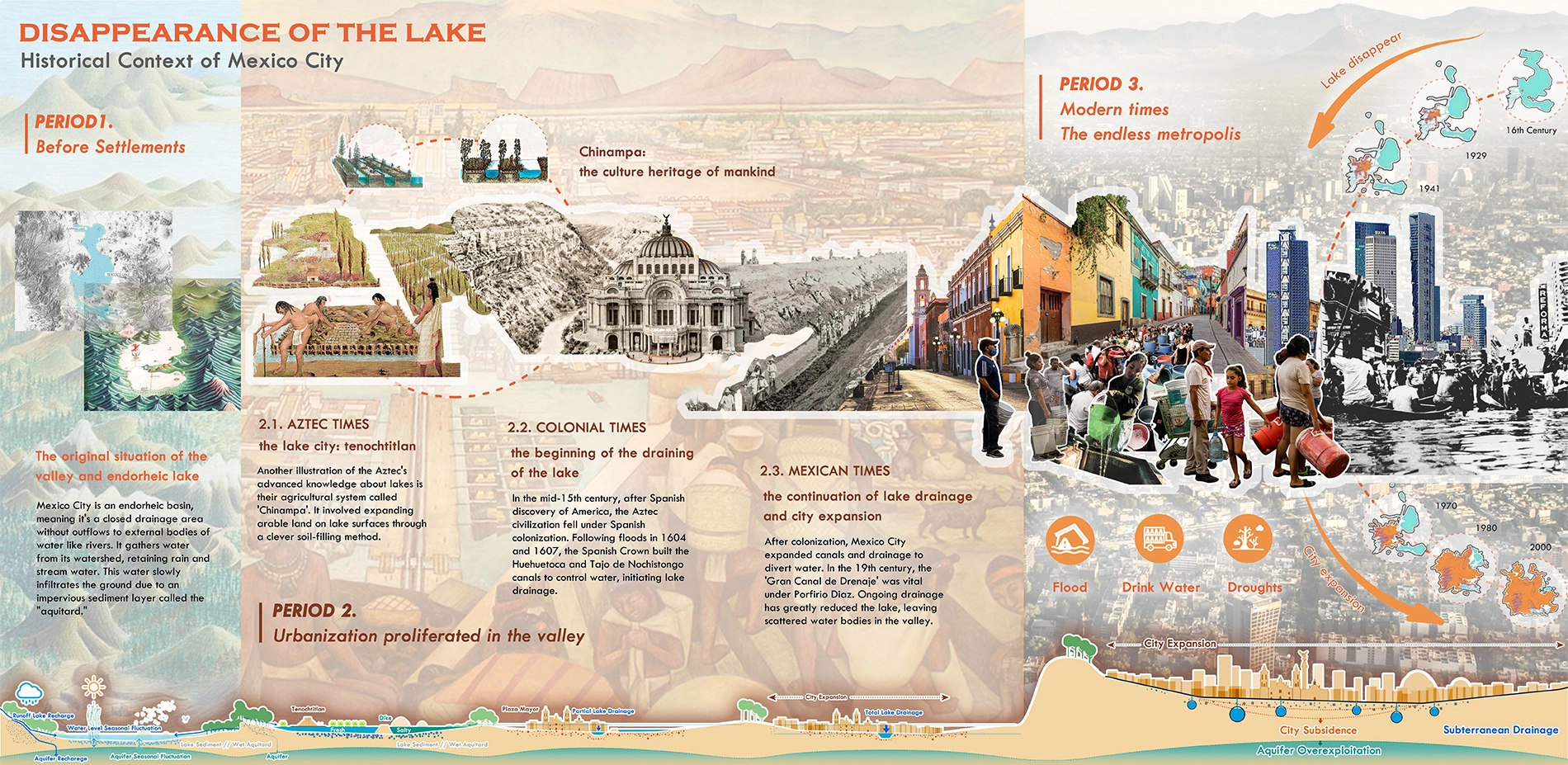
Mexico City faces severe flooding during rainy seasons and water scarcity in dry seasons, exacerbated by continuous land subsidence. Our project, "Fluid Fiesta," combines the adaptability of water and the vibrant spirit of a fiesta to portray the dynamic interplay between terrain dynamics, landscape infrastructure, and seasonal rainfall management. "Fluid" represents water's movement and flexibility, while "Fiesta" embodies the celebratory Mexican culture. By emphasizing the integration of natural topography and landscape infrastructure, this translation underscores Mexico City's bright future nurtured by water sustainability, highlighting the harmonious coexistence of nature and culture in reshaping urban water security.
-
Background
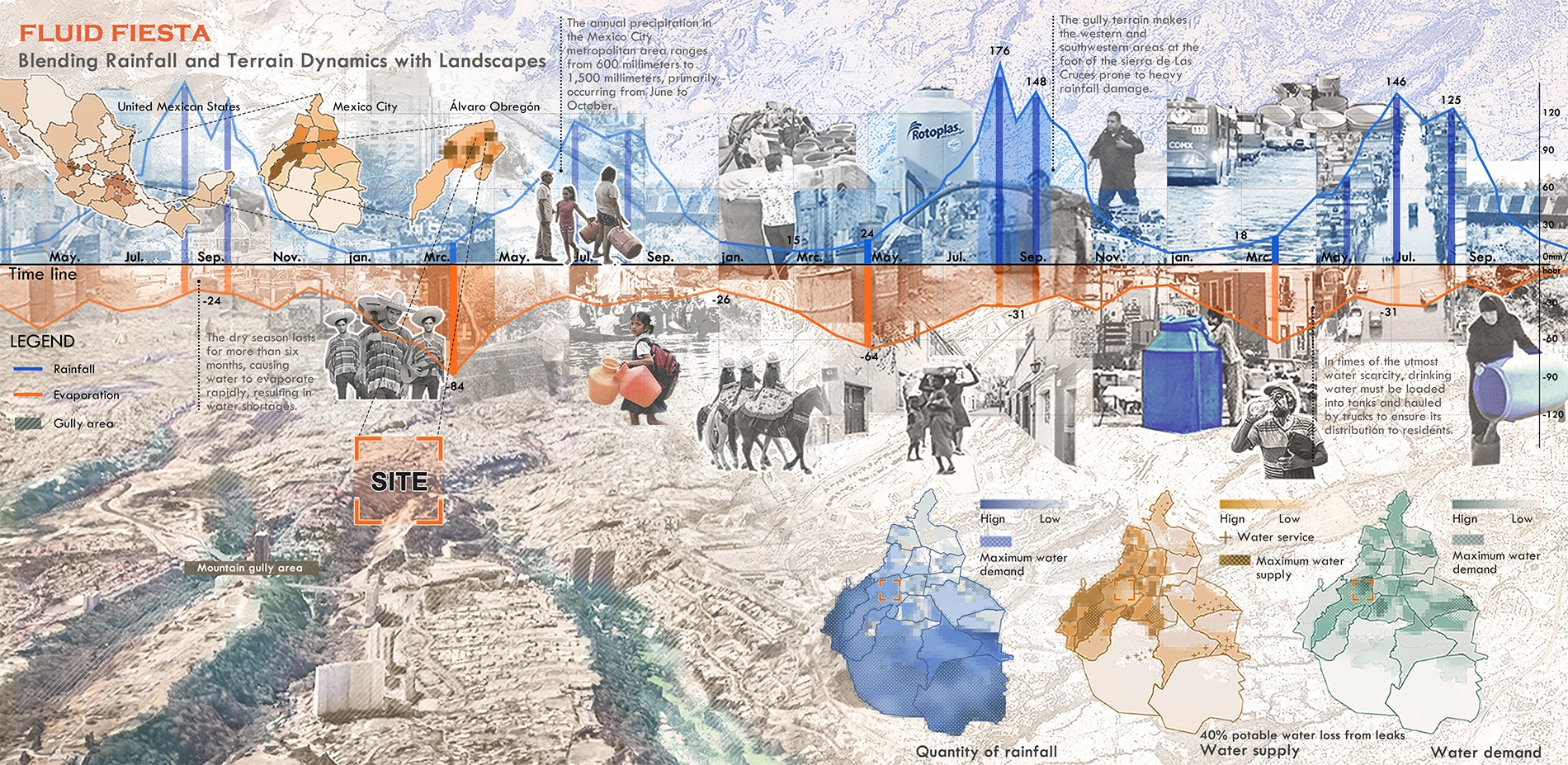
Mexico City faces severe flooding during rainy seasons and water scarcity during dry seasons, worsened by continuous land subsidence. The complex terrain and damaged water infrastructure force residents to rely on groundwater and trucked water. Uneven water distribution, weak infrastructure and increasing pollution significantly impact the city.
Research
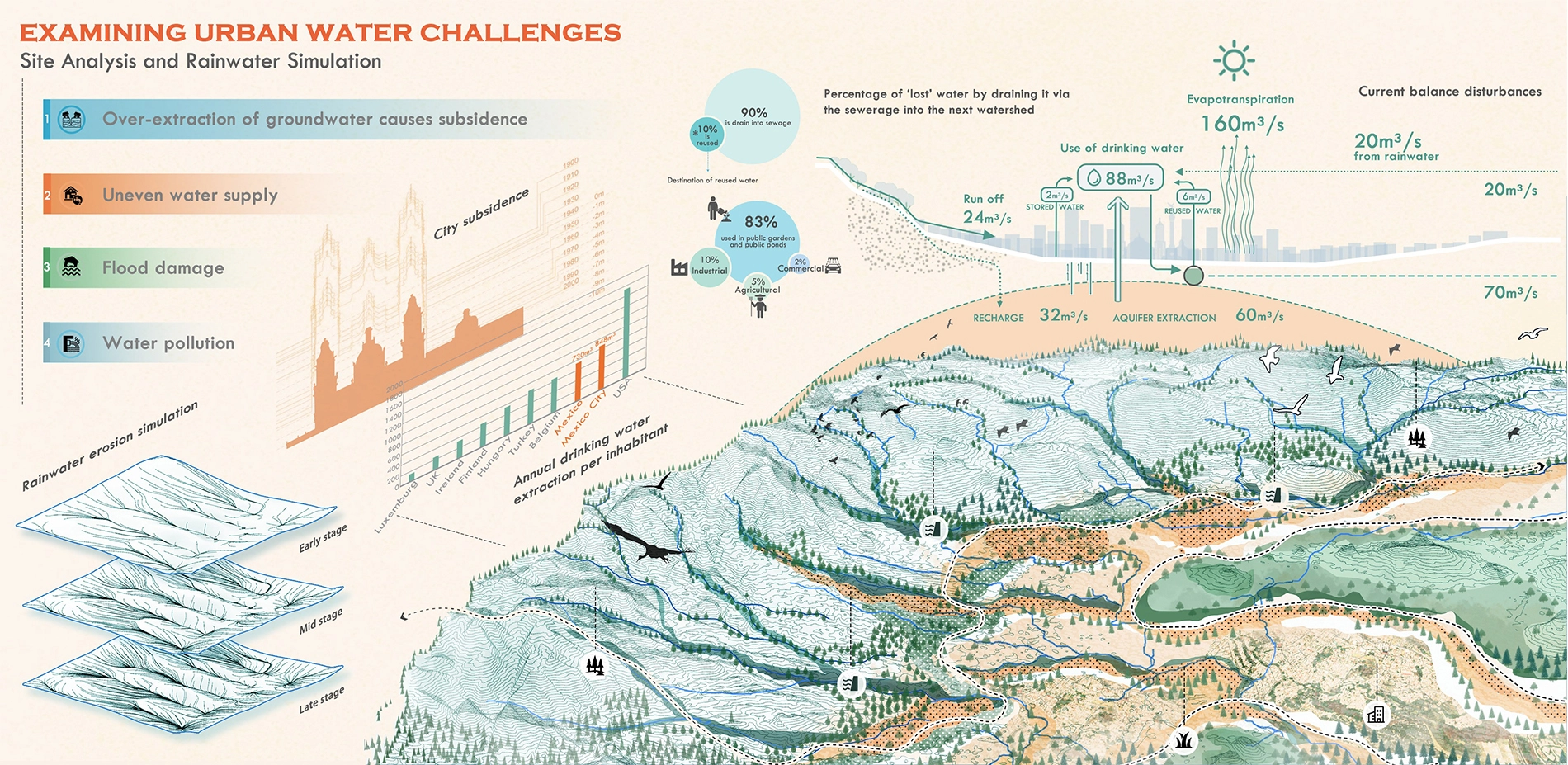
Key water issues in Mexico City include:
1. Rugged terrain causes the water system to struggle with runoff, leading to damage.
2. Rapid evaporation constitutes 75% of annual precipitation, worsens water shortages and the urban heat island effect.
3. Basic infrastructure mixes rainwater, gray water, and black water, hindering natural infiltration and evaporation.
4. Scarce water supply forces residents to extract groundwater and rely on trucked water.
5. Over-extraction of aquifers causes land subsidence and pipeline leaks, losing 40% of potable water. Urban paving disrupts permeable surfaces, worsening aquifer depletion. The city subsides several centimeters annually.
Strategy
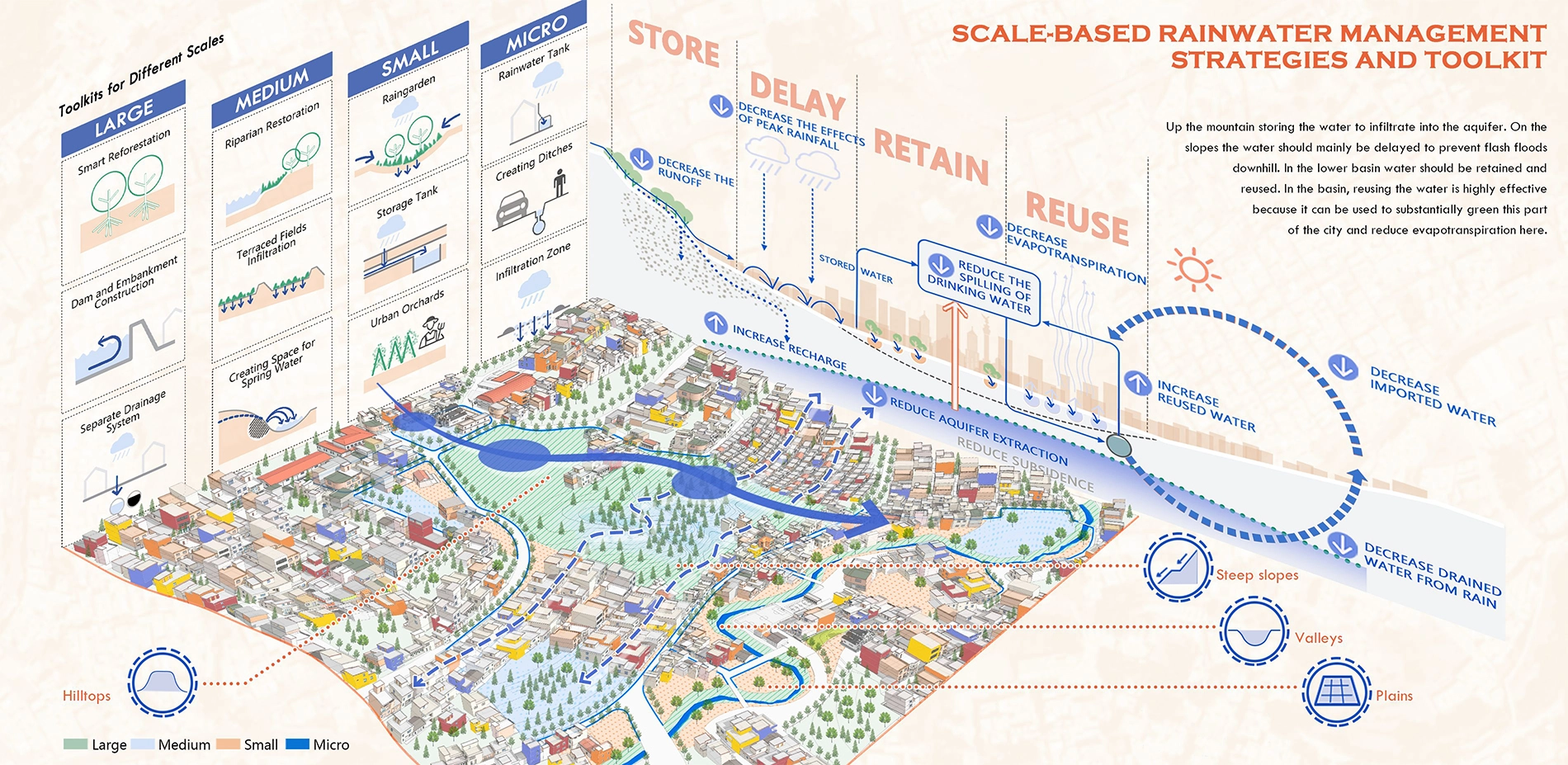
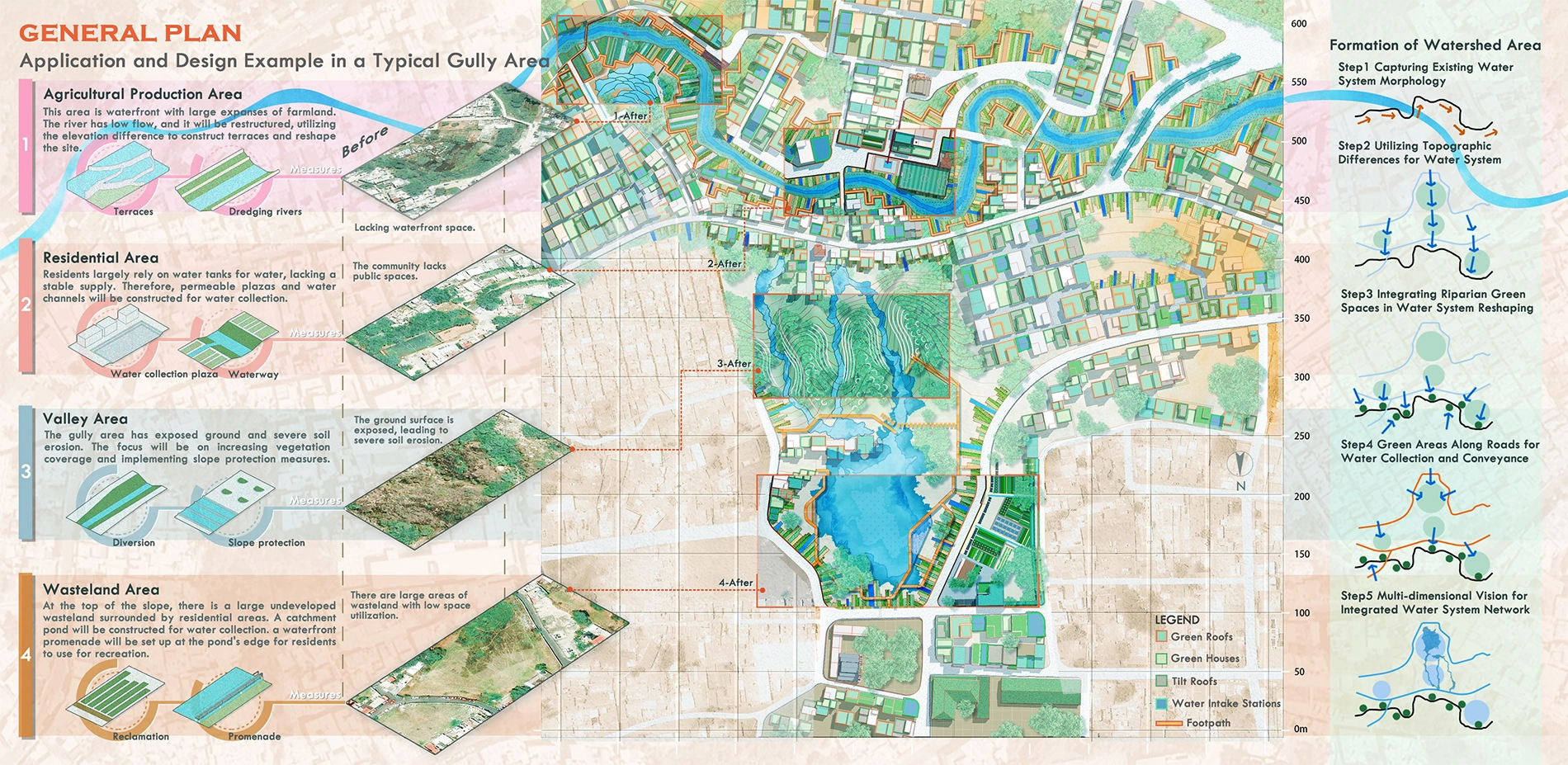
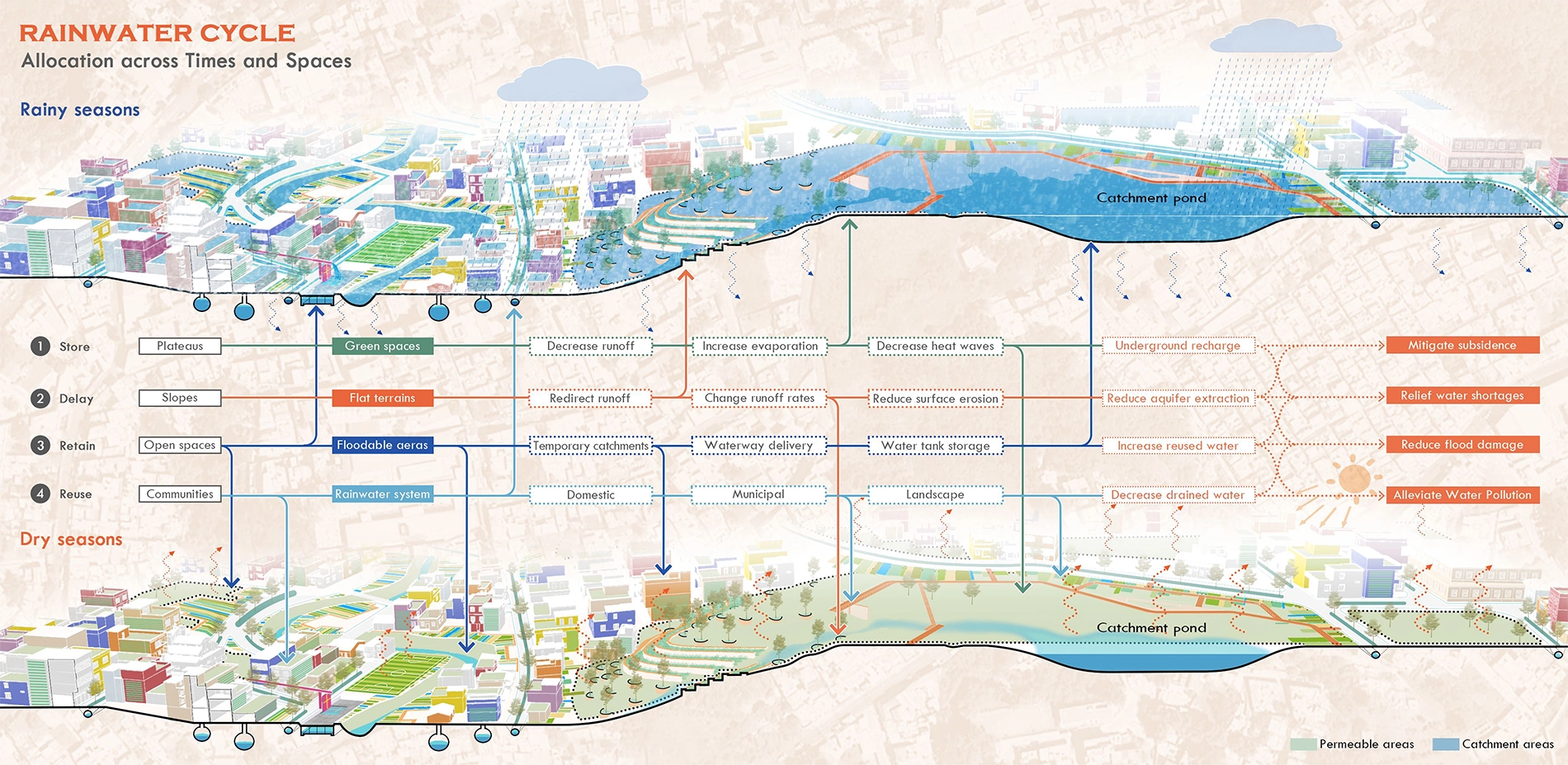
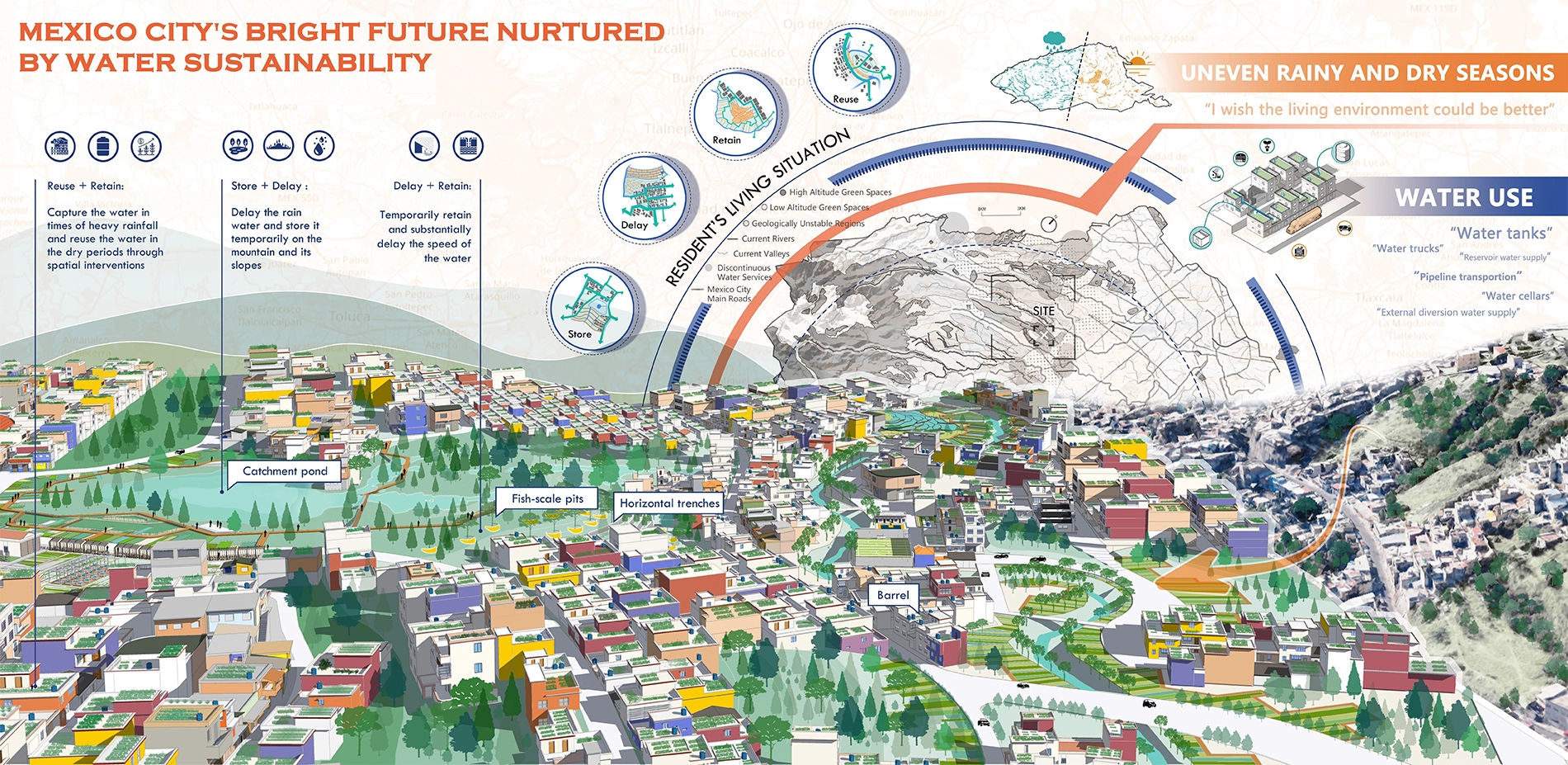
The project addresses Mexico City's seasonal water issues by examining historical causes and current conditions, providing tailored solutions. We propose four strategies: store, delay, retain, and reuse. Using landscape infrastructure, we aim to manage urban water resources, promoting harmony between nature, city life, and culture. The project seeks sustainable water use and environmental development, demonstrating the strategies in typical areas to create a toolkit integrating natural water cycles with urban living, enhancing residents' quality of life, economic productivity, and ecological environment, while fostering cultural prosperity.
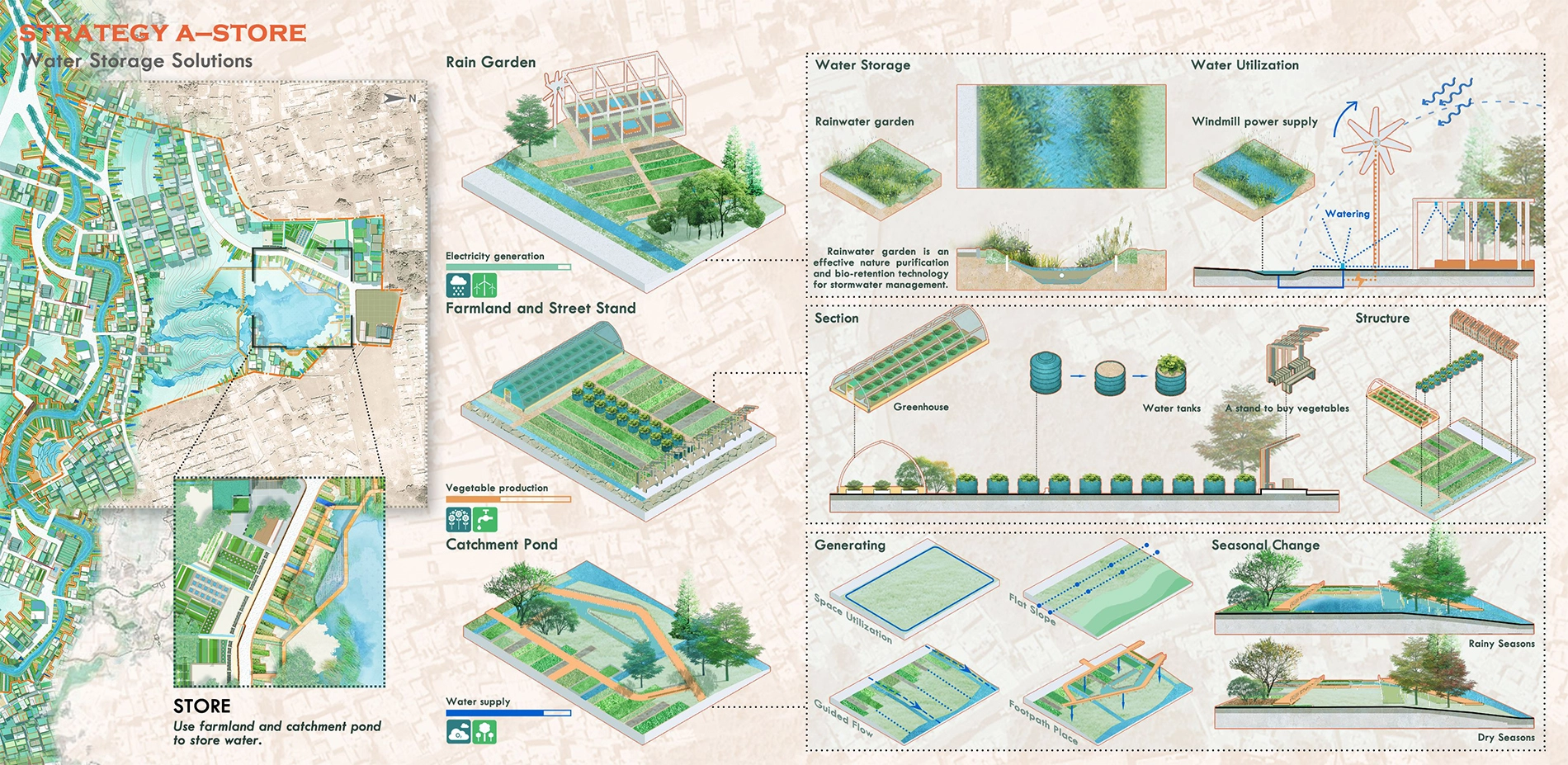
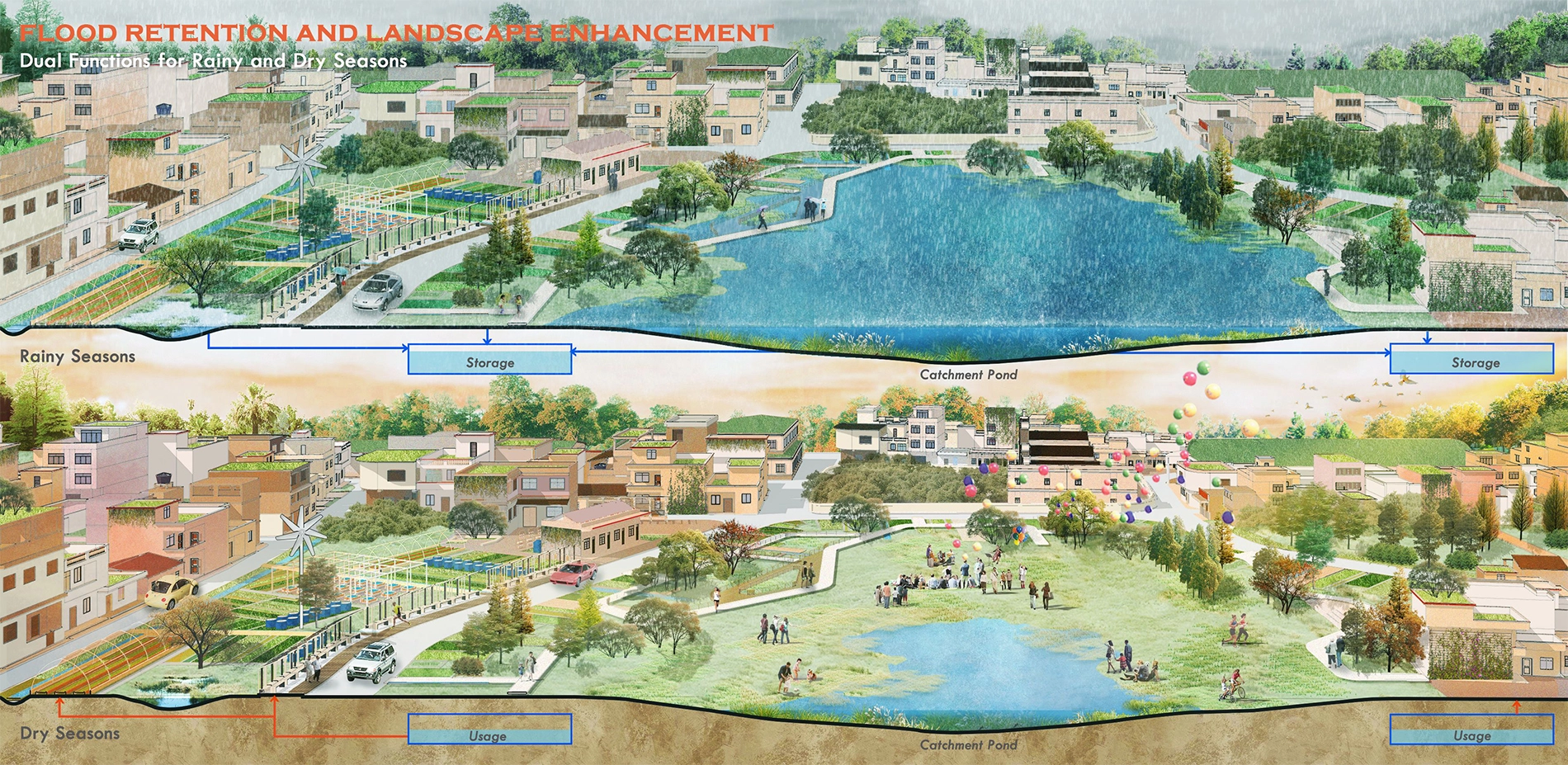
Strategy A: Store
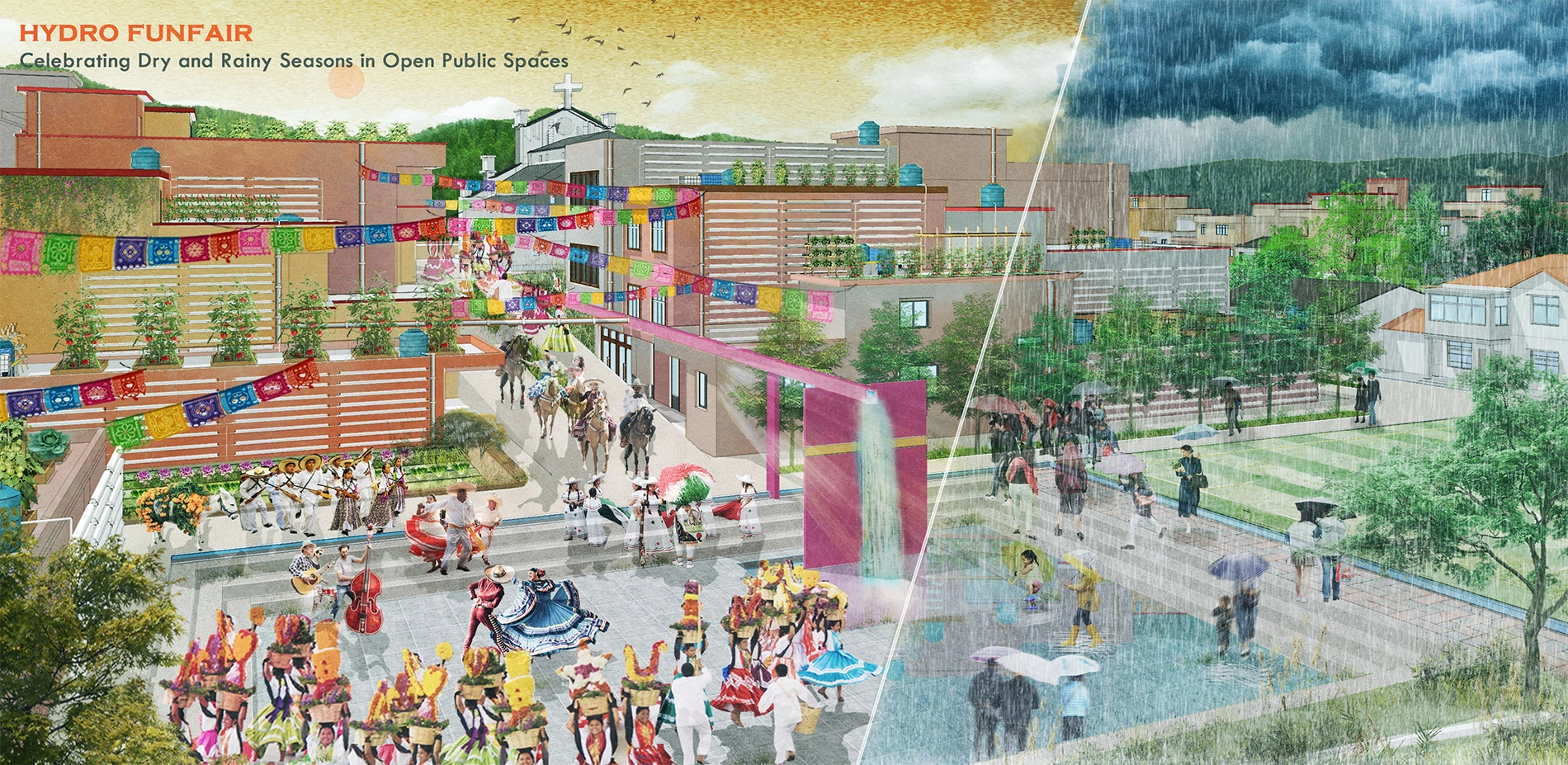
In hilltop areas, we restore natural habitats and install catchment ponds. This reduces rainwater runoff and promotes natural infiltration. During rainy seasons, water enriches the land, creating pleasant waterfront landscapes. In dry seasons, stored water irrigates green spaces and farmland, providing comfortable areas for cultural activities.
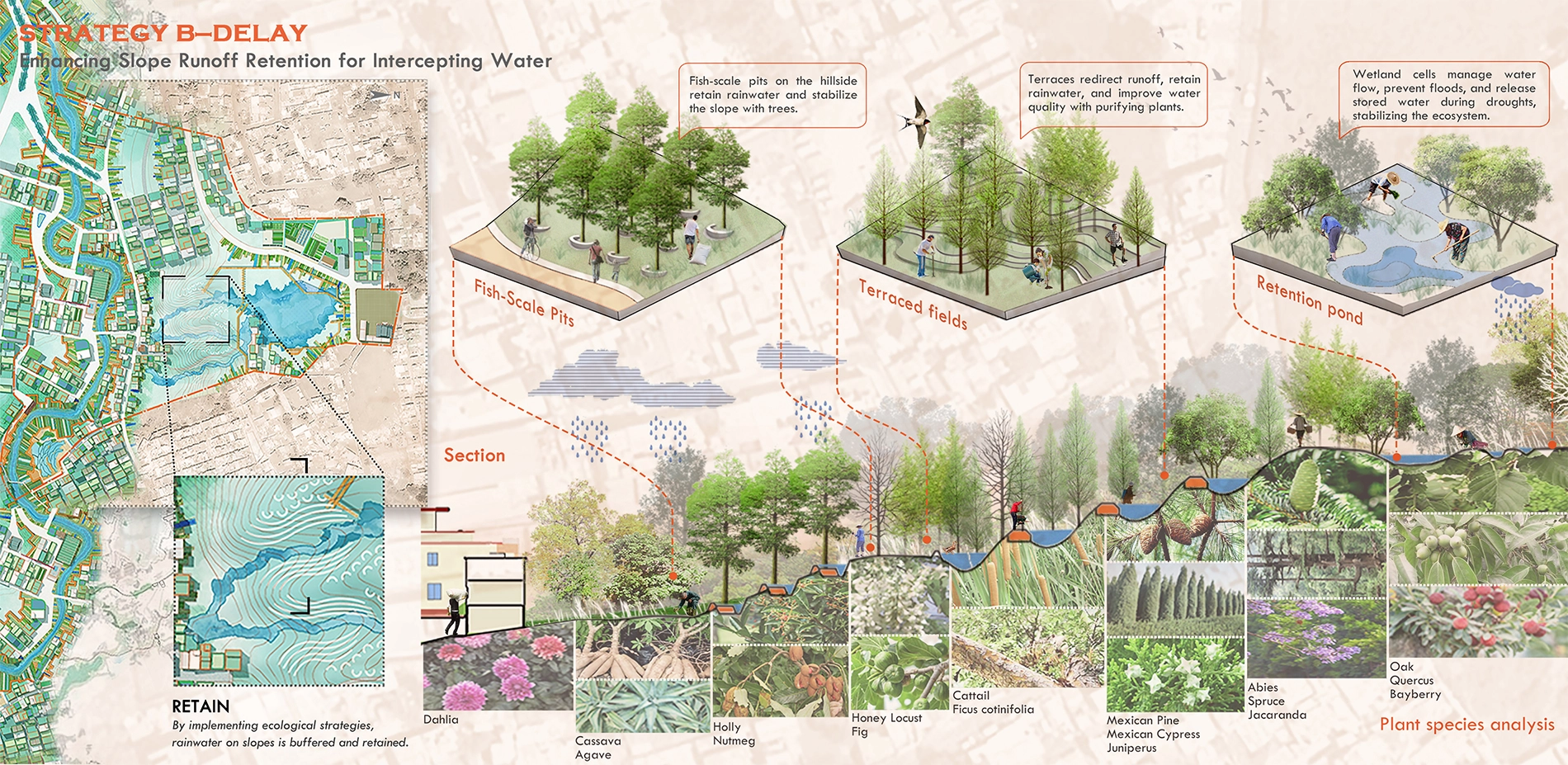
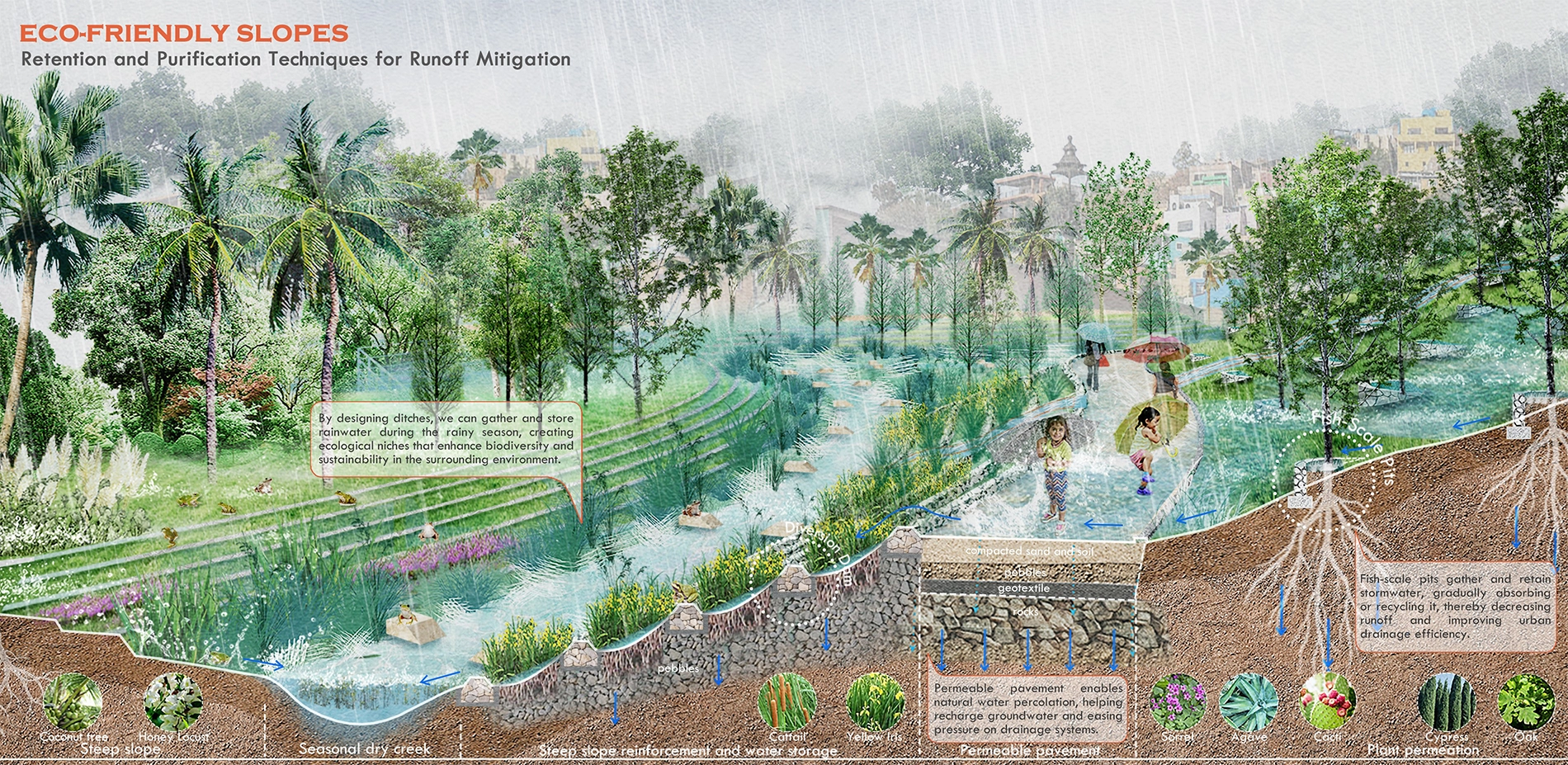
Strategy B: Delay
On slopes, we use fish-scale pits, terraces, and dams to slow rainwater flow and change runoff directions. These measures extend the time rainwater stays on slopes, preventing erosion, and nourishing green spaces and crops.
Strategy C: Retain
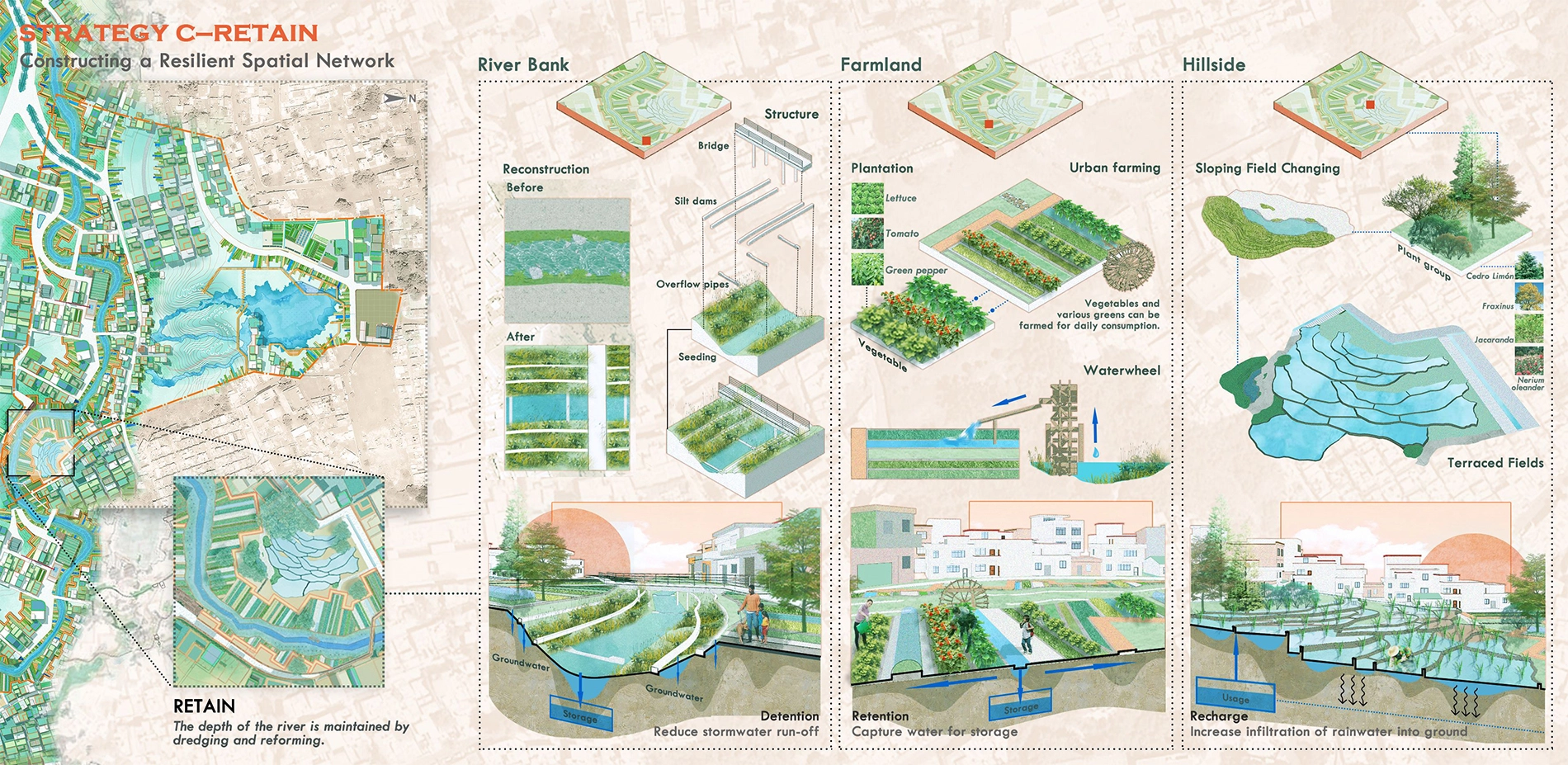
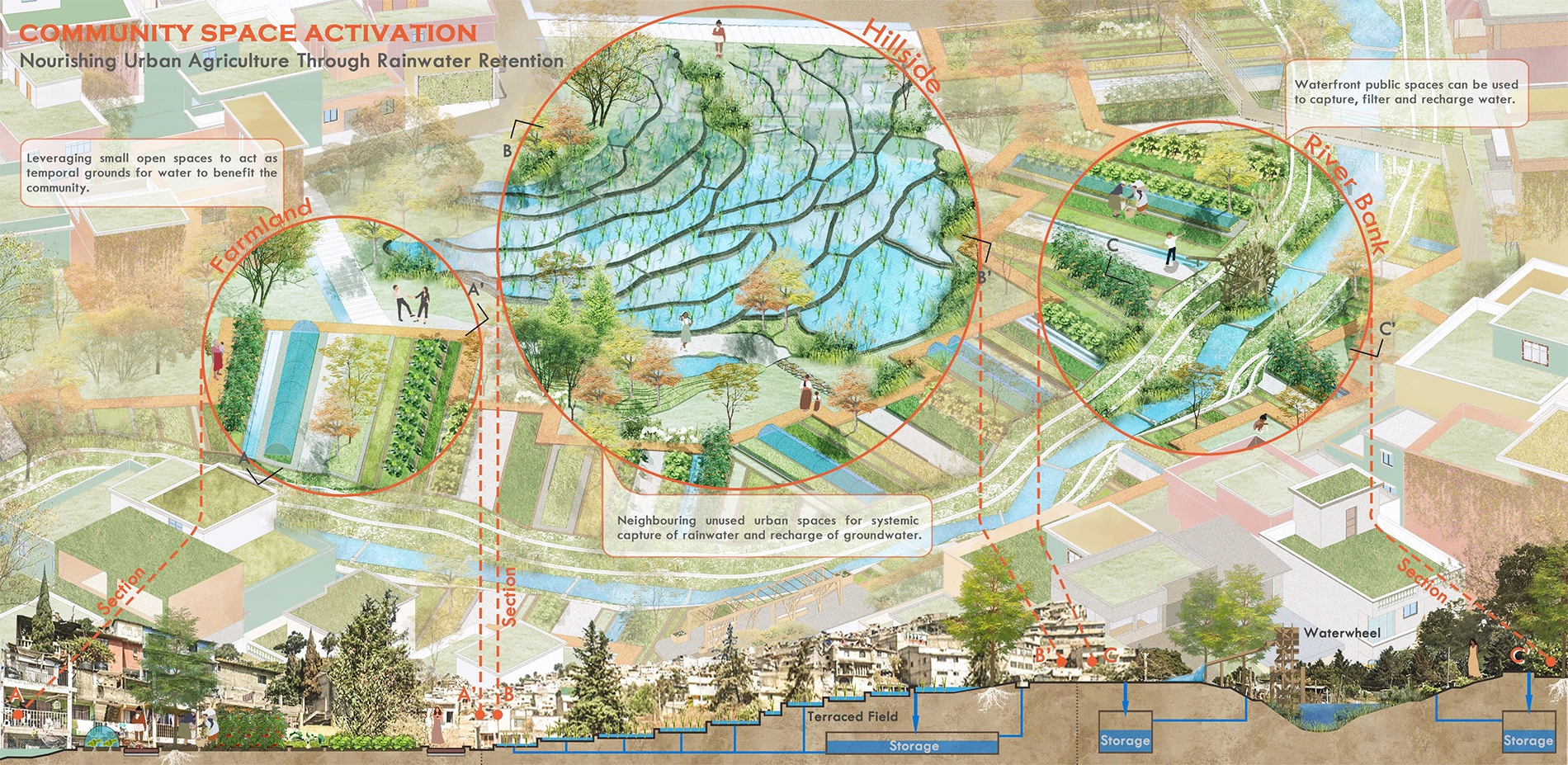
In low-lying areas, we design flexible public spaces to handle concentrated rainfall. These areas temporarily hold water during rainy seasons and transform into multifunctional spaces during dry seasons. Enhanced rainwater pipelines filter and store runoff, ensuring clean water collection. These spaces improve the city's rainwater system and incorporate Mexico's rainwater culture, becoming new gathering places for residents.
Strategy D: Reuse
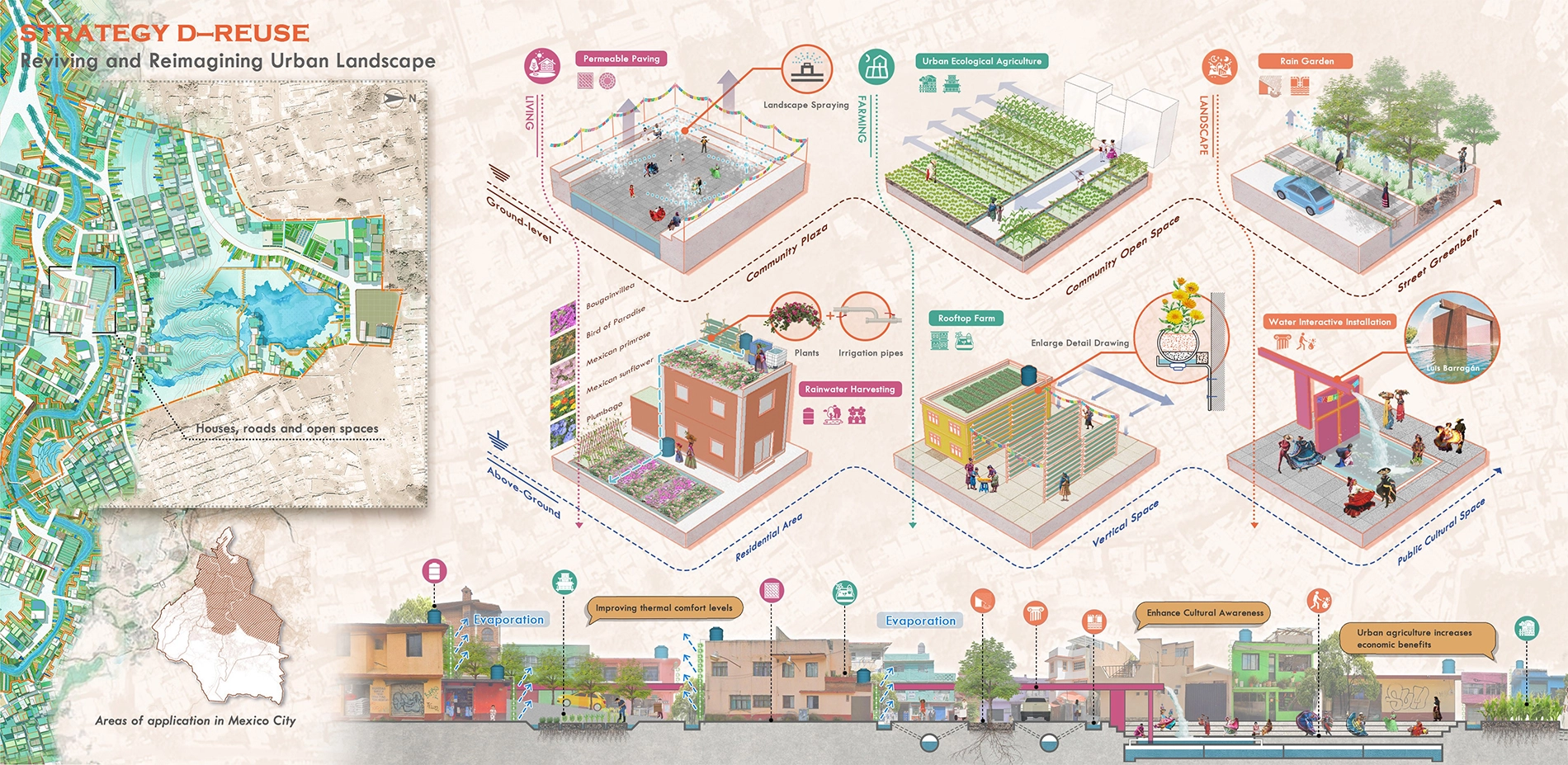
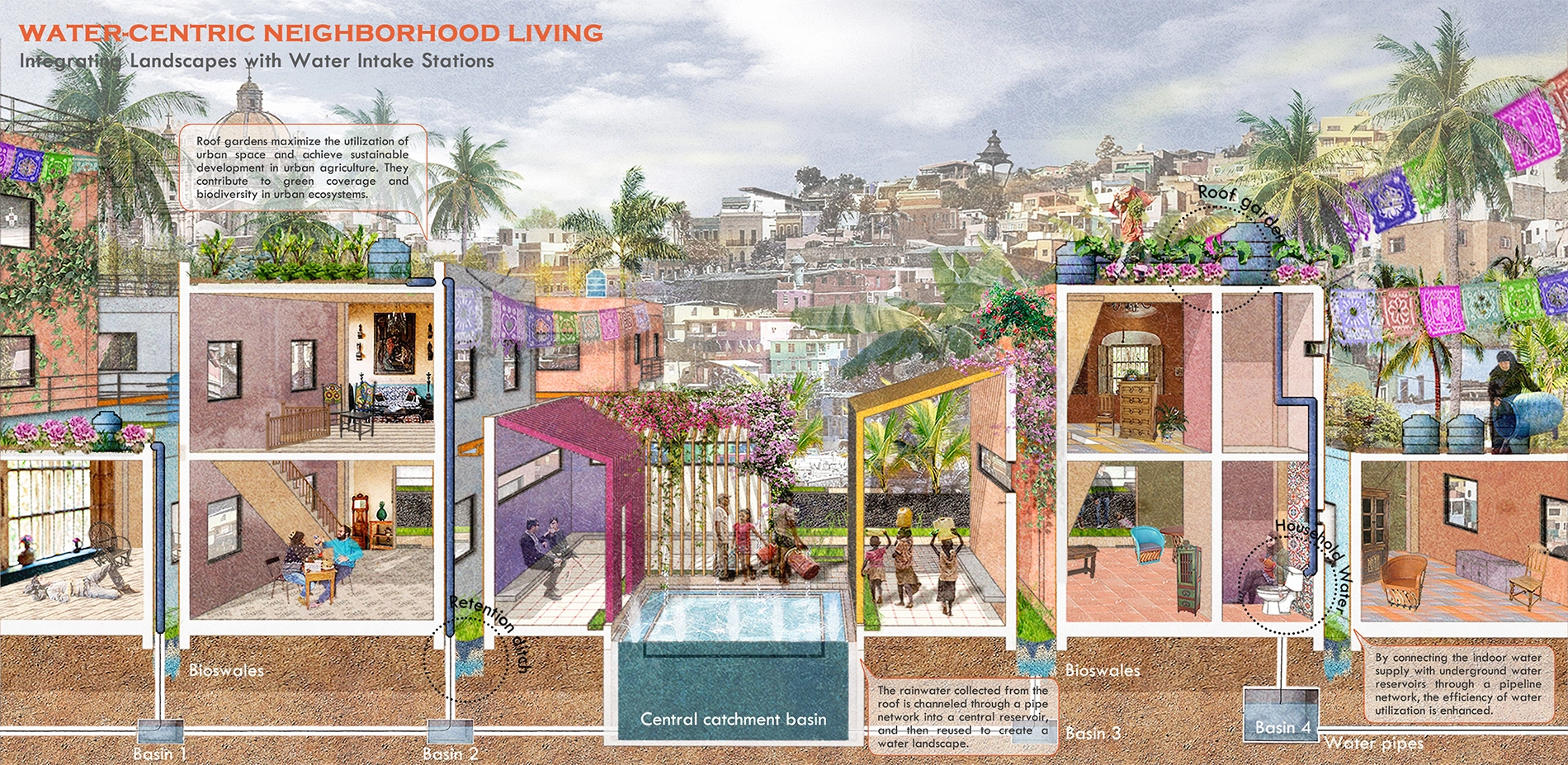
To maximize rainwater use, we integrate urban agriculture by redesigning rooftops, facades, and small spaces. Water stations supplement household use, rooftop tanks connect to home farm systems, and public space rainwater supports greenery and agriculture, providing cooling in summer. This approach meets water needs for living, economic activities, and public landscapes, reducing drainage pressure and improving urban environmental quality.
Vision
Using rainwater, we aim to transform Mexico City from water-challenged to water-enriched through landscape infrastructure, enhancing life quality, economic productivity, and ecological environment while allowing cultural practices to thrive.
-
- Ficus cotinifolia
- Jacaranda
- Oak
- Allspice
- Honey locust
- Fig
- Juniper
- Fir
- Spruce
- Montezuma Cypress
- Bayberry
- Mexican Powderpuff
- Agave
- Cacti
- Cassava
- Cattail
- Dahlia
- Desert Zinnia
- Hydrangea
Related Awards
Honor Award, Urban Design
Urban Balcony Embracing Rewilded Nature
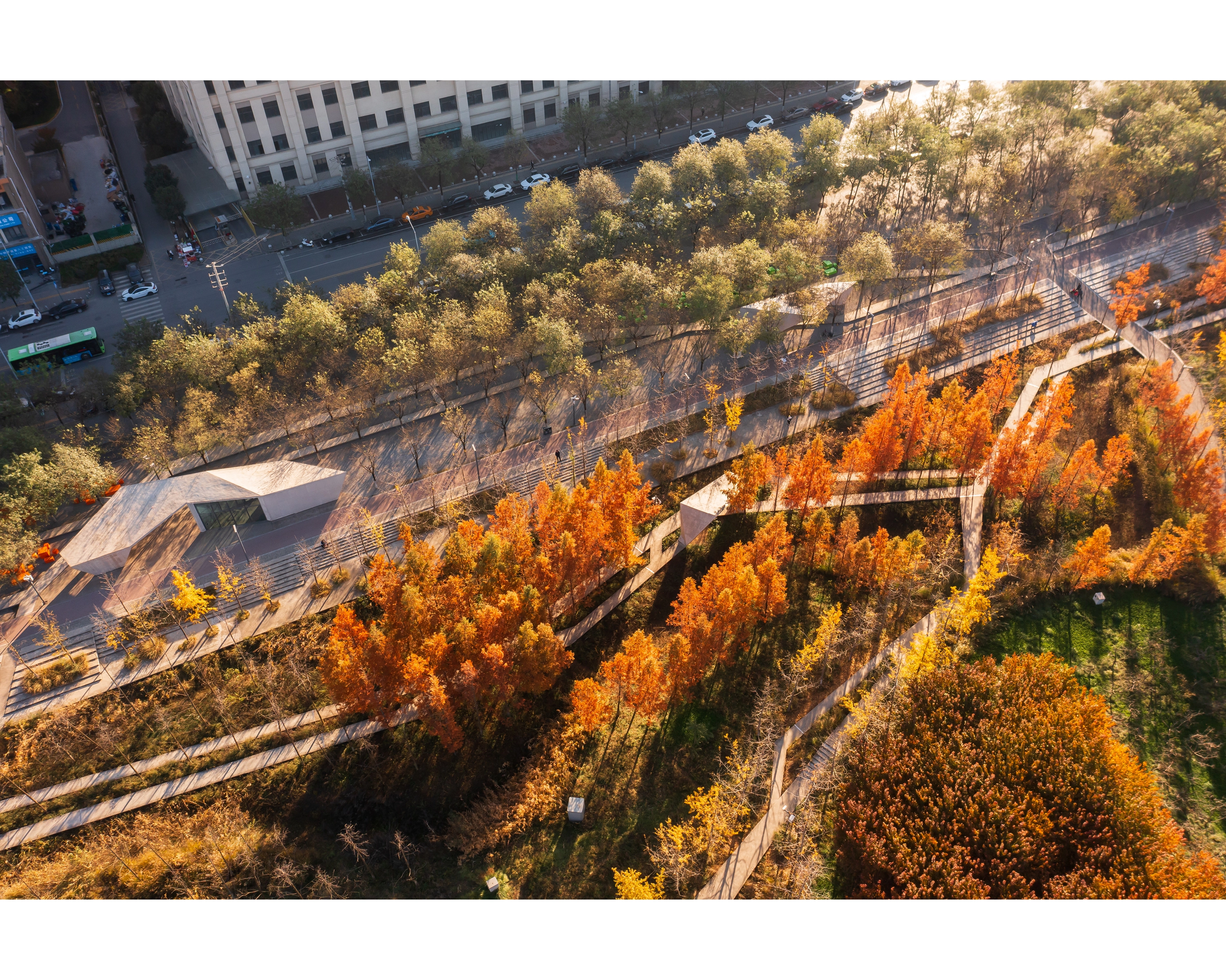
In a densely populated urban setting, this project unveils a rewilded natural area, revitalizing a former concrete waterway through innovative stormwater management. The design introduces a linear activity zone extending over four residential blocks, tailored for diverse social interactions. It underscores the vital role of landscape architecture in enriching the social and ecological aspects of urban living.
Related Articles

Awards
ASLA 2026 Professional Awards: Early Bird Deadline Approaching January 9
Submit your best work by the January 9 Early Bird deadline to save. Get insider tips at the January 7 Professional Awards Webinar. Student and other professional deadlines follow in February.
Dec 16 2025