

.webp?language=en-US)

.webp?language=en-US)
Advertisement
Healthy Communities For All
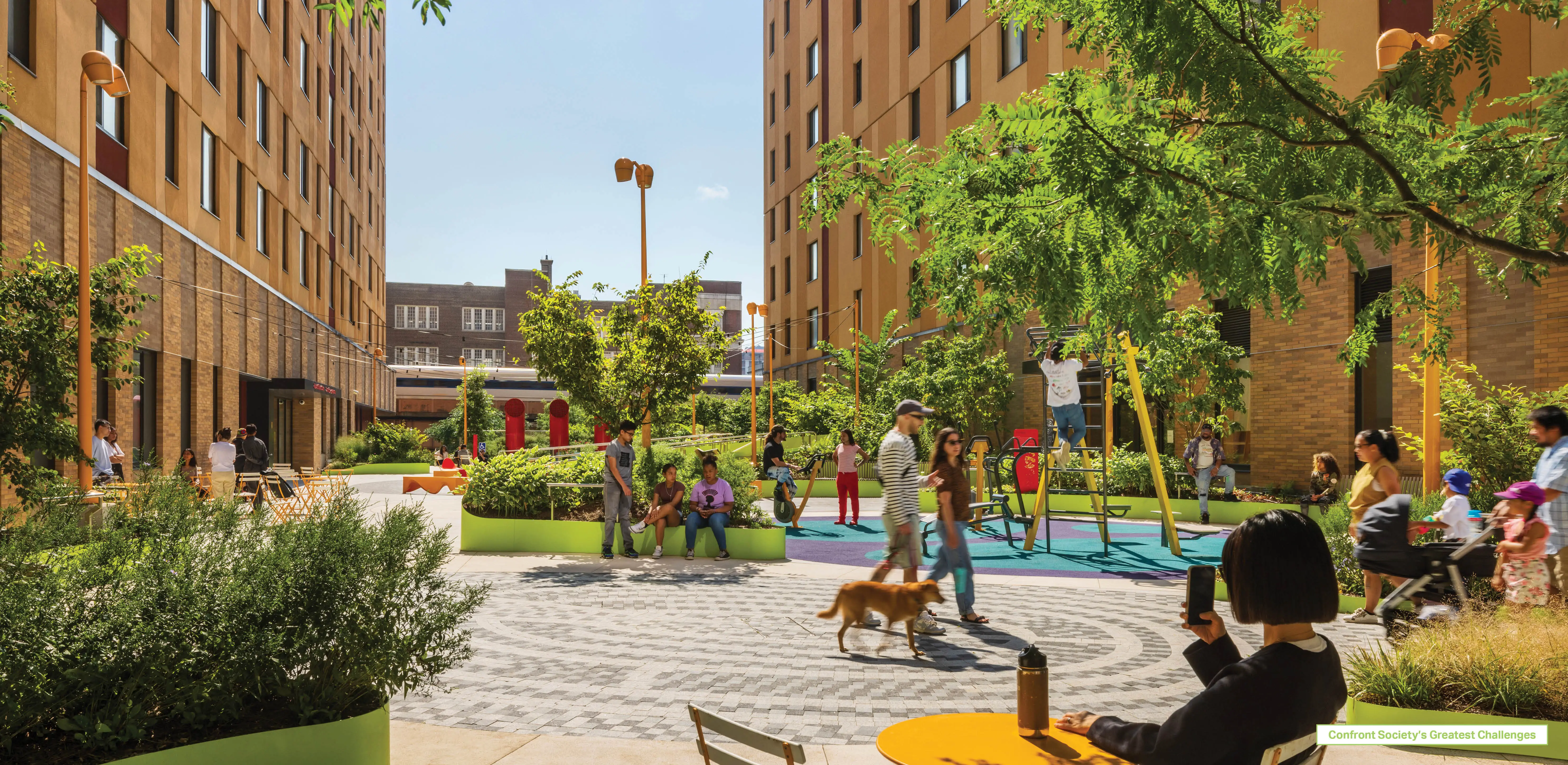
Landscape architects plan and design healthy, resilient, livable communities – from large-scale community developments to safe walkable neighborhoods. Landscape architects plan and design communities in a manner that fosters sustainable development, generates jobs, and encourages healthy lifestyles.
Community Development Block Grants (CDBG)
-
The Community Development Block Grant (CDBG) Program provides annual grants on a formula basis to states, cities, and counties to develop viable urban communities by providing decent housing and a suitable living environment, and by expanding economic opportunities, principally for low- and moderate-income persons. The program is authorized under Title 1 of the Housing and Community Development Act of 1974, Public Law 93-383, as amended 42 U.S.C. 5301 et seq. The program was designed to reinforce several important values and principles of community development:
- CDBG's flexibility empowers people and communities to design and implement strategies tailored to their own needs and priorities.
- CDBG's emphasis on consolidated planning expands and strengthens partnerships among all levels of government and the private sector in enhancing community development.
- CDBG's technical assistance activities and set-aside for grantees builds the capacity of these partners.
-
On January 10, 2024, HUD published a Proposed Rule in the Federal Register which would enable much needed revisions and updates to the requirements governing the Community Development Block Grant (CDBG) and Indian CDBG (ICDBG) programs.
All public comments were due by March 11, 2024. The Public Comment period has closed.
-
Eligible grantees are as follows:
- Principal cities of Metropolitan Statistical Areas (MSAs)
- Other metropolitan cities with populations of at least 50,000
- Qualified Urban Counties with populations of at least 200,000 (excluding the population of entitled cities)
- States and insular areas
Eligibility for participation as an entitlement community is based on population data provided by the U.S. Census Bureau and metropolitan area delineations published by the Office of Management and Budget. HUD determines the amount of each entitlement grantee’s annual funding allocation by a statutory dual formula which uses several objective measures of community needs, including the extent of poverty, population, housing overcrowding, age of housing and population growth lag in relationship to other metropolitan areas.
Eligibility for participation as a state - 49 States and Puerto Rico participate in the State CDBG Program. HUD continues to administer the program for the non-entitled counties in the State of Hawaii because the State has permanently elected not to participate in the State CDBG Program. HUD distributes funds to each State based on a statutory formula which takes into account population, poverty, incidence of overcrowded housing, and age of housing.
States participating in the CDBG Program award grants only to non-entitlement Units of General Local Government (UGLG).
-
CDBG funds may be used for activities which include, but are not limited to:
- Acquisition of real property
- Relocation and demolition
- Rehabilitation of residential and non-residential structures
- Construction of public facilities and improvements, such as water and sewer facilities, streets, neighborhood centers, and the conversion of school buildings for eligible purposes
- Public services, within certain limits
- Activities relating to energy conservation and renewable energy resources
- Provision of assistance to profit-motivated businesses to carry out economic development and job creation/retention activities
Each activity must meet one of the following national objectives for the program: benefit low- and moderate-income persons, prevention or elimination of slums or blight, or address community development needs having a particular urgency because existing conditions pose a serious and immediate threat to the health or welfare of the community for which other funding is not available. Generally, the following types of activities are ineligible:
- Acquisition, construction, or reconstruction of buildings for the general conduct of government
- Political activities
- Certain income payments
- Construction of new housing (with some exceptions)
-
A grantee must develop and follow a detailed plan which provides for, and encourages, citizen participation and which emphasizes participation by persons of low- or moderate-income, particularly residents of predominantly low- and moderate-income neighborhoods, slum or blighted areas, and areas in which the grantee proposes to use CDBG funds. The plan must:
- Provide citizens with reasonable and timely access to local meetings, information, and records related to the grantee's proposed and actual use of funds
- Provide for public hearings to obtain citizen views and to respond to proposals and questions at all stages of the community development program, including at least the development of needs, the review of proposed activities, and review of program performance
- Provide for timely written answers to written complaints and grievances
HUD introduced the eCon Planning Suite, including the Consolidated Plan template in IDIS OnLine and the CPD Maps website. By creating a more cohesive planning and grants management framework and providing better data and a tool for analysis, the eCon Planning Suite supports grantees and the public to assess their needs and make strategic investment decisions. HUD grantees are now required to submit their Consolidated Plan and year one Annual Action Plan using the Consolidated Plan template in IDIS OnLine. If grantees have an approved multi-year Consolidated Plan, they are not required to use IDIS to submit their Annual Action Plan until the next multi-year strategy is due.
Public School Green Rooftop Program Act
-
The American Society of Landscape Architects (ASLA) believes the skillful use of vegetation in built environments is integral to the quality of life, sustainability, and resiliency. ASLA encourages applied research and best practices in which vegetation significantly improves environmental conditions, economic stability, ecosystem services, and human health and culture.
Additionally, ASLA recognizes the presence and needs of underserved communities and works to balance socioeconomic impacts through environmental and community planning and design. -
More frequent climate impacts like extreme weather have contributed to alarming rates of higher temperatures and heat waves nationwide. These events have caused increased energy demands for heating and cooling and caused energy prices to surge. Additionally, as cities become more densely populated, green space becomes scarce leading to numerous economic, environmental, and public health challenges. Including increased green infrastructure and other nature-based solutions like green roofs into the built environment will help to mitigate the impacts of climate change and also provide important economic benefits.
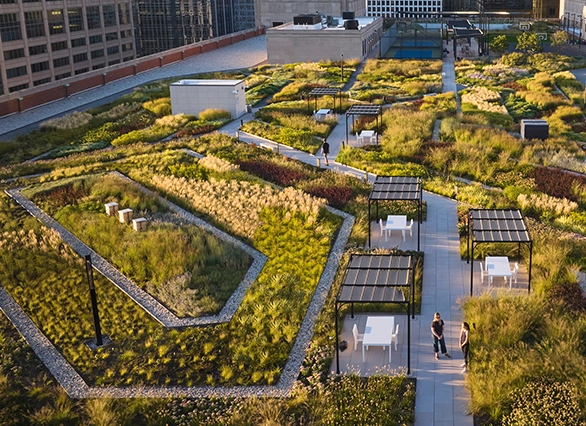
Green roofs provide economic benefits that conventional roofs do not, including lower energy costs, water use, stormwater runoff, landfill waste, and building operating expenses. Additionally, green roofs address environmental and public health challenges by improving air and water quality, mitigating excess heat, and creating habitats for various plants and wildlife, including pollinators. Adding much-needed green space to the built environment also decreases environmental injustices experienced by many underserved communities. Green roofs also have positive impacts on student performance and can provide opportunities for hands-on learning about nature-based solutions, environmental studies, climate change, biodiversity, and more.
Landscape architects are leaders in planning and designing green roofs—from designing master plans, including selecting appropriate vegetation, to overseeing construction, to assisting with maintenance and monitoring activities. Landscape architects are equipped to steward green roof projects through grant selection, design, construction, academic evaluation, and more. -
On June 21, 2023, Representative Nydia M. Velazquez (NY) reintroduced H.R. 4270, the Public School Green Rooftop Program Act. Specifically, the measure:
- Amends the Energy Policy and Conservation Act to authorize State energy conservation plans to allow grants for green roofs at public schools.
- Allows additional funding for up to five years for the maintenance of the green roof.
- Prioritizes projects for public schools that serve low-income and high-pollution neighborhoods.
- Prioritizes projects that meet performance and nationally recognized standards for green roofs, including The Sustainable SITES Initiative® (SITES®).
- Recognizes the role of landscape architects as leaders in planning and designing green roofs.
-
To date, this measure has not been introduced in the current 119th Congress (2025-2026).
-
Representative Nydia M. Velazquez (NY), and cosponsors.
-
Velázquez Reintroduces Bill to Bring Green Rooftops to Public Schools. June 21, 2023.
Landscape Architecture Solutions to Extreme Heat
Landscape Architecture Solutions to Biodiversity Loss
ASLA Press Release: ASLA Endorses Public School Green Rooftop Program Act. June 21, 2023.
ASLA Green Roof
U.S. Environmental Protection Agency: Design Guidelines and Maintenance Manual for Green Roofs in the Semi-Arid and Arid West. November 10, 2010.
U.S. Environmental Protection Agency: Heat Islands—Using Green Roofs to Reduce Heat Islands. July 13, 2022.
U.S. Environmental Protection Agency: Climate Change Impacts on Energy. December 13, 2022.
U.S. Environmental Protection Agency: Nonattainment Areas for Criteria Pollutants (Green Book). May 1, 2023.
U.S. Department of Energy: Federal Energy Management Program—Federal Technology Alert, Green Roofs. August 2004.
U.S. General Services Administration: Green Roofs. November 15, 2021. -
Air Quality
Climate Change and Resilience
Environmental Education
Environmental Justice
Environmental Sustainability
Human Health and Well Being
Livable Communities
Urban and Local Agriculture
Vegetation & Built Environment
Water Quality and Conservation
Wildlife and Wildlife Habitat
Urban Growth and Development
Revitalizing America's Schoolyards Act
-
The American Society of Landscape Architects (ASLA) believes skillful use of vegetation in built environments is integral to quality of life, sustainability, and resiliency, including at schools. School grounds that include certain vegetation and other nature-based solutions can serve as extensions of the classroom by providing opportunities for hands-on learning, environmental education, physical activity, and social interaction, while strengthening community resilience.
-
School districts are one of the largest land managers in almost every city and town in the United States. The land management choices made by schools and districts directly impact students’ experiences and the well-being of the surrounding community. On-campus green space, including revitalized schoolyards, can provide hands-on learning experiences for students and have community-wide resilience benefits. Such benefits include stormwater management, rainwater collection, carbon sequestration, air quality improvement, wildlife habitat restoration, extreme heat mitigation, and ecological resiliency.
Revitalized schoolyards are park-like outdoor environments at elementary or secondary schools, which may include climate-appropriate trees, plants, cultivated gardens, outdoor meeting and gathering areas, natural playgrounds, and other elements designed for the students and surrounding community.
Landscape architects have the technical knowledge and creative skills necessary to transform underused outdoor spaces into park-like environments and outdoor classrooms. From developing master plans, leading community engagement, creating designs, and assisting with outdoor education lesson plans, landscape architects are equipped to steward these projects through grant selection, design, construction, academic evaluation, and more.
-
The Revitalizing America's Schoolyards Act, introduced by Senator Martin Heinrich (NM) and Representative Summer Lee (PA), establishes a competitive grant program administered by the Department of Education to support the planning and implementation of revitalized schoolyards. Specifically, the bill will:
- Create a Revitalizing America's Schoolyards Grant Program:
- Establishes competitive planning and implementation grants for eligible schools, educational agencies, and nonprofit partners.
- Awards grants through biennial cohorts with planning grants followed by implementation grants.
- Support Nature-Based Schoolyard Design:
- Defines revitalized schoolyards as park-like outdoor learning environments that strengthen ecological systems, promote nature play, and improve health and well-being.
- Encourages features such as trees, gardens, outdoor classrooms, gathering spaces, pollinator habitat, natural playgrounds, green infrastructure, and stormwater management.
- Support Planning and Implementation Projects:
- Provides funding for planning, design, construction documents, community engagement, and implementation.
- Supports educator professional development and long-term stewardship of revitalized schoolyards.
- Prioritize Underserved Communities:
- Gives competitive priority to schools serving high percentages of students eligible for free or reduced-price meals.
- Prioritizes investments in schools with low tree canopy and high vulnerability to extreme heat or flooding.
- Reserves 5 percent of annual funding for schools operated by the Bureau of Indian Education and Tribal schools.
- Promote Best Practices and Long-Term Success:
- Requires projects to include long-term maintenance plans and community participation.
- Establishes a national clearinghouse of best practices, design resources, lesson plans, partnership models, and technical assistance for outdoor learning environments.
- Create a Revitalizing America's Schoolyards Grant Program:
-
On March 26, 2026, Sen. Martin Heinrich (NM) introduced the Revitalizing America's Schoolyards Act of 2026 (S. 4258) in the Senate. Companion legislation, H.R. 8303, was introduced in the House by Rep. Summer Lee (PA).
-
Senate: Senator Martin Heinrich (NM).
House: Representative Summer Lee (PA) and cosponsors.
-
Revitalizing America's Schoolyards Act: Talking Points | Leave Behind
Supporting Organizations of the Revitalizing America’s Schoolyards Act of 2026.
Green Schoolyards America: Revitalizing America’s Schoolyards Act of 2026
ASLA: Professional Practice—Health Benefits of Nature.
ASLA: Landscape Architecture Magazine—The Schoolyard Is Sick. June 25, 2019.
Designing Outdoor Environments for Children: Landscaping Schoolyards, Gardens and Playgrounds (2006), Lolly Tai, PhD, RLA, FASLA.
Environmental Justice for All Act
-
ASLA believes that all persons should have equitable access to a healthy environment in which to live, work, and learn. To that end, ASLA encourages policies and practices that proactively recognize and equitably address the needs and concerns of underserved populations.
-
According to the U.S. Environmental Protection Agency, environmental justice is achieved when all people regardless of race, color, national origin, gender, or income 1) live in neighborhoods free of health hazards, 2) are able to enjoy equal access to safe, healthy places, and 3) participate meaningfully in the planning of their communities.
In addition to environmental burdens and lack of access, marginalized groups have not historically had a voice in community planning and policymaking, and therefore have not been able to advocate for design changes that would benefit their own health and well-being. Design for environmental justice invites everyone to the table to consider policy and design decisions using participatory and inclusive tools. Landscape architects are uniquely qualified to work with communities envisioning and planning the places where they live, work, learn, and recreate. -
The Environmental Justice for All Act would create new federal opportunities that landscape architects can access to help create outdoor recreation spaces in underserved communities. It also aims to strengthen environmental planning standards, public participation in new project development, legal remediation for past environmental injustices, and executive agency environmental impact reporting,
Specifically, the measure would:
- Establish the Outdoor Recreation Legacy Partnership Grant Program in the Department of the Interior. This 100 percent matching grant program would help fund project expenses related to land acquisitions for new parks, renovation of existing recreation facilities, and development of infrastructure supporting outdoor education and public land volunteerism. Priority will be given to projects that take place within underserved communities, empower the youth in these communities, and significantly enhance access to parks and recreational opportunities.
- Establish the Transit to Trails Grant Program supporting projects that increase critically underserved communities' access to green space. Transit connections between communities and outdoor recreation include bus lines, bus rails, light rail, rapid transits, or personal rapid transits. The Department of Transportation will award grant funding to projects that specifically connect underserved communities with public and private lands, waters, parks, and monuments. Individual grants provided under this program will range between $25,000 and $500,000.
- Codify and bolster a 1994 Executive Order 12898 by directing federal agencies to develop environmental justice strategies and regularly report on implementation and progress. The Environmental Justice for All Act also ensures that federal agencies include diverse communities in public health research, data collection, and analysis.
- Require federal agencies to provide early and meaningful community involvement opportunities under the National Environmental Policy Act (NEPA) when proposing an action affecting an environmental justice community. It ensures robust Tribal representation throughout the NEPA process for an activity that could impact an Indian Tribe, including activities impacting off-reservation lands and sacred sites. Require consideration of cumulative impacts in permitting decisions under the Clean Water Act and the Clean Air Act and ensure that permits will not be issued if the project cannot demonstrate a reasonable certainty of no harm to human health.
-
To date, this measure has not been introduced in the current 119th Congress (2025-2026).
-
S. 919: Senator Tammy Duckworth (IL), and cosponsors.
H.R. 1705: Representative Raul Grijalva (AZ), and cosponsors. -
Natural Resources Committee Hosts Legislative Hearing on Environmental Justice for All Act
Landscape Architecture Solutions to Extreme Heat
Natural Resources Committee: Environmental Justice
Environmental Justice For All Fact Sheet
Environmental Justice & Landscape Architecture: A Students’ Guide
White House: Environmental Justice
Climate and Economic Justice Screening Tool
Environmental Justice Research at the EPA
175 Environmental, Environmental Justice, Civil Rights, and Allied Organizations Sign Letter on H.R. 2021
Mapping tools help Ohio cities chart course for environmental justice
Environmental justice law in New York
Health & Well-Being
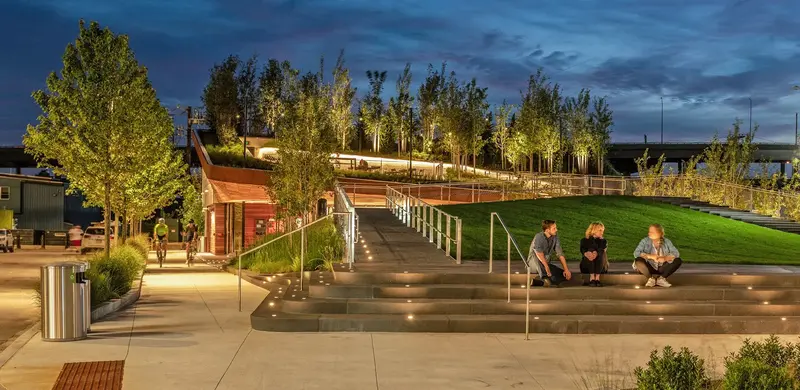
Landscape architects design with nature to create places that promote physical, mental, and community health.