

.webp?language=en-US)


Public Practice Landscape Architects Spotlight
Last month, ASLA released an online guide outlining 10 distinctive aspects of public practice work, providing an overview of public practice landscape architecture. Its mission is to design, implement, and manage functional, liveable, safe, and attractive places for the public. These spaces are often developed with a larger social goal in mind.
Public practice, including non-profit and governmental work, offers unique opportunities and challenges for practitioners. Less than ten percent of ASLA’s membership identify as public practitioners. They work for local, state, and federal government agencies, universities and colleges, transit agencies, or parks and arboreta. Many of these ASLA members have found their way to public practice after years in private practice. They seek to have an impact on public spaces for the common good.
To help illustrate this landscape architecture practice type, we are releasing a handful of profiles of public practice landscape architects (you can read the first set right here). This installment includes:
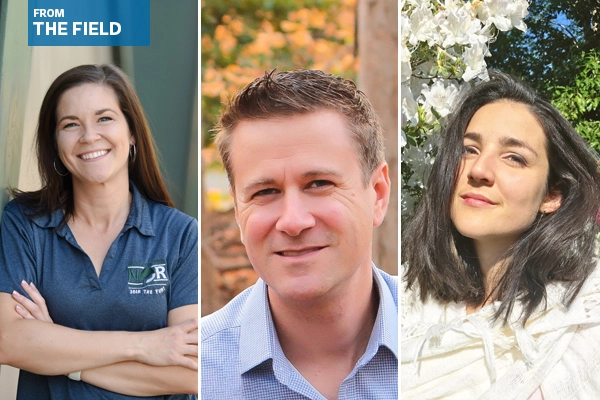
Steph Thisius-Sanders, PLA, ASLA Planning & Construction Director North of the River Recreation and Park District
Brandon Hartz, ASLA, PLA, SITES AP, LEED AP Senior Landscape Architect U.S. General Services Administration (GSA)
Irene Cambeyro Gonzalez, Associate ASLA, ENV SP Park Planner 2 Miami-Dade County Parks, Recreation and Open Spaces Department
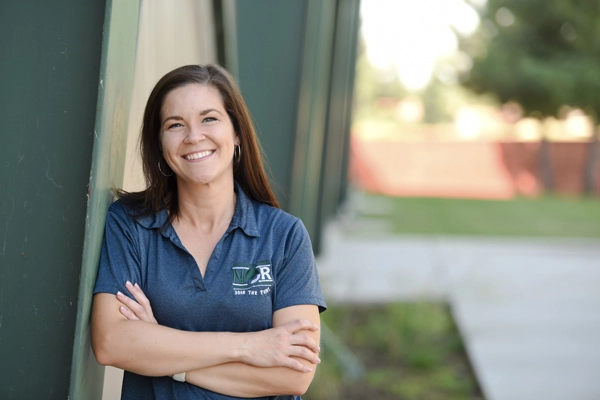
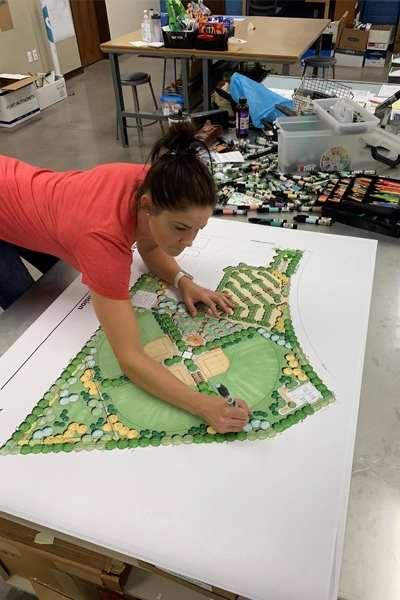
Steph Thisius-Sanders, PLA, ASLA Planning & Construction Director North of the River Recreation and Park District
What inspired you to pursue a career in landscape architecture, and how did you find your way into public practice?
I stumbled upon landscape architecture in high school when I was completing an independent study and managing the greenhouse. The agriculture teacher poked fun at me for never taking one of his classes and thus, I took Intro to Horticulture to fill credits my senior year. Part of the class was dipping into landscape design and architecture, and I thought it was so interesting that a career path could be so broad but practical.
I spent five years at North Dakota State University and knew instantly after the first year that landscape architecture was what I was meant to do. Our studio was close, many of whom I still stay in contact with today. Even though each of us had different concentrations within the major, we all had strengths that made even individual projects collaborative. I loved the team environment and the ability to work with architecture and engineering students really piqued my interest in feasibility on projects. I knew I wanted to learn more about the construction process so the future projects that I would work on would not only be functional, but practical and cost-effective.
After graduation, I landed in California working for a design-build landscape contractor for about six years, both in construction and design. I’m a hands-on person, so being outside with the crews gave me the opportunity to see the end result, but also being in the office on the front end completed the whole cycle of project concept to completion.
In 2013, the opportunity of a lifetime presented itself at North of the River Recreation and Park District (NOR)—the planning and construction director was retiring after 31 years of service. What caught my attention with the position is the broad spectrum of what I’d be doing—park land development and planning for 215 square miles of District jurisdiction. NOR is a special district, created by the public to serve a special purpose—in our case, recreation and park services for the north Bakersfield community. We are not a city nor a county, but have most of the same dominion, not including land use authority. What sold me was that my position was serving the community that I live in, creating spaces that had to work in multiple ways and it included construction administration, contracting, and working with a broad-spectrum audience—but as an owner/operator.
What I didn’t know is that it’s incredibly fun, no day has ever been the same, there are many more challenges than anticipated, and other days are (literally) a walk in the park. Over the past decade, I’ve:
- overseen building construction, environmental issues, long range planning, recreation needs assessments, day-to-day maintenance operations, and of course, plenty of park concepts;
- been involved with state and local legislation;
- done more work as a land planner than I ever anticipated;
- assisted other local agencies with public park feasibility and practical applications of park design and construction; and
- completed multiple grant applications/awards and administration.
I have literally become a jack of all trades, master of none. I’ve learned so much of what landscape architecture traditionally isn’t and made it my business to find out ‘what else can I do?’ So much of my work moves at the speed of government and so I had to pivot early on from the project goal-oriented mindset of the private sector to a process-driven mindset. My job satisfaction truly comes from the process, routines take the place of goals, and in return, by not chasing hard goals, objectives and successes find their way into each week in different ways.
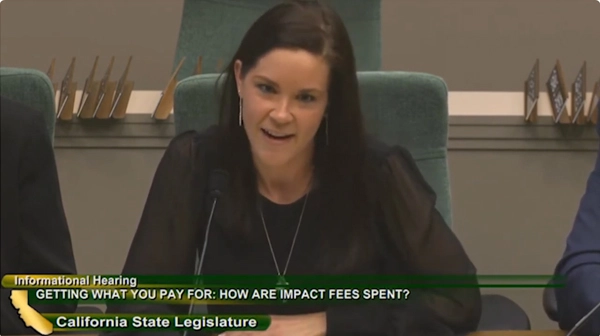
Can you share a favorite project you have worked on as a public practice landscape architect? What is the impact it has had on the community?
Most tasks feel like a full-blown project, just because it’s not as simple as point A to point B! My favorite project has little to do with landscape architecture and more about architecture, operations, and long-range planning—it was the construction of NOR’s new administrative offices in 2017. After being at the location where all of the District began in 1955, annexations and population growth realized the need to centralize our operations to better serve our community. After two-and-a-half years of architectural concepts, all done in house, we contracted with a design-build general contractor for the construction of approximately 10,000 sq. ft. of offices, warehouse storage for documents and recreation equipment, IT servers, a more efficient print shop, conference space, and typical office amenities. It was an addition to our newest community center, expanding the facility to nearly 45,000 sq. ft. We combined the operations of three-and-a-half different locations into one, housing human resources, creative services and marketing, finance, the general manager, recreation administration, maintenance, and planning all under one roof.
It was daunting to understand how each department operated but also related to one another, while anticipating needs for the District for the next 50 years, especially because I am not an architect by trade! My mother is a seasoned architectural drafter, so I knew enough to be dangerous going in; by the time we had a solid concept to provide for the RFP call, I knew where every outlet and CAT 6A port had to be. Construction documents took four months and from groundbreaking to moving day, construction was 11 months with minimal change orders. We were also able to provide a real-world construction scenario to a local high school architectural drafting class right next door to the park and seeing their awe and excitement for the process was very rewarding.
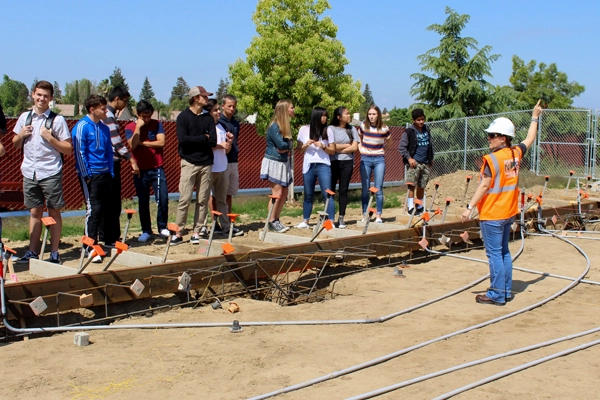
We’ve been in the new office for over five years and it’s hard to imagine what the old location was like because this office blends so well. The efficiencies of operations at the administrative center show in better customer service to the community and department collaboration is exceptional; let alone work is just plain fun. How could it not be—we’re a recreation and park agency! While I do miss the ability to swim laps on my lunch break (one of our pools was literally right outside my office door), to have my hand in such a historic moment of our agency, done efficiently and fiscally responsibly, is an honor. Oh—and of course, I designed and oversaw the park modifications and landscape architecture around the building addition.
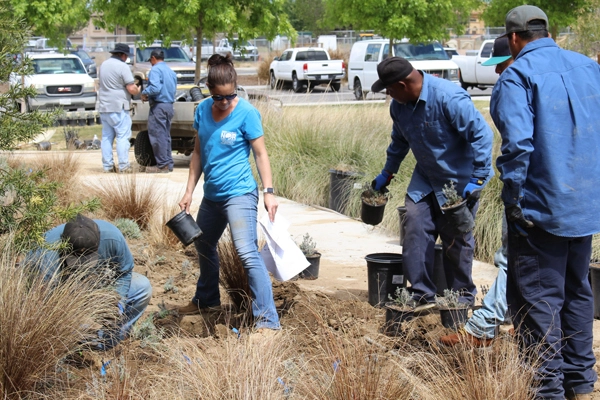
What is one thing you wish more people knew or understood about public practice landscape architecture?
We have the best collaboration between planning & construction and operations & maintenance (O&M) within our agency. In my experience, there’s plenty of public agencies that keep to their department and don’t reach out to other areas that may be impacted by a project. We have an excellent pulse on what works and doesn’t work for our maintenance staff, where our field crews spend most of their time, have streamlined specifications as small as fixtures so we’re able to bulk order dry goods, we know what gets vandalized the most and what holds the test of time. This is all incorporated into park planning and construction, because one-time construction of the park is usually a very significant sum up front, but on the back end, maintenance adds up very quickly with the annual costs of labor, repairs, replacements, equipment, and upkeep. Maintenance costs more than we think and that can be over half or the majority of an agency’s annual operating budget; to put it bluntly, that’s our tax dollars at work. It’s also the success or decline of a project; why construct it if we can’t maintain it? I didn’t realize the importance of the relationship between the landscape architect and maintenance until it became my business. While I may not get to design the trendiest award-winning parks, I know that they’re functional, cost-effective, fiscally responsible, and that generations of all types of families within our community will recreate in and enjoy our parks for decades to come.
What advice would you give to someone who is interested in a career in the public sector?
Don’t be afraid to explore the opportunities within the public sector, even if it means getting away from what is traditionally considered landscape architecture and is more in line with city/land planning. Lean into the love of learning and be comfortable with the uncomfortable. It’s really a motto for the profession in general, but in the public sector, I feel governance, expectations, and fiscal responsibility are always fluid. I’ve had to pivot tasks and plans based on vandalism or from public input that was received within an hour of a board meeting. Sometimes the perception of the public sector can be, “red tape, constraints, negativity, and regulations,” but I’ve found that there’s plenty of creativity in that as well—lots of “challenge accepted” and “we’ll find a way.” I didn’t anticipate not designing as much and I miss that at times, but I’ve also become more creative in other ways, such as writing, fun community ideas and interactions, recreation programming, and team collaboration across the agency.
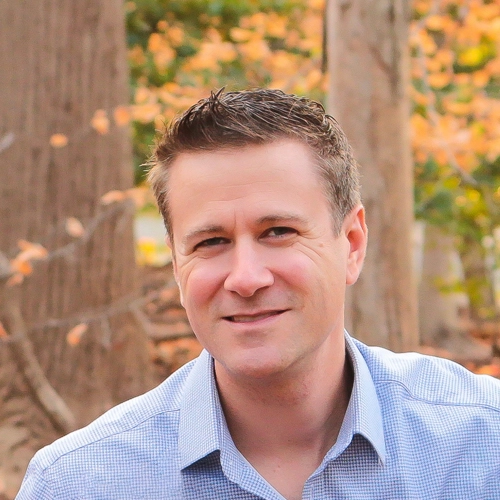
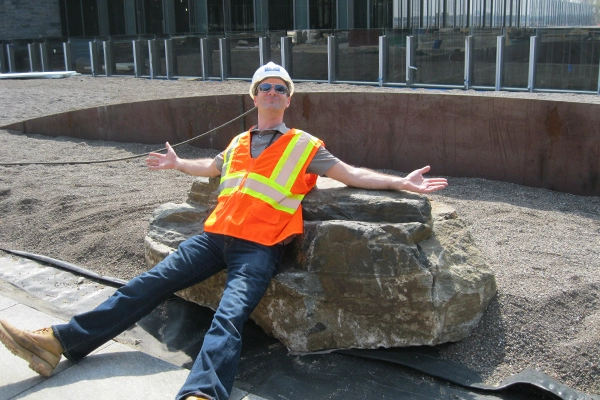
Brandon Hartz, ASLA, PLA, SITES AP, LEED AP Senior Landscape Architect U.S. General Services Administration (GSA)
What inspired you to pursue a career in landscape architecture, and how did you find your way into public practice?
I’m naturally a right-brain thinker so the field of landscape architecture was a perfect fit. After having worked in private firms for a long time and after much introspection I found that my core life principles better aligned with a position in public service and I made the switch.
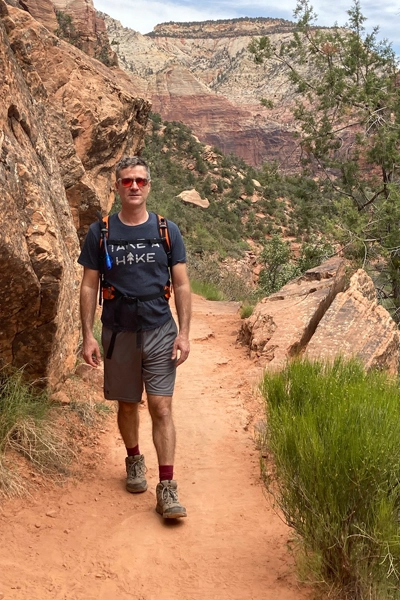
Can you share a favorite project you have worked on as a public practice landscape architect? What is the impact it has had on the community?
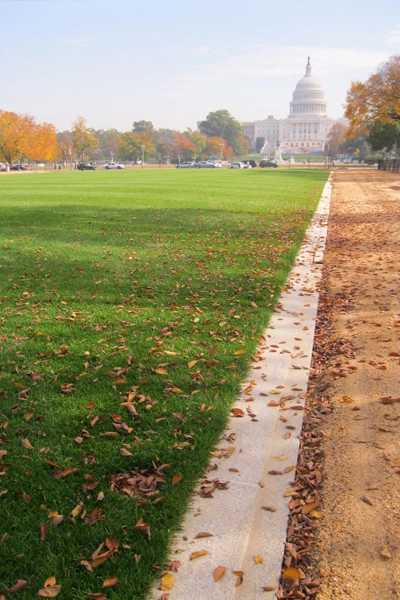
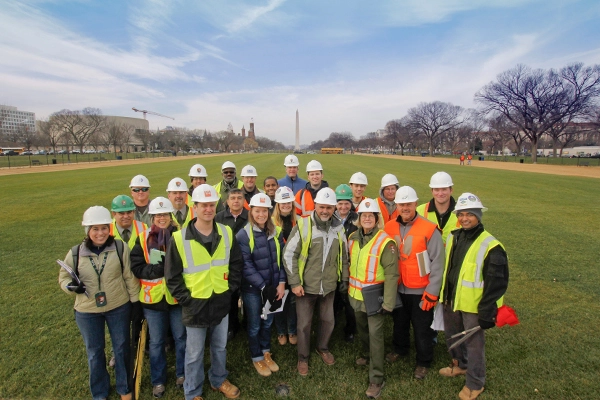
The arc of my career has been strongly influenced by two federal projects I worked on while in the private sector: the National Mall Turf and Soil Reconstruction and the US Coast Guard Headquarters. Both were featured in Landscape Architecture Magazine and the former won an ASLA Honor Award in 2020.
I recently helped secure $23.8M in funding for GSA to execute 13 landscape architectural projects in 10 different states. This investment at existing facilities will install smart climate and sustainable landscape solutions that will benefit government tenants and surrounding communities.
What is one thing you wish more people knew or understood about public practice landscape architecture?
Similar to private practice, there are so many different career paths in the public sector. Whether your interest is in project management, policy, design review, land stewardship, community engagement, permitting, research…there are so many different opportunities!
What advice would you give to someone who is interested in a career in the public sector?
Just because you’re a mid- or late career professional doesn’t mean you can’t transition to public service. A job in the public sector can be just as or even more rewarding than private practice. You can have tremendous impacts at scale.
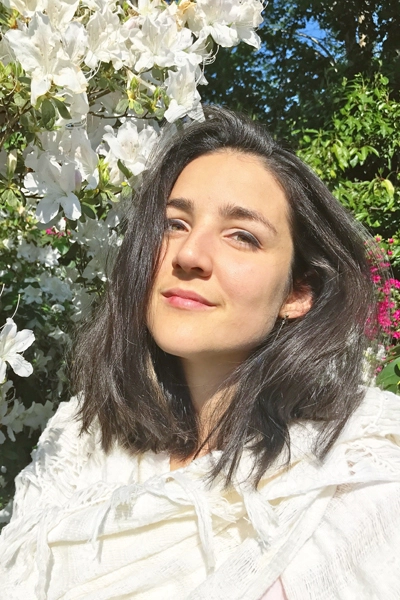
Irene Cambeyro Gonzalez, Associate ASLA, ENV SP Park Planner 2 Miami-Dade County Parks, Recreation and Open Spaces Department
What inspired you to pursue a career in landscape architecture, and how did you find your way into public practice?
Since childhood, nature has been my sanctuary, providing relief and inspiration amidst life's challenges. My career journey led me to the fulfilling realm of landscape architecture, where my love for nature and strong sense of altruism converged, inspiring me every step of the way. My interests in art, nature, urban photography, and a feeling of duty to help others not only directed me toward landscape architecture, but also to public practice. Being able to directly contribute a positive impact to the community by enhancing park services, social cohesion, and sustainable development, fills me with immense gratification in serving the greater good.
Can you share a favorite project you have worked on as a public practice landscape architect? What is the impact it has had on the community?
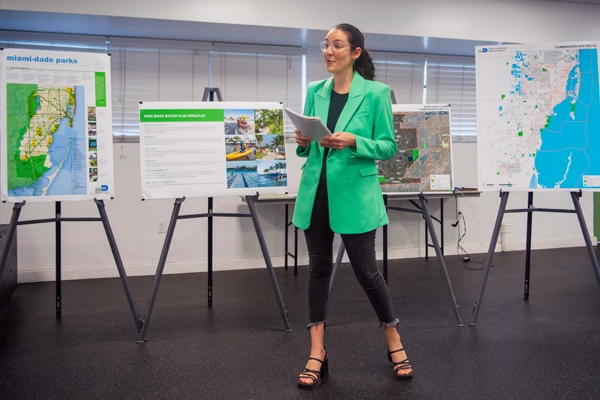
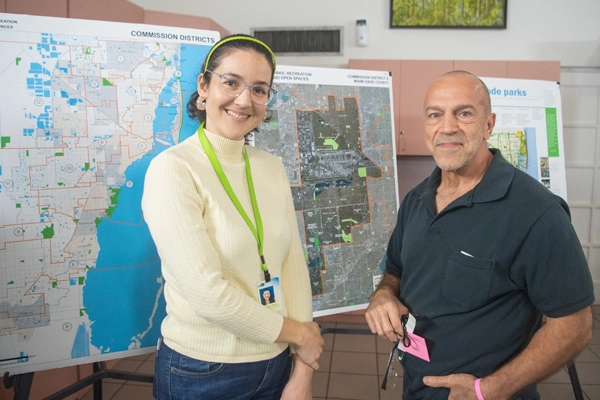
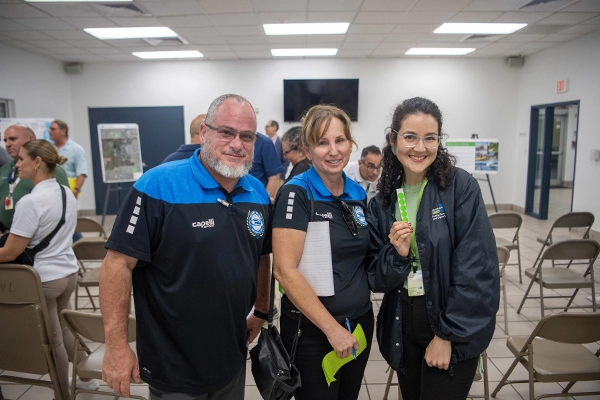
At Miami-Dade County, Parks, Recreation and Open Spaces (PROS), we regularly engage the community for projects- and parks-specific matters; however, we are now working on what has become my favorite project so far: Parks Needs Assessment public outreach. It is a county-wide, long-term effort to understand the community’s park-related needs. We're exploring what draws people to parks, their preferred spaces and activities, perceived benefits, how they discover a park’s opportunities, and much more. By gathering and analyzing the insights, we'll shape future planning and design, enhancing public landscapes at the neighborhood level. I'm passionate about meeting people face-to-face to discuss our work's impact, collaboratively improve our public landscapes, and see the outcome in the foreseeable future. Being a part of such an impactful initiative meant to enhance the lives of every individual residing in Miami-Dade County makes me feel I’m in the right place, and at the right time.
What is one thing you wish more people knew or understood about public practice landscape architecture?
I wish that public practice landscape architecture was not perceived to be as detached as it is from other types of landscape architecture. In fact, for most projects, they hold more things in common than recognized. Landscape architecture in public practice vs. private practice is like two flowers in a garden, identical in their passion for crafting outdoor spaces that are as functional as they are beautiful. They share a common goal of making communities more livable and enjoyable for everyone, whether it's by designing a bustling urban park or revamping an underused neighborhood square.
What advice would you give to someone who is interested in a career in the public sector?
If you're passionate about making a global impact through the public sector, consider directing your energy towards the parks department. Parks are not just recreational spaces; they're vital for environmental conservation, community well-being, and sustainable urban development. Your role within the parks department can be a powerful avenue for driving positive change, whether it's implementing green initiatives, fostering community engagement, or advocating for biodiversity preservation. By channeling your passion into the parks department, you are part of a larger movement towards a more sustainable and inclusive world.
See Paths to Public Practice, Part 1, for profiles from:
Kat Shiffler, Associate ASLA Landscape Architect Rivers, Trails & Conservation Assistance Program, National Park Service
Matt Boehner, PLA, ASLA Senior Planner / Landscape Architect Columbia Parks & Recreation
Maria Debye Saxinger, ASLA PROS Master Plan Manager | Planning, Design, and Construction Excellence Division Miami-Dade County Parks, Recreation, and Open Spaces (PROS)