

.webp?language=en-US)


HELP on Long Island: Ecology Training at the First Audubon Preserve
by CeCe Haydock, ASLA, PLA, SITES AP, LEED AP, WEDG
In the past ten years, ecological landscape design has become the prevalent style; climate change, pollinators, and clean water are some of the drivers for this shift away from formal, high-maintenance landscapes. While many designers are both practitioners and advocates, the landscape management industry is slower to make the switch. That is exactly the motivation for the recent HELP: Habitat and Ecosystems Land Pro three-session course in March.
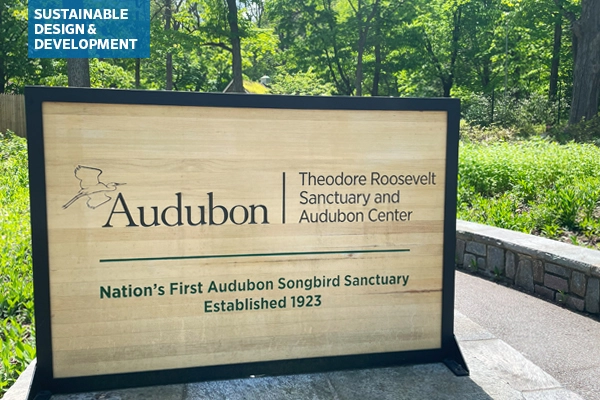
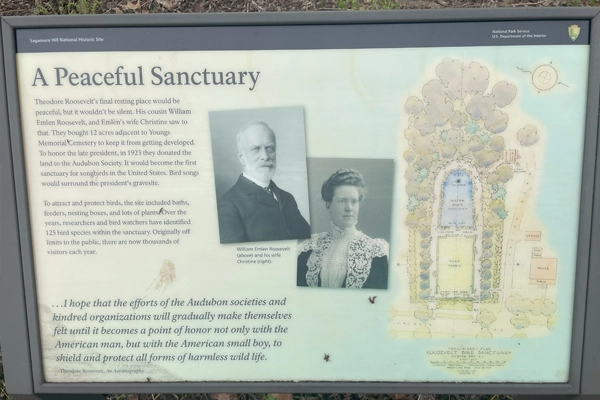
The classroom setting was the historic Theodore Roosevelt Bird Sanctuary and Audubon Center, the first Audubon Center created in 1923. The site was originally designed by the Olmsted Brothers with attracting birds the focal point. The Sanctuary was recently redesigned by Mathews Nielsen Landscape Architects and is adjacent to Roosevelt’s final resting place in a small cemetery.
The HELP course was intended to train landscape professionals in ecological and sustainable landscape practices, focusing on existing landscapes in both the public and private spaces. Upon completing the course, the HELP graduates are informed about ecological degradation and how to improve the ecosystem functions of their site.
The indefatigable course creator and presenter, Joy Cirigliano, was passionate and knowledgeable. As Audubon’s Senior Coordinator of Bird Friendly Communities, she spent three consecutive March Thursdays explaining the need for native plants and environmentally friendly practices, and how to create them. The first of its kind in the country, Audubon plans to present this program nationwide. Follow-up locations will be in Connecticut and New York’s Hudson Valley during the summer of 2024.
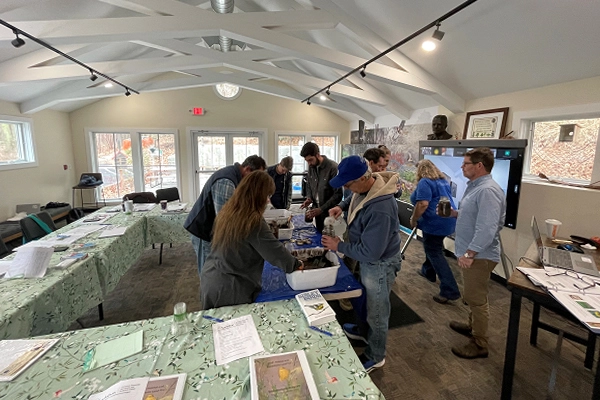
The unveiling of the program at the Theodore Roosevelt Bird Sanctuary was a perfectly timed event. March is a slow month for the landscape industry, and the classes were ready for testing. The attentive audience spanned a wide variety of attendees: parks department employees, landscape contractors, ecologists, and landscape designers and architects. By the end of the course, the attendees left with a headful of useful information and intentions to utilize many of the practices learned.
In the first session, Joy introduced Audubon and what it is. Most in the audience were familiar with how the Society “uses birds as a lens to focus on environmental issues and how to solve them” (HELP Habitat and Ecosystems Land Pro Endorsement Program Manual, Audubon Theodore Roosevelt Sanctuary and Audubon Center). What was new to many is how broad Audubon’s reach is into the environment: from teaching classes on native plants to defining ecological principles and combating climate change. The inception of the course occurred several years ago, when the local Audubon chapter recognized a need to educate landscape and horticultural professions on ecologically sound landscaping principles, including the use of native plants (HELP Program Manual, page 8).
With a detailed program guide, the thirty or so attendees next learned about habitat loss, invasive species, pollution issues, and much more. Naturally, a good program provides answers, so the rest of the course was based on analyzing a site, which is not often part of the self-learning of landscape contractors. Understanding the predominant landscape model, such as the installation of inappropriate and often invasive plants, and how these practices impact the environment was further defined. And part of any ecological training includes new environmentally friendly methods currently available to the landscape industry. Turf reduction, ecological lighting, and stormwater retention were some of the topics covered as part of “The Big Picture” presented during the second session. Some of the newer concepts included bed solarization, as well as utilizing beneficial insects. And any good course in ecological planting design includes the creation of no-mow areas, leaving the landscape planted with native grasses and left alone.
While altruistic reasons for creating a better landscape maintenance paradigm are easy to identify, landscape professionals also need to make money. The instructor did not avoid the often cited “but environmentally friendly maintenance is more expensive” excuse. She proceeded to identify time and cost savings such as timed organic pest management, application of organic slow-release fertilizers, and corn gluten meal fertilizer and weed suppression as cost effective methods of landscape maintenance.
Finally, local native plants, soil types, and other local issues for Long Island, coastal Connecticut, and the lower Hudson Valley were isolated to familiarize the attendees of availability in the area. Ecology AND aesthetics are important elements of plant choice: clients’ ingrained habits can change but the final effect must be pleasing—and the plants must be available.
The material covered was intense and thorough; a looseleaf binder contained the background information needed for the course. Kathryn D’Amico, the Audubon Center’s Director, helped organize the event with Joy, and welcomed the attendees. After each session, quizzes were given, with the intent of awarding continuing education units upon successful completion of the course.
Stay tuned for announcements of future HELP: Habitat and Ecosystems Land Pro programs!
CeCe Haydock, ASLA, PLA, SITES AP, LEED AP, WEDG, is a licensed New York landscape architect WBE and has practiced in the public as well as the private sector. She is an officer for ASLA's Sustainable Design & Development Professional Practice Network (PPN), a trustee of the Planting Fields Arboretum State Historic Park in Oyster Bay, NY, a member of the International Council of the Preservation Society of Newport County, and a visiting lecturer at the New York Botanical Garden.