

.webp?language=en-US)



WEDG: National Standard for Excellence in Waterfront Design Expands to Riverine and Lacustrine Waterbodies
by Tom Klein, ASLA, WEDG
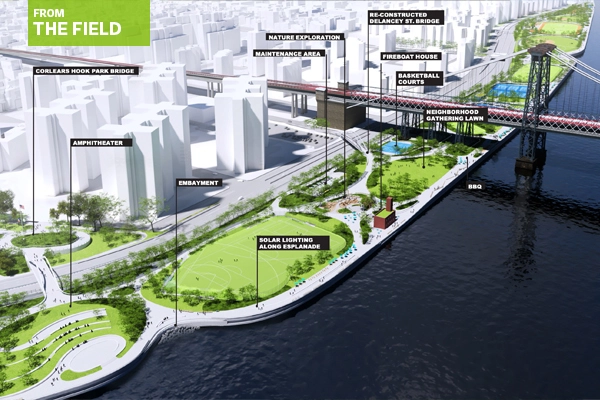
Whether you are enjoying the views at an iconic site like Brooklyn Bridge Park in New York City or walking the boardwalk along the Cape Fear River in Wilmington, North Carolina, our waterfronts are treasured social spaces in our cities. At this year’s ASLA Conference on Landscape Architecture in Minneapolis, the significant role that waterfronts play nationwide was front and center. From panel discussions that considered strategies for protecting cultural landscapes from sea level rise like the Tidal Basin in Washington, D.C., to the numerous award-winning waterfront projects including Grand Junction Park and Plaza in Westfield, Indiana, the need for embedding ecological and social resilience into urban waterfronts is clear.
One tool that designers can deploy is WEDG® (Waterfront Edge Design Guidelines). First conceived in 2015, WEDG® is a rating system started in the United States to address resilience, ecology, and access on waterfront sites, and has been consulted thousands of times on coastal waterfront projects. Eight years after launching its first version, the Waterfront Alliance—a New York based non-profit organization—has expanded its design guidelines to include riverine and lacustrine waterfronts. With 12 WEDG Verified projects and counting, the revised standard aims to expand reach by creating a new manual, professionals training, and set of guidelines that can be applied across all waterfront types.
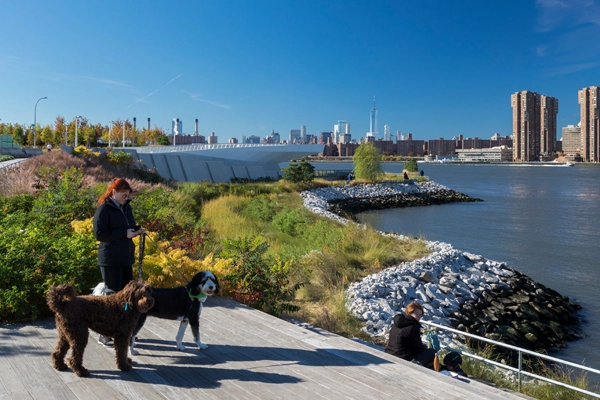
Rating systems for building and design such as LEED and SITES have transformed how projects are developed, normalizing sustainability within the architecture and construction industry. Waterfront sites, especially those with public access, are the flagship property in nearly every community, yet other established rating systems do not fully address the unique complexities and challenges of the waterfront. The waterfront is the first line of defense for resilience, home to some of nature’s most sensitive ecosystems, and among a community’s best assets for public space.
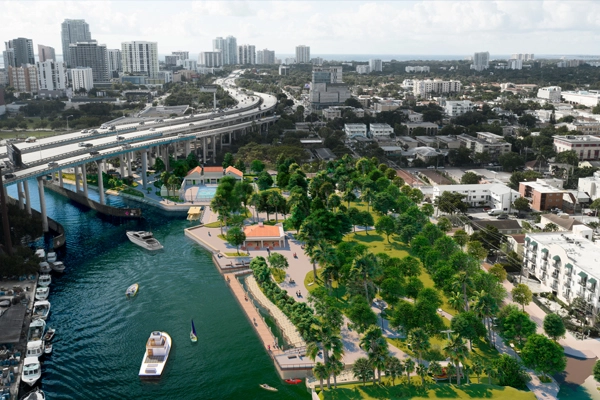
Local governments across the United States have utilized WEDG to shape their waterfronts, incorporating the WEDG into existing guidelines or adopting the standard as part of waterfront zoning requirements. In New Rochelle, New York, WEDG is now required as part of the zoning process for multi-family developments along the waterfront. In Miami, the city encourages waterfront capital projects to use WEDG and includes WEDG in its design guidelines for the Baywalk and Riverwalk.
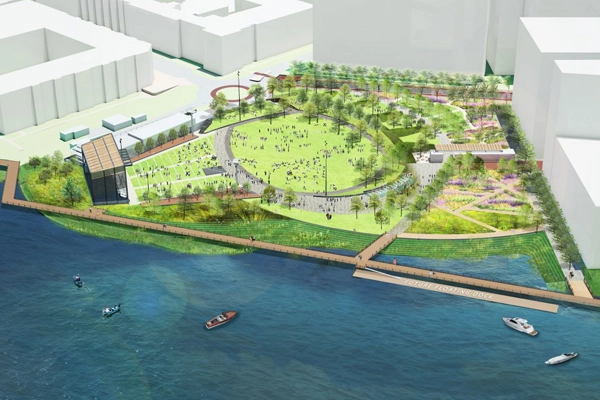
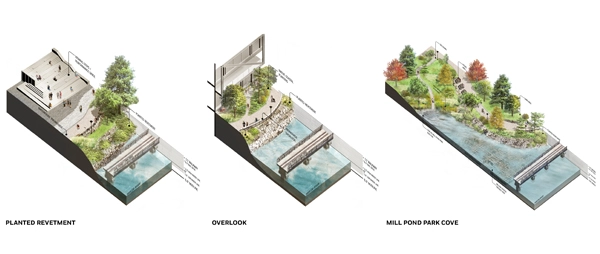
As a rating system, WEDG provides a set of design standards that landscape architects can use to inform their design. The most successful projects use WEDG from the very beginning to inform design and maximize performance using the Preliminary Review process as the project moves through conceptual or schematic design. Other projects are submitted for Final Review once the project has progressed into the construction documentation phase. For either option, design teams submit a set of narratives and supporting documentation to the Waterfront Alliance who work with teams of technical experts to vet the project against the standards. WEDG’s standards are outlined in the publicly available WEDG Manual.
Tom Klein, ASLA, WEDG, is a Denver-based Landscape Designer and Project Manager at Wenk Associates. Tom has a passion for crafting engaging public spaces that perform ecologically and socially. With professional experience in community sustainability, coastal resilience, environmental management, and active transportation planning, he is most compelled by large-scale projects that blend infrastructure and design. As a practicing designer, Tom has worked on a variety of projects where human and non-human systems come together, rethinking the role of infrastructure in our cities.
Previously, Tom worked at SCAPE Landscape Architecture in New York City and Design Workshop in Denver. He earned a Master of Landscape Architecture degree from Washington University in St. Louis and has held a variety of leadership roles including as a Mayoral Appointee on the Denver Bicycle Advisory Committee and Waterfront Edge Design Guidelines (WEDG) Fellow with the Waterfront Alliance in New York City.