

.webp?language=en-US)


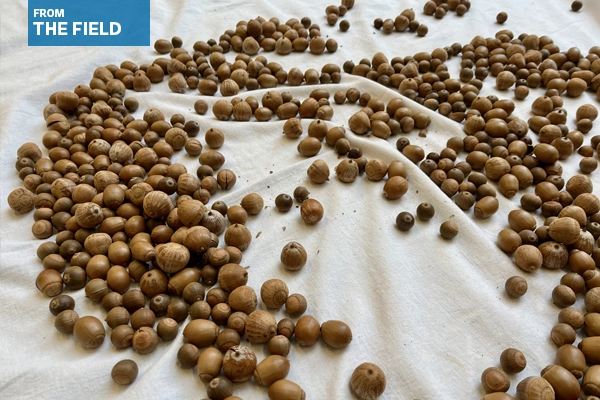
While green schoolyards, outdoor learning spaces, and other places to get hands-on with nature are often discussed for children, adults may be just as likely to experience some nature deficit-related disconnection. When was the last time you considered the humble acorn, for example? A recent installation by social practice artist Shawn Shafner and associated events in Washington, DC, used this mundane feature of landscapes both urban and forested as a launching point for delving into a range of other issues, from the joy of taking the slow route to ways to support regenerative agricultural and local watersheds.
Last month, a multidisciplinary panel conversation at the Seva Teaching Kitchen, part of George Washington University's Culinary Medicine Program, explored the cultural, culinary, and ecological value of oak trees and their seeds, focusing on acorns' connections to health, agriculture, and ecology.
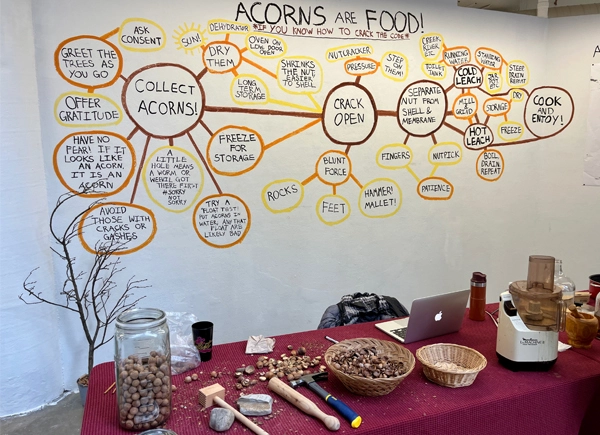
Ralph Waldo Emerson wrote that “The creation of a thousand forests is in one acorn," and their small-but-mighty nature continues in an array of other settings, from acorns as nutritional powerhouses to oak trees' central role in ecosystems and the water cycle. One eye-opening quote from the exhibition: "If you took a gigantic table and laid out all the foods humans have eaten across the globe and over time, making an individual pile for each foodstuff, acorns would be, by far, the largest pile on the table," according to forager and author John J. Slattery. (There's even a dedicated word for eating acorns, balanophagy, in case this comes up in a future round of trivia.)
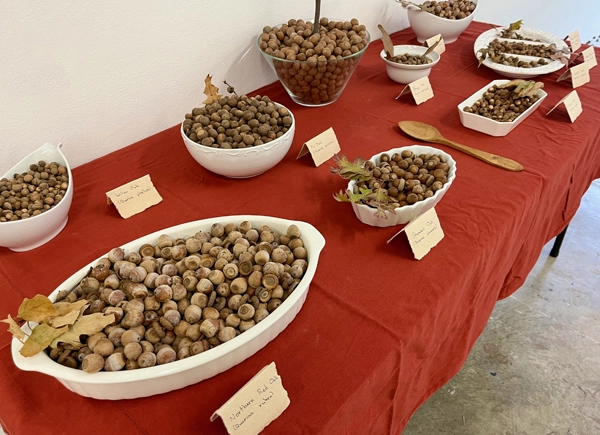
A Washington Post feature on the future of farming, published on Thanksgiving, highlights some of the reasons why large-scale agriculture has been slow to adopt regenerative practices. However, individuals are able to find small ways to incorporate wild foods or foods grown through regenerative agriculture into their daily routines. The panelists highlighted how taking a break from our convenience-based food culture of supermarkets and sterile packaged foods can be empowering. Collecting acorns is a way to be stewards, co-creators with the planet, and an embedded part of the local ecology.
The conversation covered how oaks are found around the world and are noteworthy for many characteristics, including their mycophilic connections to the extensive fungi networks that exist underground, connecting trees' roots and contributing to forest-wide wellbeing, soil health, and resilience, and oak trees' role in watersheds. One mature oak can filter 100 gallons of water daily.
While the idea of food forests—from Serenbe and the Browns Mill Food Forest in Georgia to the Daybreak Star Indian Cultural Center in Seattle—isn't new, many more places would benefit from the expansion of regenerative agroforestry practices and more ways for community members to engage with nature right in their own neighborhood.
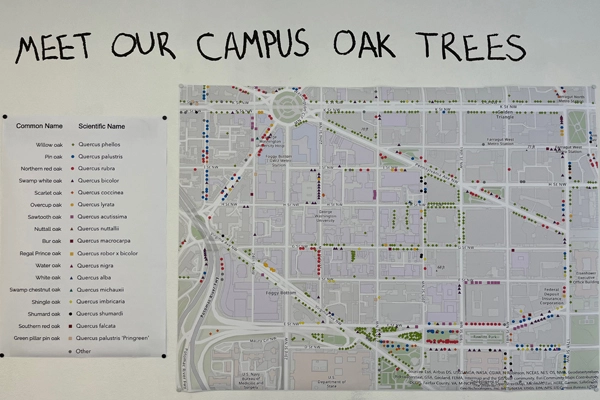
Other events supported the Potomac Conservancy's Tomorrow's Trees initiative with donated acorns and included a Plant Walk around George Washington University's campus. The series offered a holistic view of connecting with nature, from what we eat to how we choose to spend our time, bringing a wide range of participants together, from med school students to community gardeners.
If this has piqued your interest, here are a few books from the installation for further reading:
Nature's Garden: A Guide to Identifying, Harvesting, and Preparing Edible Wild Plants
by Samuel Thayer
Eating Acorns: Field Guide—Cookbook—Inspiration
by Marcie Lee Mayer
by Alicia Bayer
The Sioux Chef's Indigenous Kitchen
by Sean Sherman with Beth Dooley
by Yoko Ono
As we head toward the holidays and time seems to be sweeping forward even more rapidly than usual, I hope you may pause for just a moment to consider the acorn, and its far-reaching impacts.