

.webp?language=en-US)

by Daniel Kissi-Somuah
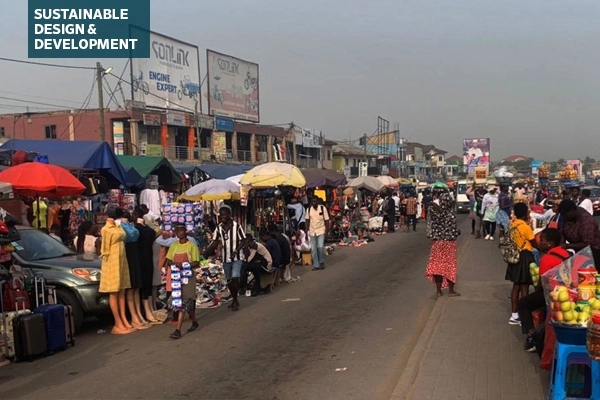
Daniel Kissi-Somuah, a Ghanian from just outside Accra, is completing his MS in Geography at the University of Arkansas under the supervision of Professor Edward “Ted” Holland with the intention of moving on to doctoral studies in 2024. Daniel was a little unsure of the idea of using image-making as a way to tell this important story about Ghana’s sustainability and resiliency challenges, but accepted the challenge with good grace and spectacular commitment. This is definitely a bit out of the Sustainable Design & Development PPN’s usual focus for The Field, but it’s fascinating to see a non-landscape architect using, and reflecting on, something a bit outside our usual playbook. – Dr. Carl A. Smith, Int. ASLA, Sustainable Design & Development PPN Leader
Ghana, situated as a gem along the West African coastline between three degrees west longitude and one-degree east longitude, is emerging as a nation resonating with the echoes of a storied past, dancing to the diverse rhythms of its cultures, and boldly striding into the future. Nestled between Cote d'Ivoire, Burkina Faso, Togo, and the Atlantic Ocean, Ghana stands as a testament to the resilience and vibrancy of the African spirit (Briney, 2019). The country is delineated into 16 regions: Ashanti Region, Brong-Ahafo Region, Central Region, Eastern Region, Greater Accra Region, Northern Region, North East Region, Oti Region, Savannah Region, Upper East Region, Upper West Region, Volta Region, Western Region, Western North Region, Bono East Region, and Ahafo Region. Within the context of this exposition, I will delve into the two factors propelling migrants from the northern region of Ghana to the southern part of the country and refer specifically to the use of image-making as a route to my understanding of places: an approach more familiar in landscape architecture, than in the related fields of cultural and human geography. At its heart, this is a story of a community—a nation—striving towards something akin to environmental and societal sustainability and resilience.
The northern part of Ghana has been plunged into a series of conflicts that have devastated the region and destroyed its development potential (Awedoba, 2010; Tonah, 2012). Relevant to this are the Kokomba and Chokosis conflict, the Andani and Abudu conflict in the Dagbon Traditional Area, and the Kuasasi-Mampurusi conflict in Bawku (Kusimi et al., (2006). As a result of these conflicts, southern Ghana is seen as a haven and refuge, hence the continued migration of people from the north. However, the journey south, and to peace, is complex and influenced by various factors. Ghana's peace-loving nature, particularly in the capital and southern regional hub of Accra, is attributed to traditional peace education practices, ethical discourse, and inclusive development (Benson, 2021). This peaceful disposition is even evident in the city's political and activistic lives as demonstrated by street hawkers and squatters who engage in quiet encroachment to defend their access to urban space (Gillespie, 2017).
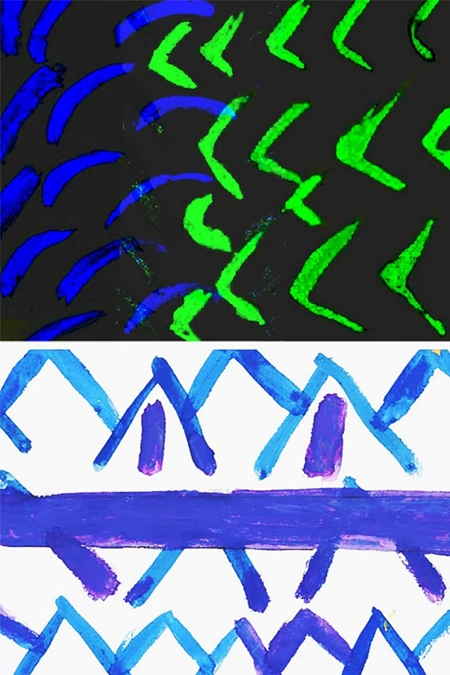
As I delved into "thinking like a landscape architect" on this issue and in particular through image-making around spaces and places and their meanings, it becomes a profound journey of capturing the essence and spirit of two different regions that lies beyond traditional mapping and analysis. Each stroke of color (black, green, blue, yellow, and deep blue), texture, and composition was a deliberate choice, mirroring the unique character of the landscapes I explored. Reflecting on the diverse regions, I tried to articulate the detailed interplay between threat and hopelessness alongside promise and optimism. The painting was my vehicle for conveying emotional as much as physical landscapes, translating the environmental nuances into a visual language. Just as a landscape architect plans to evoke specific feelings in spaces and even representations of spaces that exist or are imagined, my paintings become thoughtful designs, alternating between the intensity of challenges and the serenity of resilience. The conscious shift in hues, textures, and compositions, whether embracing vibrant tones to express promise or soothing shades to evoke peace, mirrors the intricate balance the environment demands.
Much like landscape architect who seek harmony in their designs, my artistic process is creating a harmonious dialogue between the paintings and the emotions inspired by the regions I contemplate. It is a journey of translating the language of landscapes, composing a visual symphony that resonates with the emotional reliefs of each unique environment.
For numerous decades, the northern region of Ghana has persistently ranked as the most impoverished concerning living standards, literacy levels, health, trade, and nutritional status (Whitehead, 2006). The economy of Northern Ghana is predominantly reliant on the rural sector, particularly food crop farming and livestock activities. Unfortunately, economic diversification beyond agriculture is limited in this region, leaving the area vulnerable to chronic environmental pressures of climate change.
This sense of “stuckness” and the fragility of the northern culture to threats was articulated through my image-making. The work becomes a metaphor for the life experiences of Northern Ghanaians and for the condition of the very ground itself. A decline in agricultural productivity, translated in my work as starkness and a scratched-at-dryness, also translates in a more practical sense to fewer employment and income-generating opportunities in rural areas. This dearth of economic prospects is a significant impetus, compelling individuals and families to migrate southwards to the promises of Accra for enhanced job opportunities.
Contrastingly, the service sector, particularly in education, healthcare, and trade, has been a significant driver of migration from northern Ghana to the southern part of the country, leading to employment and income opportunities (Geest, 2011). This migration is influenced by various factors, including environmental conditions, education, and community assets (Marchetta, 2013). The uneven spatial distribution of natural resources in Ghana, with the north being relatively underdeveloped, has also played a role in this migration pattern (Anarfi, 2005). Economic reasons, such as the search for better employment opportunities, have been identified as the primary motivation for migration from the northern region (Abdulai, 2016).
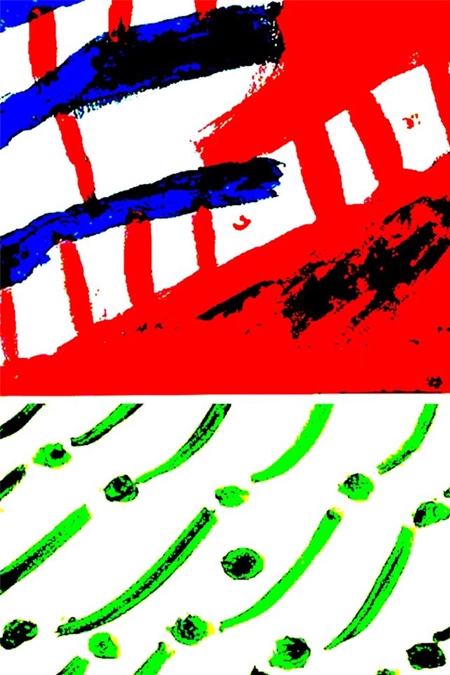
Navigating image-making as a landscape architect might, my artistic journey unveiled a tapestry where Northern Ghana became an intricately woven narrative. The threads of my imagination intersected with the stark realities of economic challenges, creating a visual dialogue that captured both constraints and the search for resiliencies and opportunities. This act required me to set aside my objective understanding born of mapping and statistics, and grapple with the lived realities faced by so many of my compatriots. Naturally, Southern Ghana emerged as a territory of promise, growth, and abundant opportunities, depicted through colors (green and black), vibrant hues, and harmonious compositions. The act of "thinking like a landscape architect" through empathy and expression, has been an enlightening exercise, at once considering the objective realties of two contrasting regions while creating a visual narrative that speaks to the complex interplay between imagination, reality, and the socio-economic constraints shaping these landscapes.
References
Abdulai, A. (2016). Internal Migration Determinants: Evidence from Northern Region of Ghana. Ghana Journal of Development Studies, 13, 1-17.
Anarfi, J.K., & Kwankye, S.O. (2005). The Costs and Benefits of Children's Independent Migration from Northern to Southern Ghana.
Awedoba, A. K. (2010). An Ethnographic Study of Northern Ghanaian Conflicts: Towards a Sustainable Peace. Key Aspects of Past, Present and Impending Conflicts in Northern Ghana and the Mechanisms for Their Address. African Books Collective.
Benson, G. . (2021). Linking the Peace-loving Nature of Ghanaians to Traditional Peace Educational Practices: Myth or Reality? International Journal of Conflict Management, 2(1), 1–32. https://doi.org/10.47941/ijcm.564.
Briney, Amanda.(2021). Facts About Ghana, West African Nation. ThoughtCo. www.thoughtco.com/geography-of-ghana-1434932
Geest, K.V. (2011). North-South Migration in Ghana: What Role for the Environment? International Migration, 49.
Gillespie, T. (2017). From quiet to bold encroachment: contesting dispossession in Accra’s informal sector. Urban Geography, 38, 974 - 992.
Kusimi, J., Fobil, J., Atuguba, R., Erawoc, I., & Oduro, F. (2006). Conflicts in northern Ghana. A mirror of answers to sub-regional stability and security questions. Asteriskos, 1(2), 209-228.
Marchetta, F. (2013). Migration and nonfarm activities as income diversification strategies: the case of Northern Ghana. Canadian Journal of Development Studies / Revue canadienne d'études du développement, 34, 1 - 21.
pj, & Mandela, N.R. (2008). What has Accra to do with New York? An analysis of moral discourse in the Accra Confession.
Tonah, S. (2012). The politicization of a chieftaincy conflict: The case of Dagbon, Northern Ghana. Nordic Journal of African Studies, 21(1), 1-20.
Weeks, J.R., Hill, A.G., & Stoler, J. (2013). Introduction to the Accra School: An Overview of Health, Poverty, and Place in Accra.
Whitehead, A. (2006). Persistent poverty in northeast Ghana. The journal of development studies. 42(2):278–300.
Daniel Kissi-Somuah was born in Accra, Ghana. He is a passionate geographer and is currently pursuing a master’s degree in Geography at the University of Arkansas, Fayetteville. Building on his academic foundation, Daniel holds a bachelor’s degree in Geography and Regional Planning from the University of Cape Coast, Ghana. Daniel's academic journey reflects his commitment to addressing crucial geographical challenges. His current thesis project at the University of Arkansas, focusing on the spatial extent of urbanization in Southern Ghana, showcases his dedication to understanding and mitigating complex urban development issues. In the realm of education, Daniel has demonstrated his passion and commitment through roles as a Graduate Teaching Assistant at the University of Arkansas and a Teaching and Research Assistant at the University of Cape Coast. Daniel's skill set is diverse, encompassing expertise in geospatial technologies such as ArcGIS Pro, QGIS, Google Earth Engine. Connect with Daniel on LinkedIn or via email at [email protected].