
.webp?language=en-US)

Reuse of volcanic ash is an interesting idea
Awards Jury
-
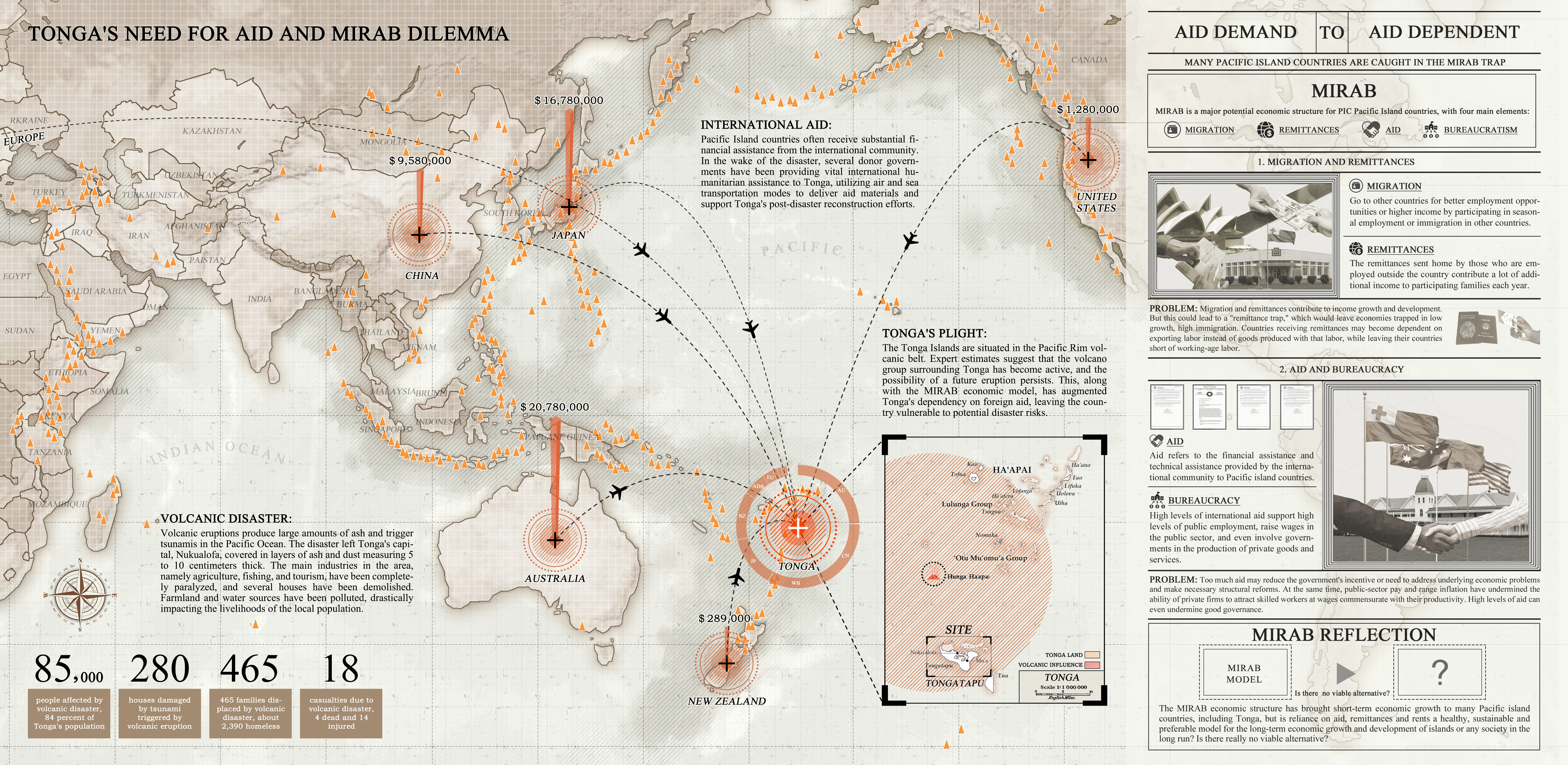
Activated volcanoes, post-disaster reconstruction pressures, and the MIRAB economic model have all increased Tonga's dependence on international aid. The project sees Tonga's reconstruction after the volcanic disaster as an opportunity for sustainable development in the future. Promote environmental and industrial recovery by applying volcanic ash-processed products to cities, farmland, and coastal areas. At the same time, our project accordingly envisages Tonga's strategies for the post-disaster period, the long-term development period, and even another disaster period. Through this holistic approach to a sustainable working landscape, Tonga will get rid of its "MIRAB trap" and achieve ecological and industrial resilience.
-
Background:
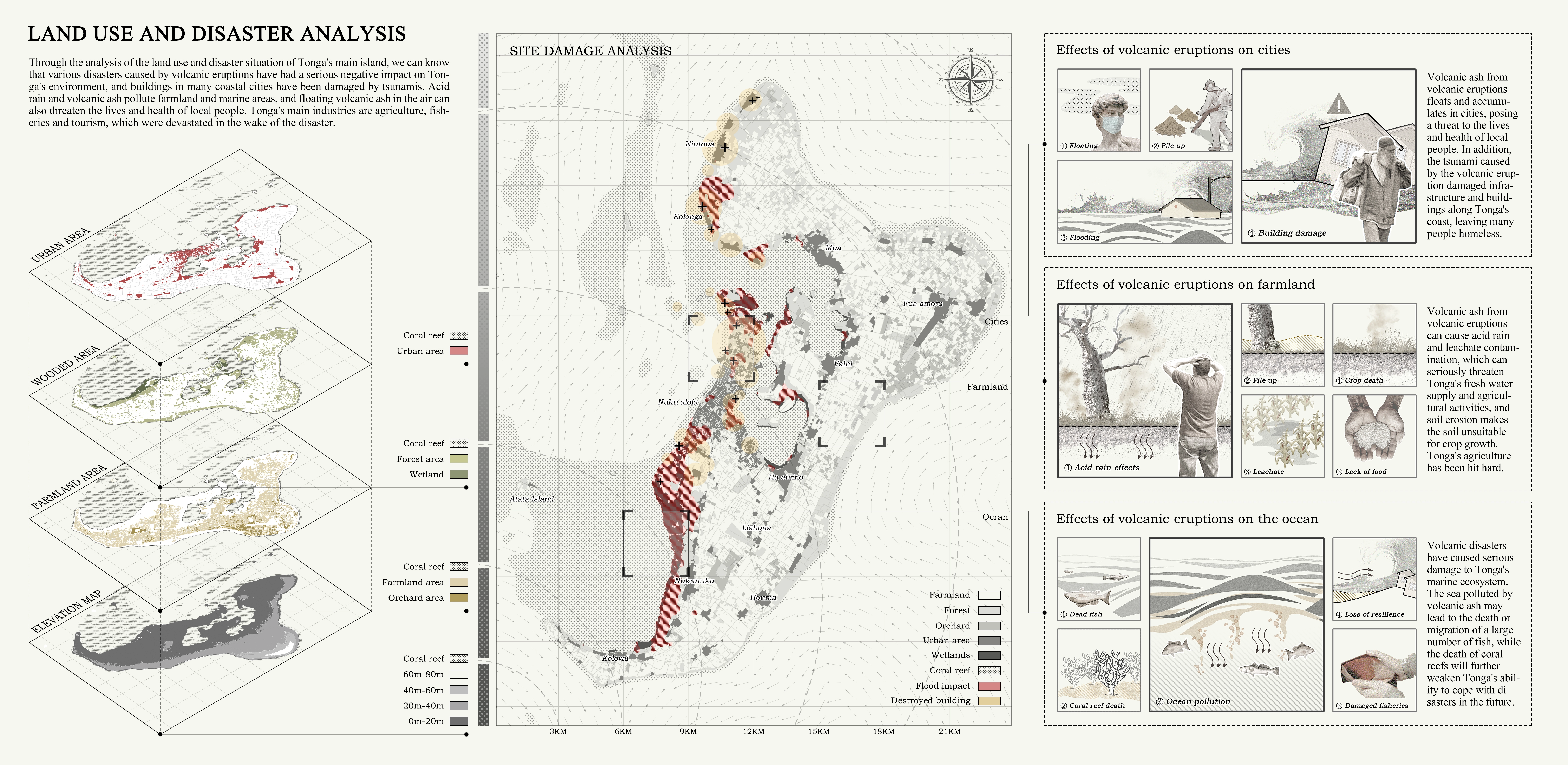
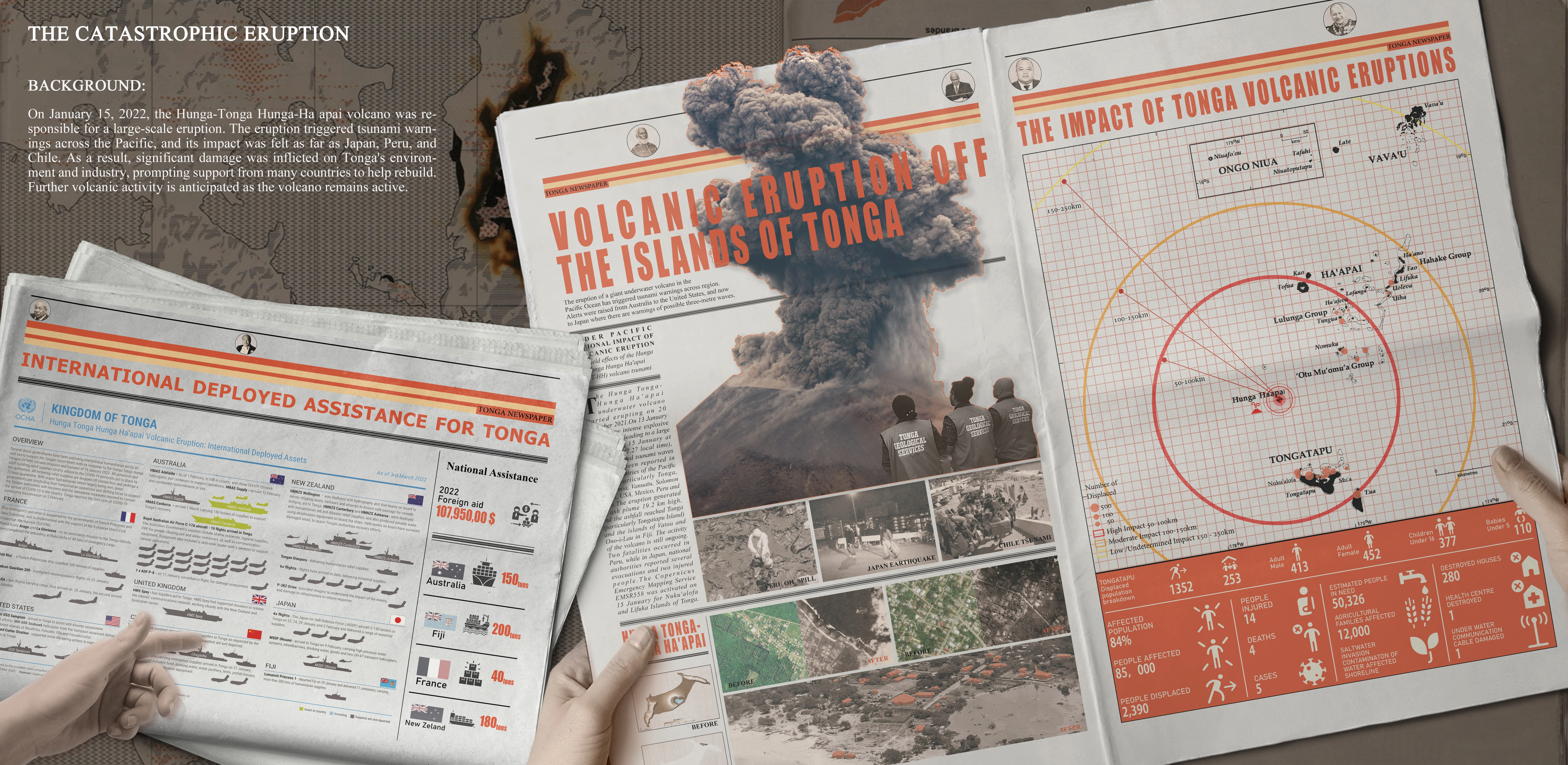
MIRAB is the economic model for Pacific Island Countries, but it has been criticized for over-reliance on resource allocation and aid, ignoring complex social processes. On January 15, 2022, Tonga faced chaos when a significant volcanic eruption covered the land in ash, destroying countless homes and halting Pillar industries like agriculture, fishing, and tourism. Tonga now faces an even greater dependence on international assistance due to heightened risks from active volcanoes.
Goals and Vision:
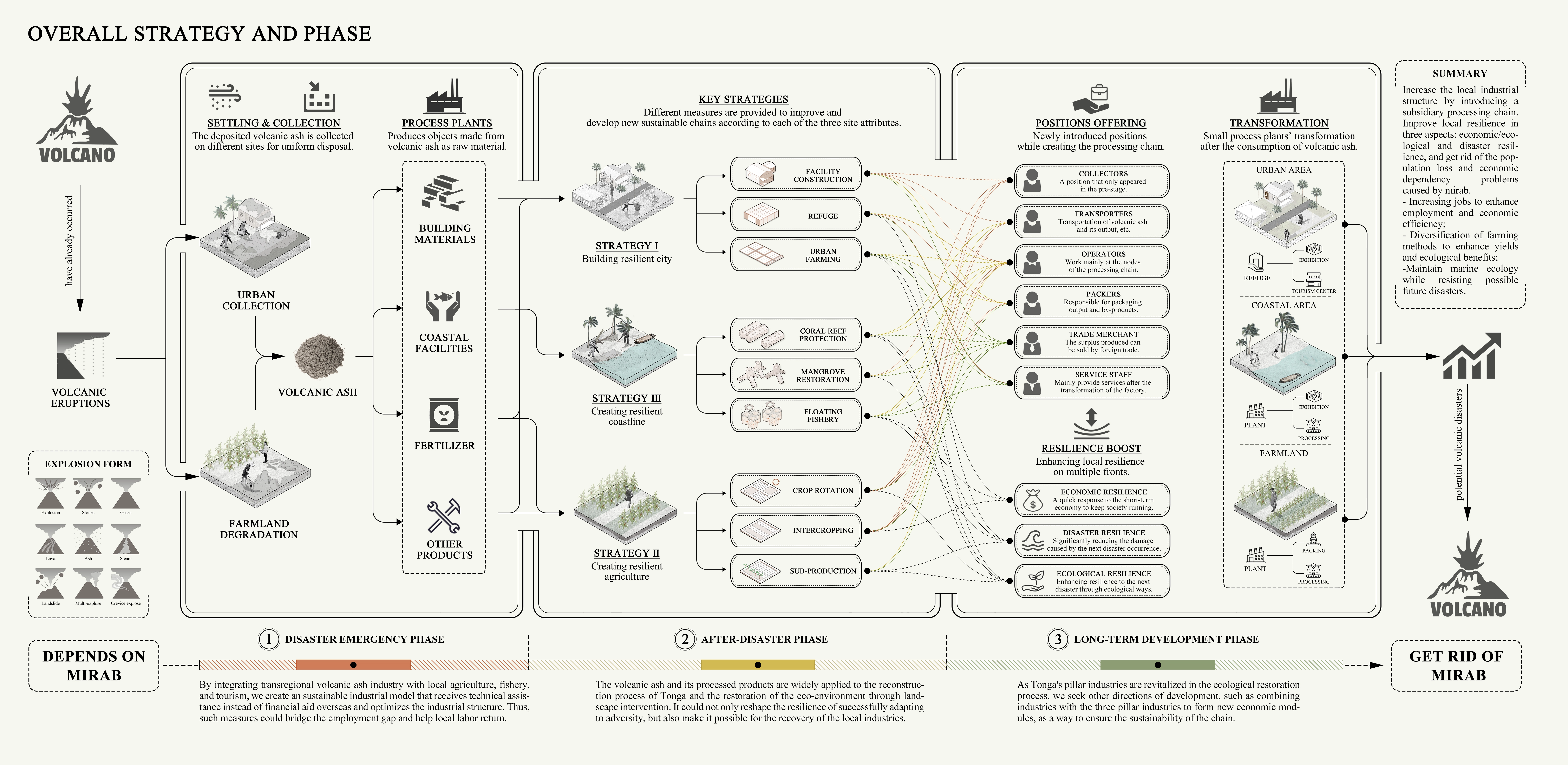
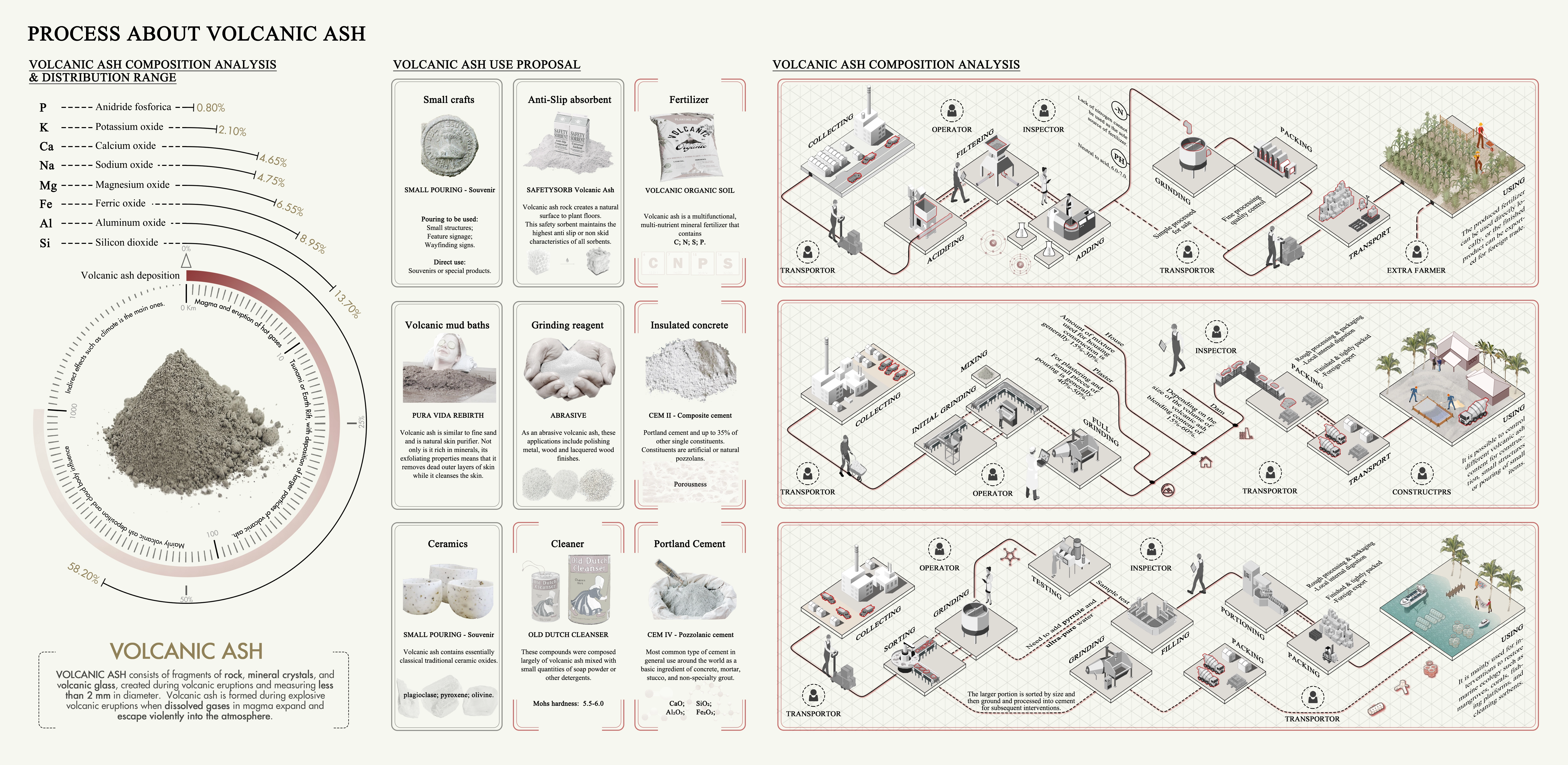
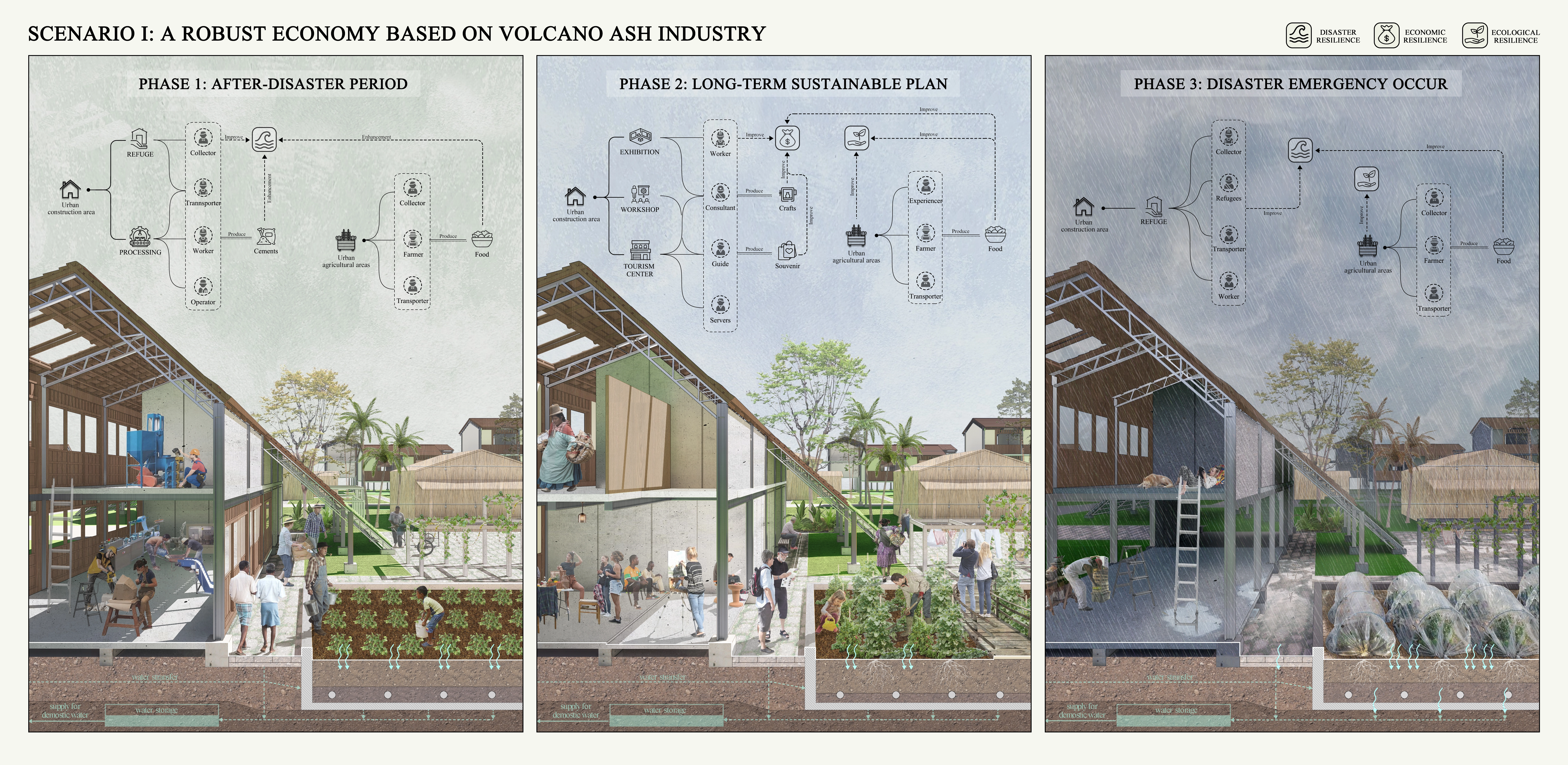
Two main solutions to Tonga's challenges are enhancing Tonga's ability to adapt to disasters through environmental resilience and achieving stable employment and economic growth to overcome the challenges posed by MIRAB. The project takes advantage of Tonga's reconstruction as an opportunity for sustainable development by collecting and processing volcanic ash into a variety of products to restore cities, farmland, and coastline. This process can rapidly promote agriculture, fishery, and tourism in Tonga. Our project envisions adaptive strategies for the after-disaster phase, long-term development phase, and disaster emergency phase, to ensure its implementation. By improving Tonga's environmental and industrial resilience, we can enhance Tonga's ability to adapt to potential risks and future disasters, creating a sustainable development model that overcomes the challenges posed by MIRAB.
Strategy 1: Building a disaster-adapting city
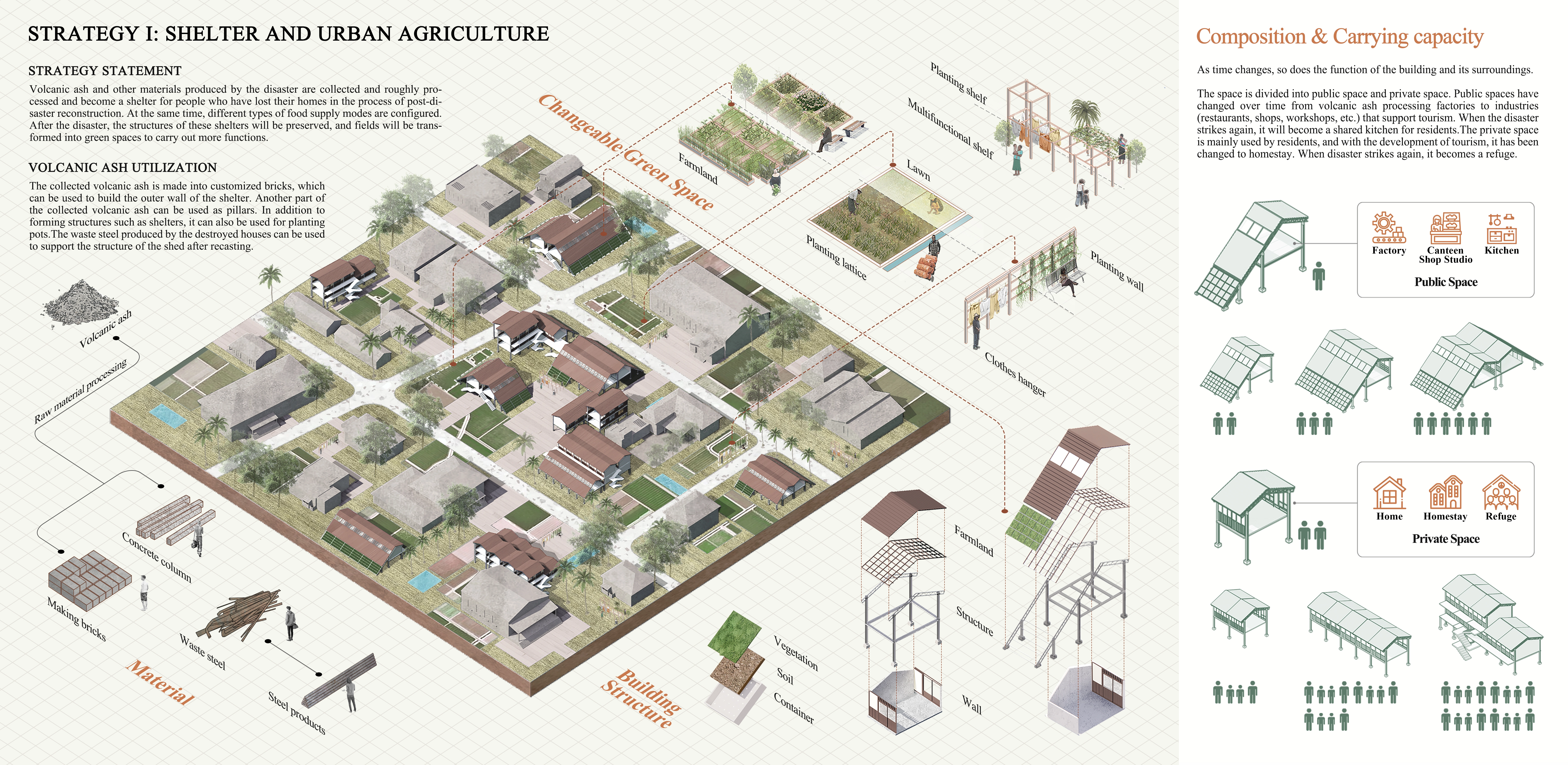
Raw volcanic ash is collected and used to repair damaged buildings, and create mixed-use modules for temporary habitat and food sources during disasters, promoting community sustainability. Later, these modules become community factories that process volcanic ash, agriculture, and fisheries. Eventually, they transform into places of volcanic memory, offering participatory workshops and shared farms, attracting visitors. This increases the city's resilience by creating new industries, jobs, and public spaces, addressing MIRAB challenges.
Strategy 2: Establish a sustainable agricultural system
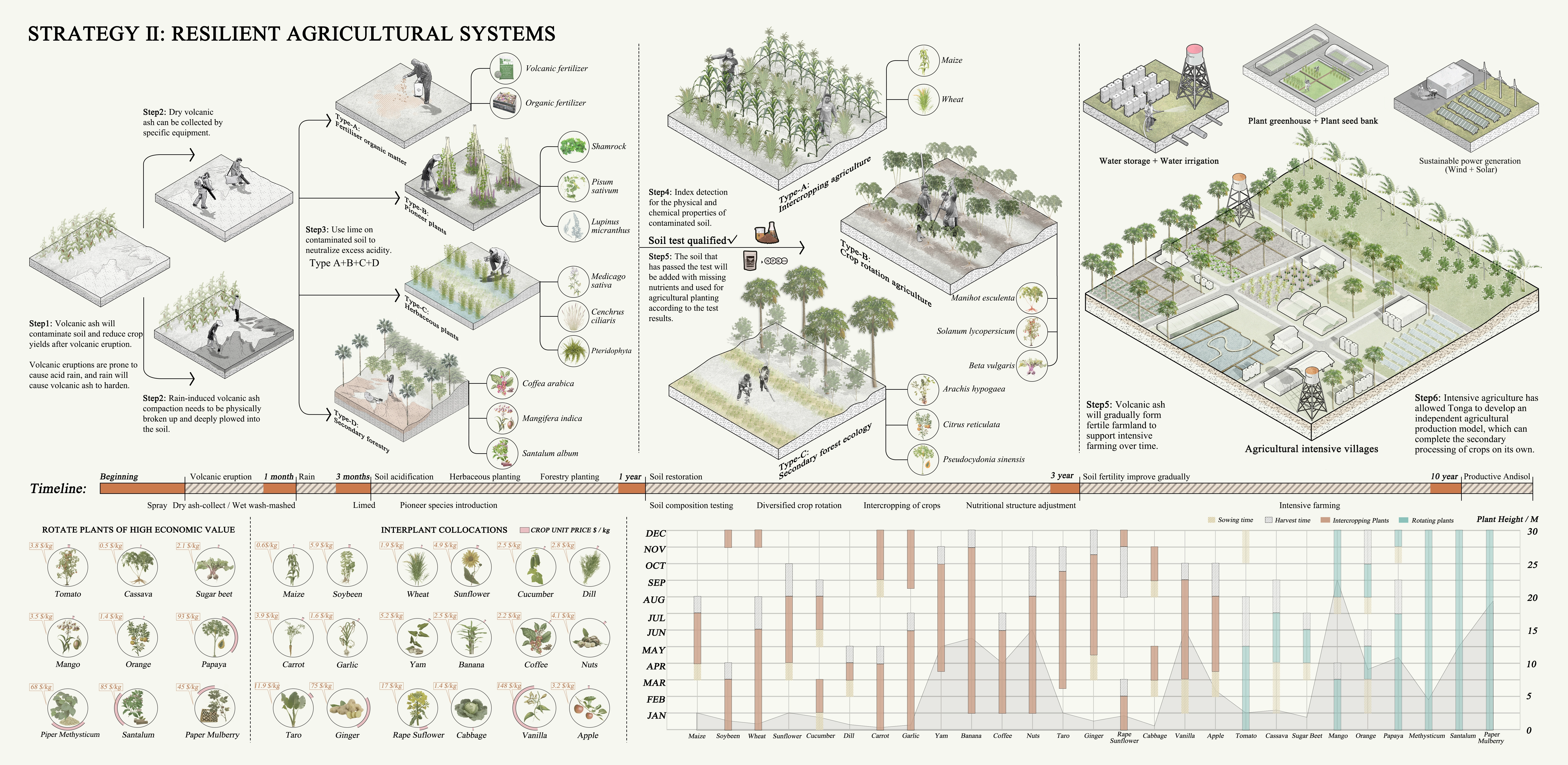
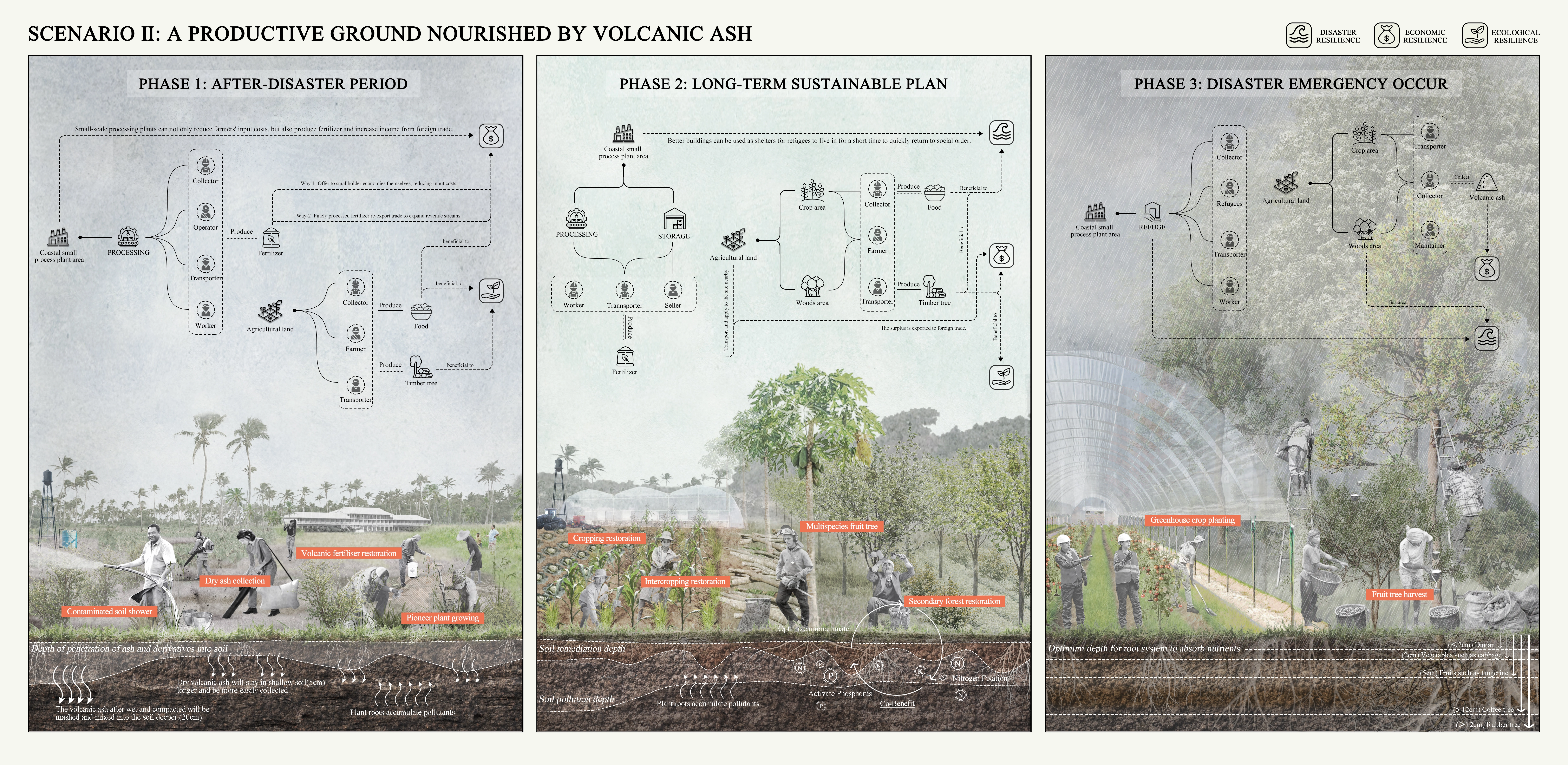
Processing volcanic ash into fertilizer is crucial to restore soil and promote fertility. Planting pioneer species and employing strategies like rotation, intercropping, and forestry will enrich planting structure and expand production capacity, forming the basis for infrastructure development such as greenhouse farming, independent irrigation, and renewable energy. Implementation of this process will improve the economic efficiency and resilience of agriculture by diversifying cash crops and reducing energy consumption, thus helping to alleviate MIRAB.
Strategy 3: Build an ecologically resilient coastline
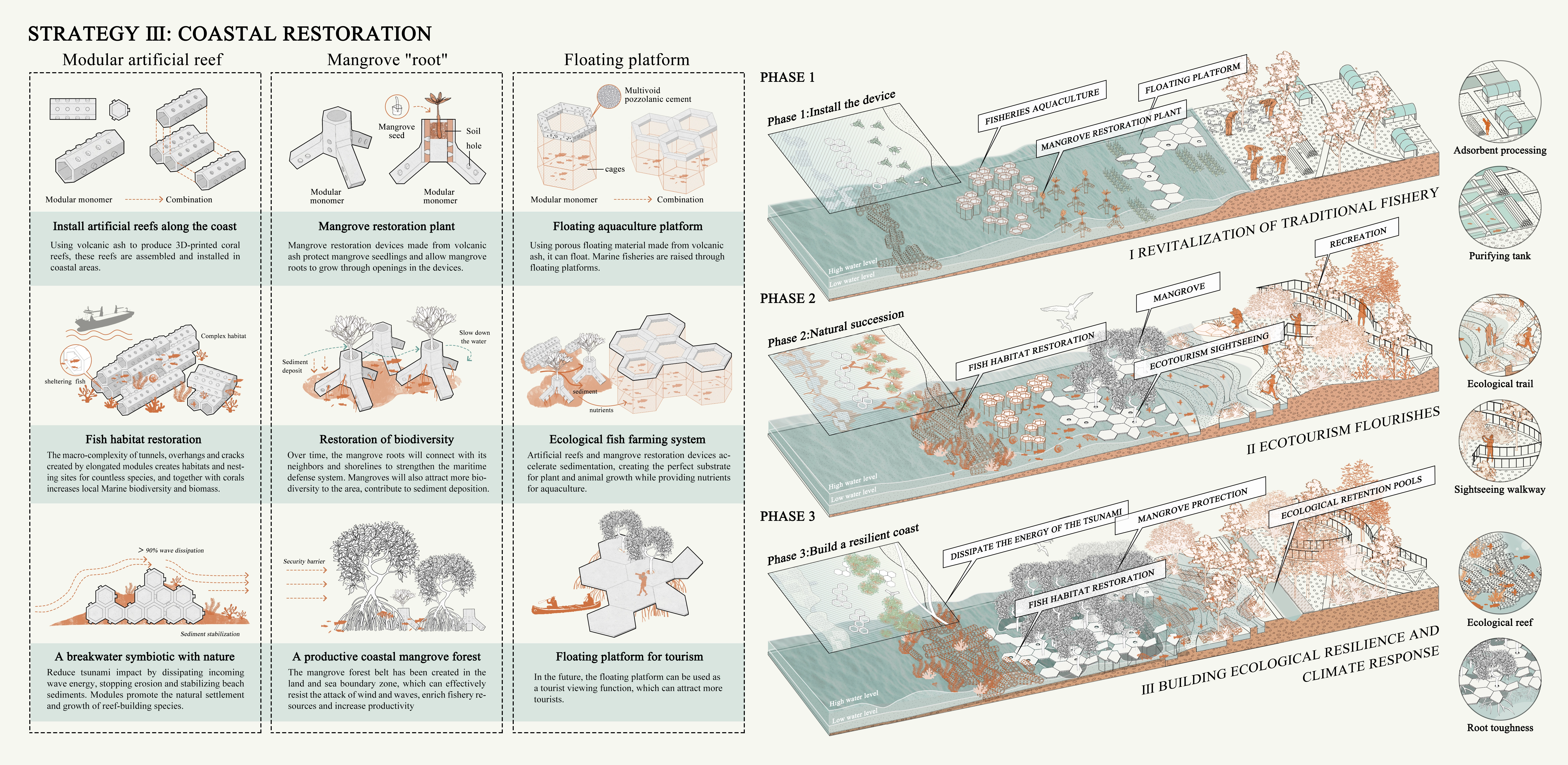
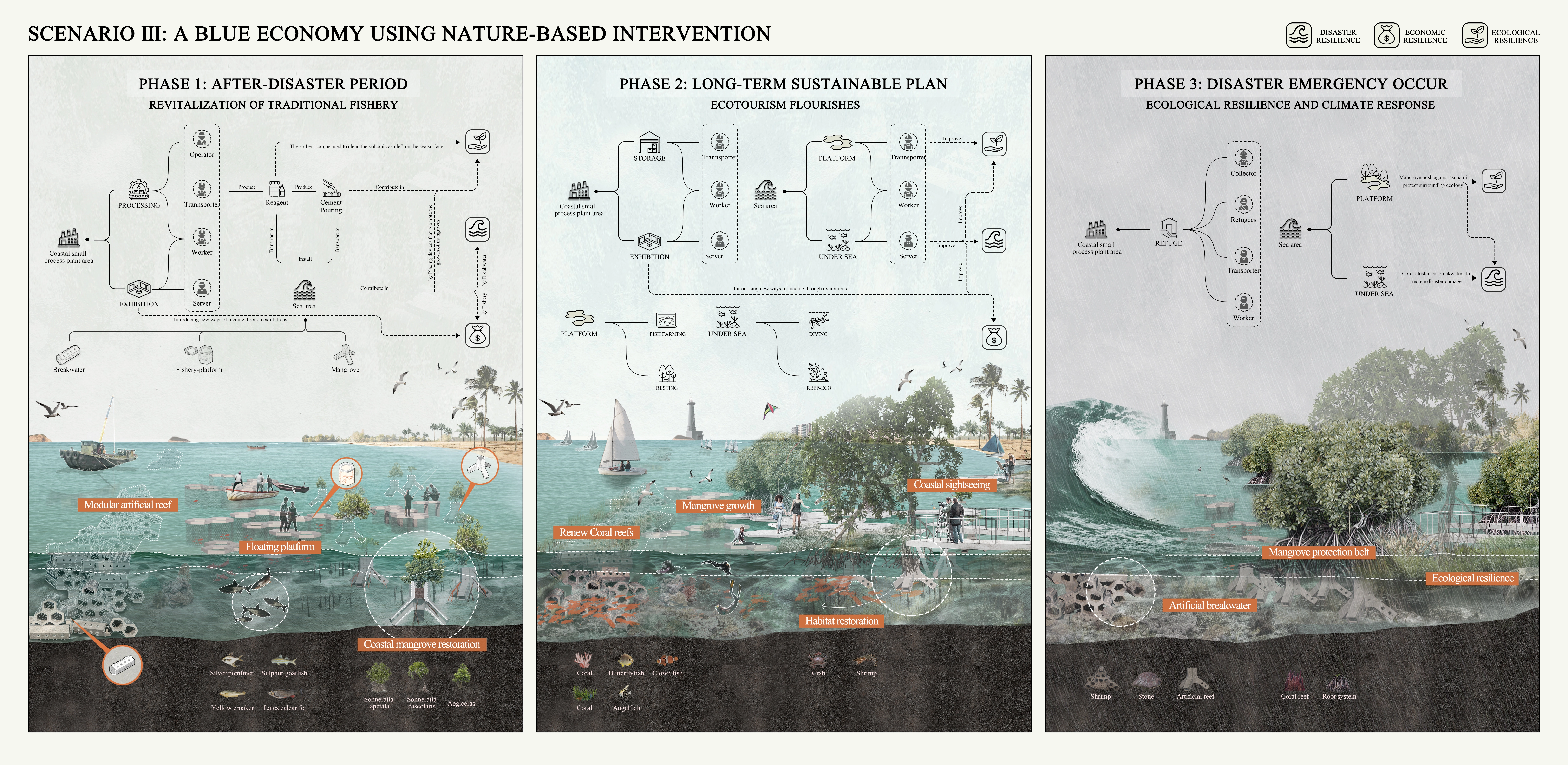
We use modular structures made of volcanic ash (artificial reefs, mangrove root units, and floating platforms) for post-disaster coastal ecological restoration, protect and restore coral reefs, and create a new mangrove habitat through long-term succession, thus revitalizing Tonga's traditional fisheries and promoting the recovery of tourism. The impact of future potential disasters can be mitigated by creating a more resilient coastal interface, while the revitalization of traditional fisheries and tourism will help alleviate the plight of MIRAB.
-
- Tomato
- Cassava
- Sugar beet
- Mango
- Orange
- Papaya
- Paper Mulberry
- Maize
- Carrot
- Garlic
- Taro
- Ginger
- Wheat
- Sunflower
- Yam
- Banana
- Cabbage
- Cucumber
- Dill
- Coffee
- Nuts
- Vanilla
- Apple
Related Awards
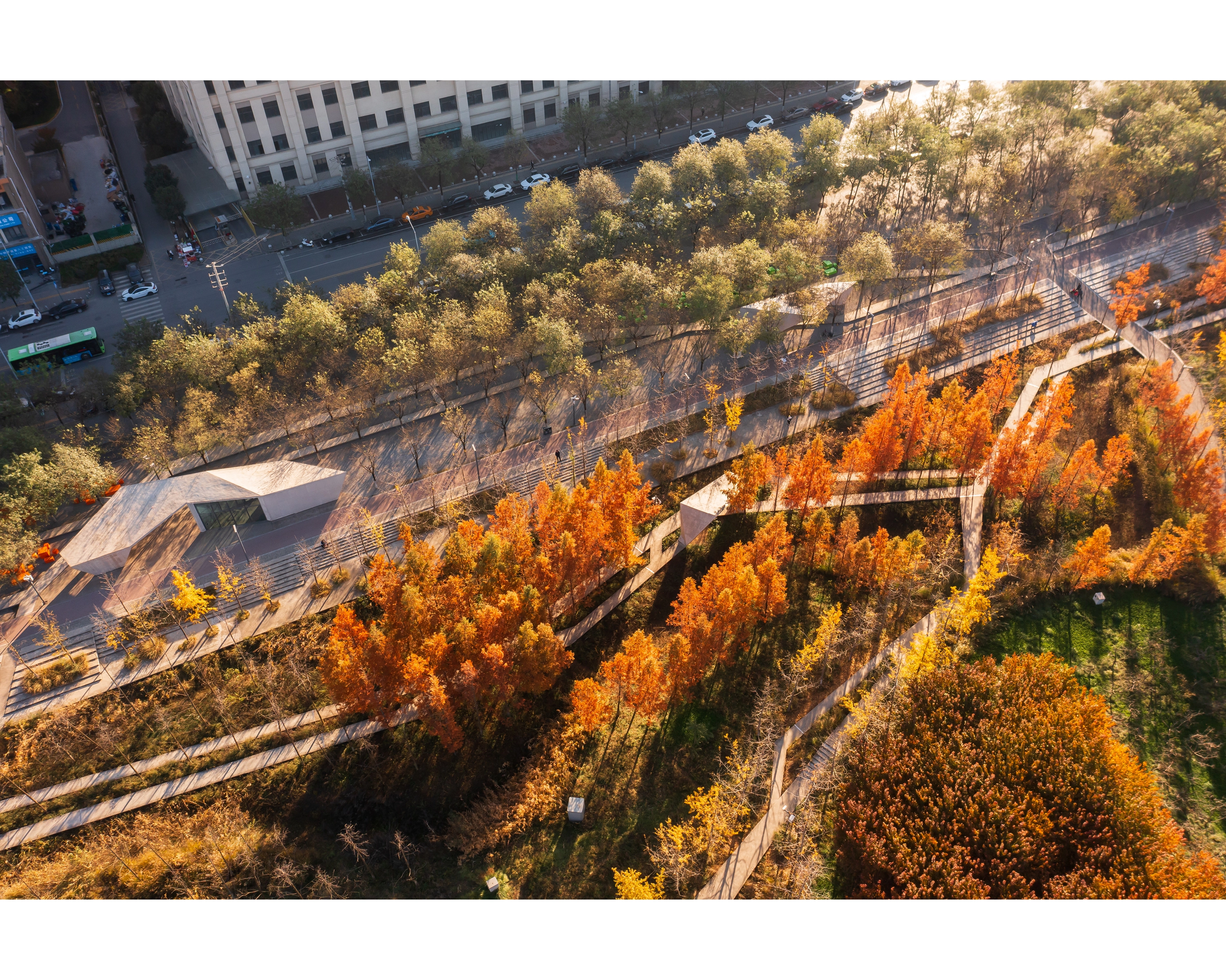
Honor Award, Urban Design
Urban Balcony Embracing Rewilded Nature
In a densely populated urban setting, this project unveils a rewilded natural area, revitalizing a former concrete waterway through innovative stormwater management. The design introduces a linear activity zone extending over four residential blocks, tailored for diverse social interactions. It underscores the vital role of landscape architecture in enriching the social and ecological aspects of urban living.