

.webp?language=en-US)


The graphics and project look great, research in describing issue is good and understand the issue is well stated.
Awards Jury
-
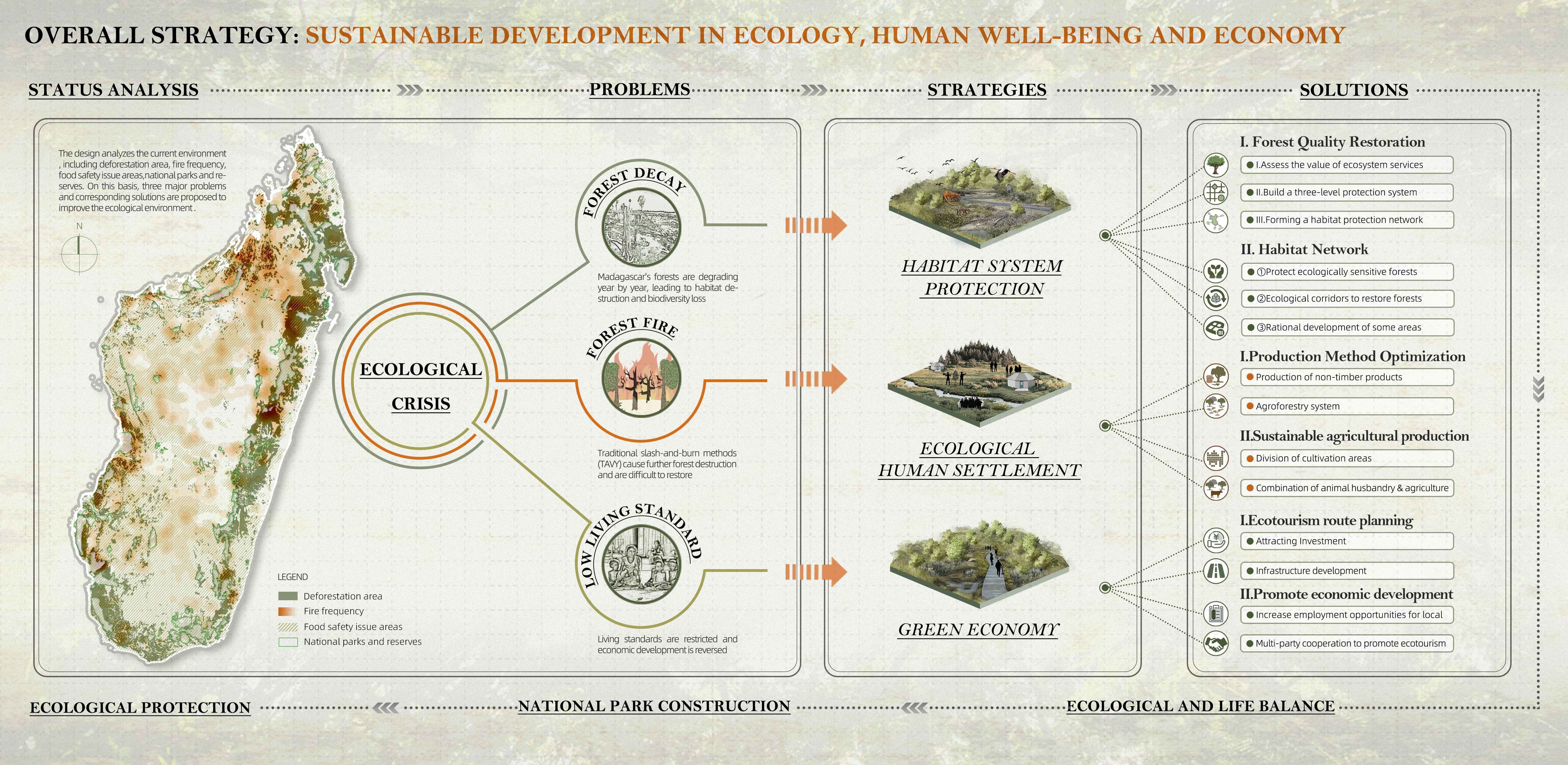
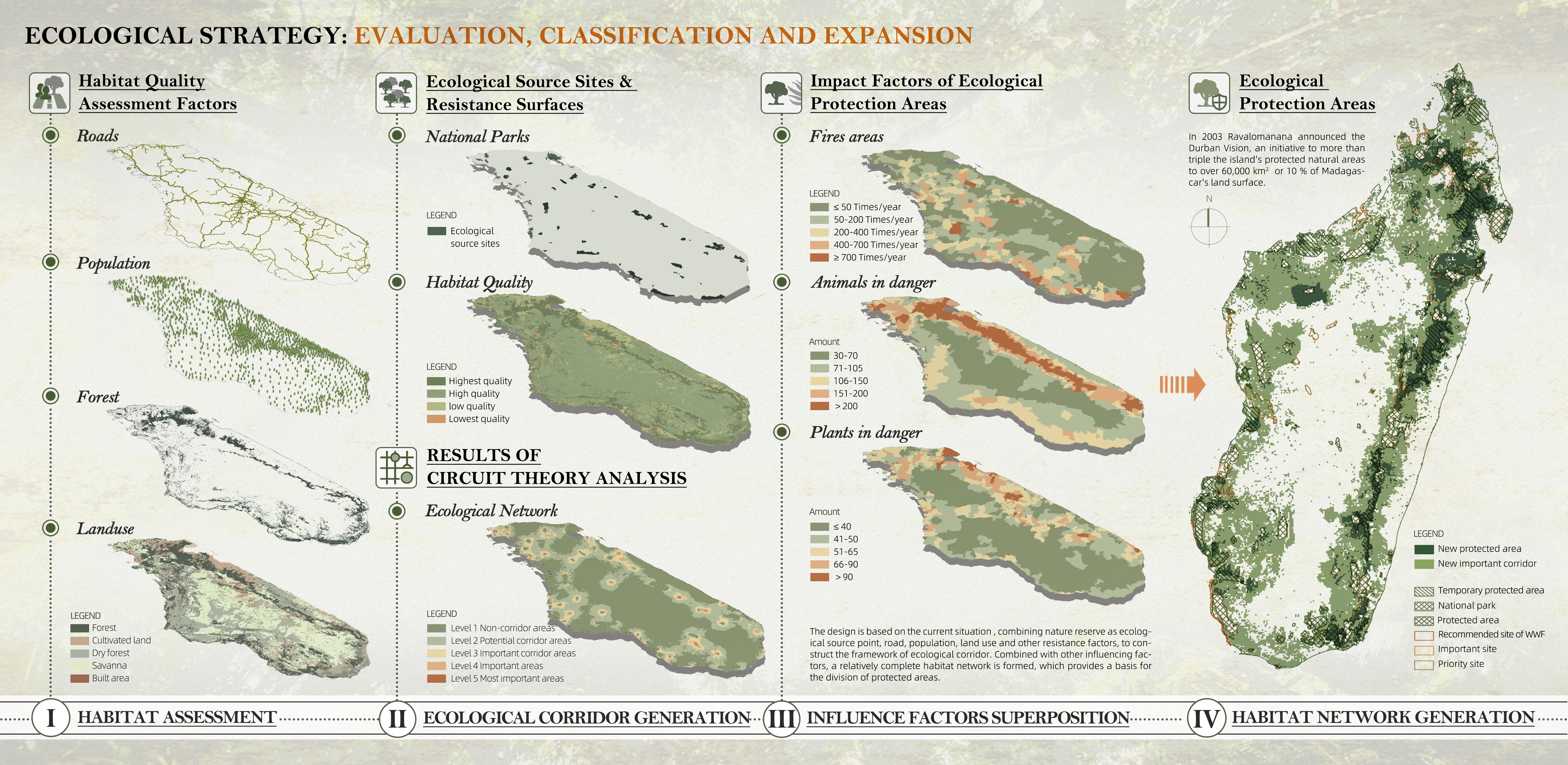
Madagascar is renowned for its exceptional biodiversity. However, deforestation in Madagascar has seriously affected the local ecological environment and economic development. From the perspective of sustainable development, we construct ecological network and assess priority areas for forest restoration. Accordingly, we propose different development methods and establish a comprehensive tourism development network based on specific natural environmental conditions and socio-economic factors in various regions, by which we can build a new virtuous cycle of forest conservation and quality of life improvement.
-
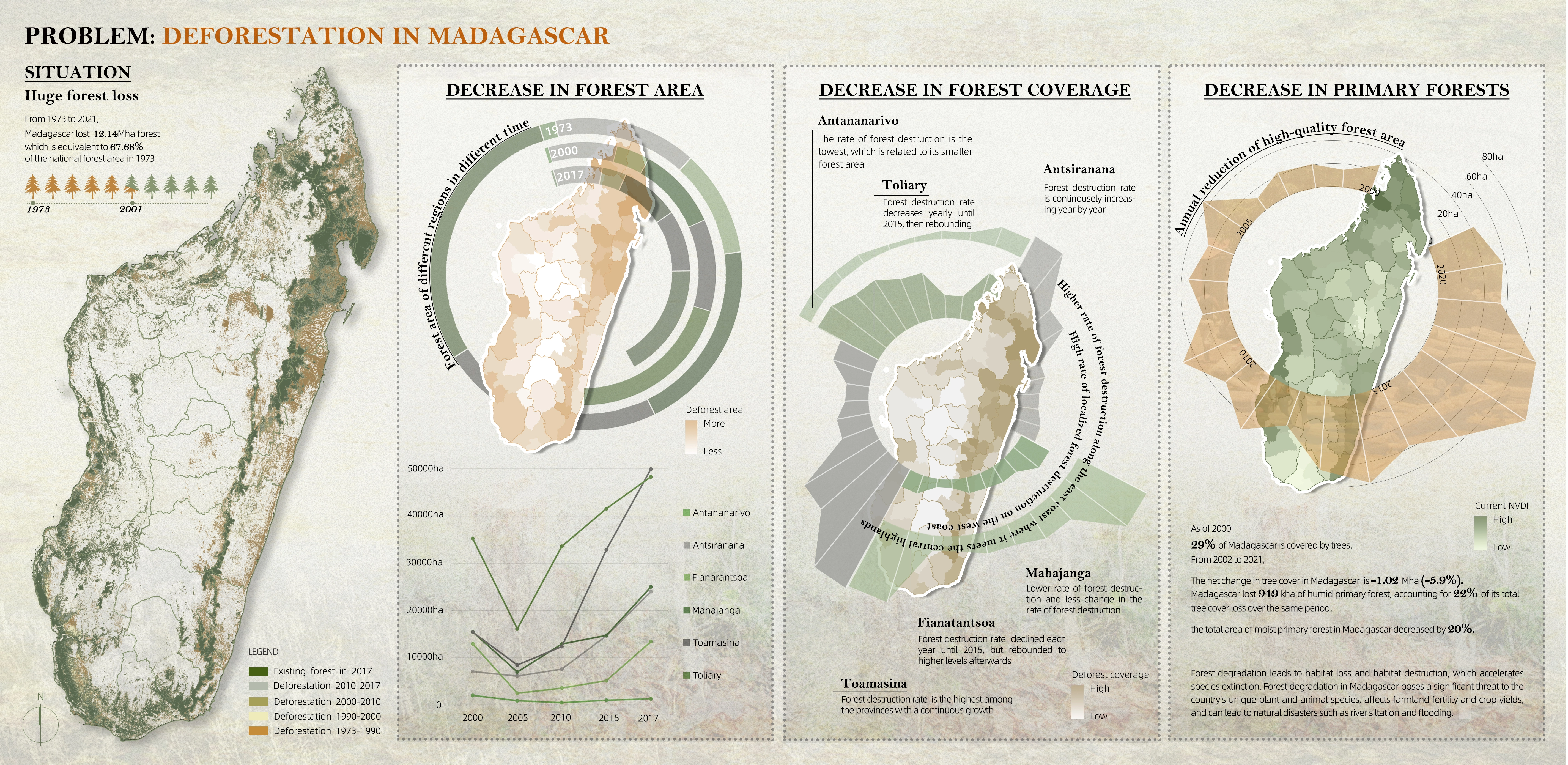
Problem: Growing Deforestation
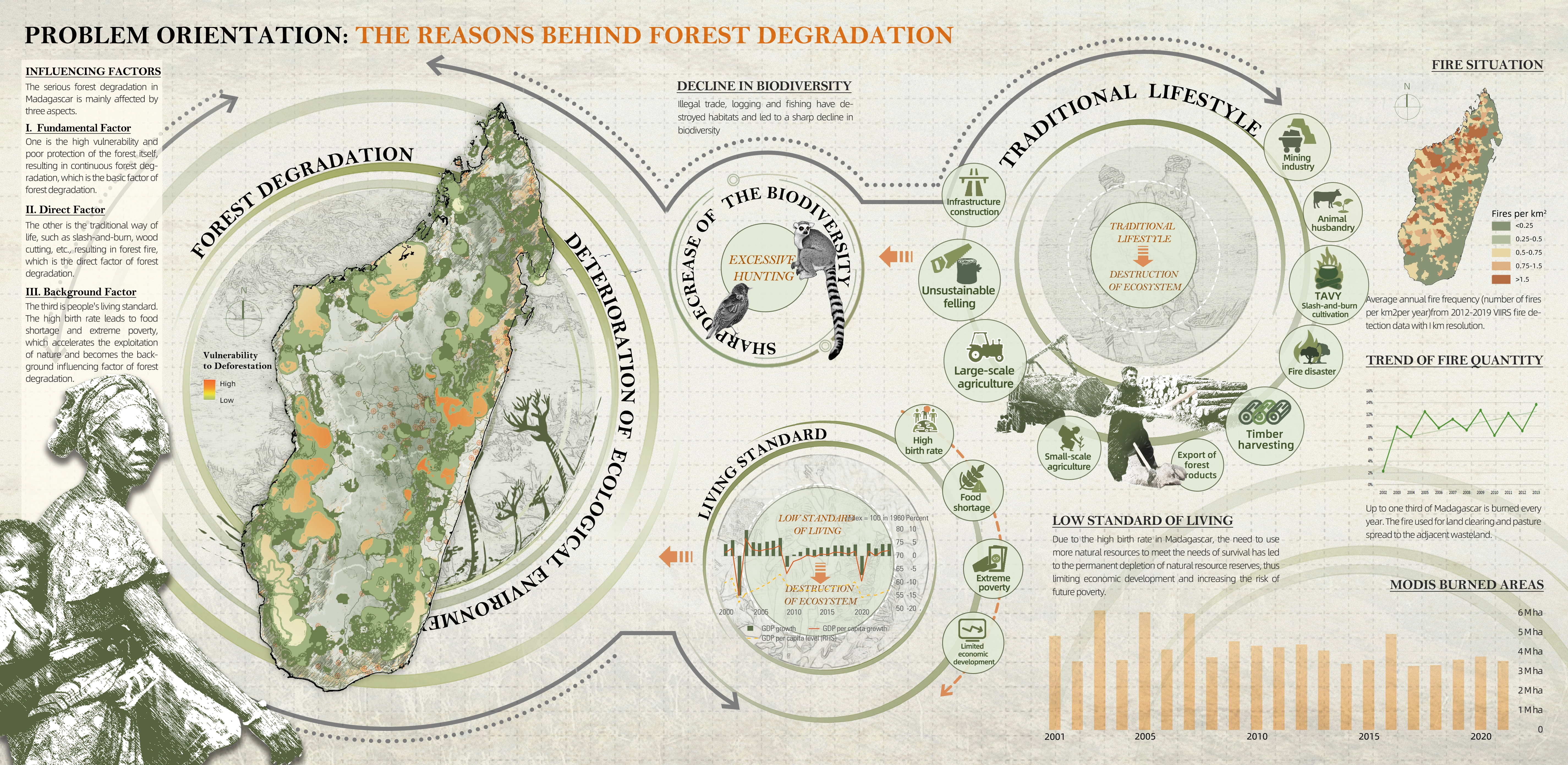
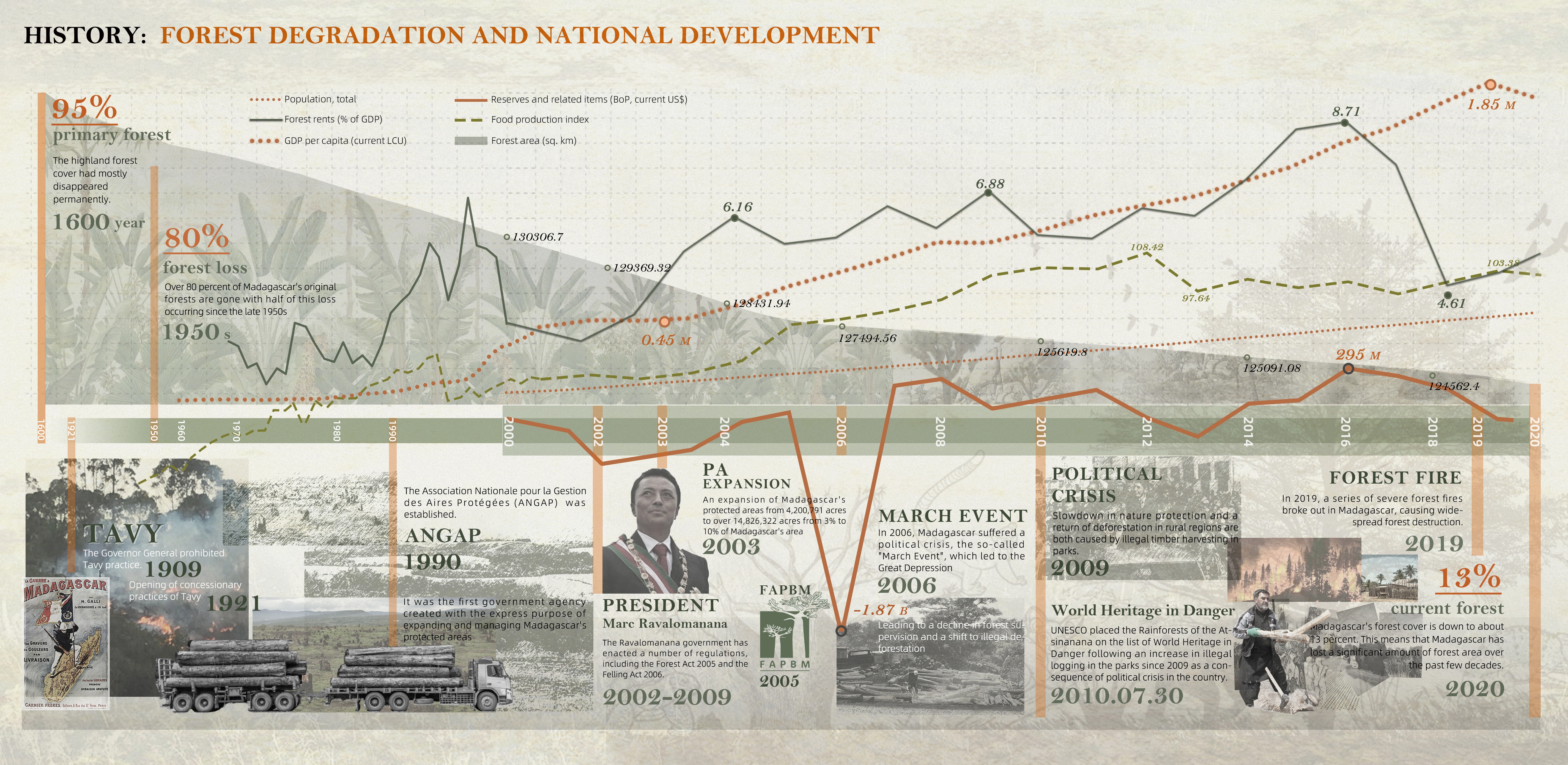
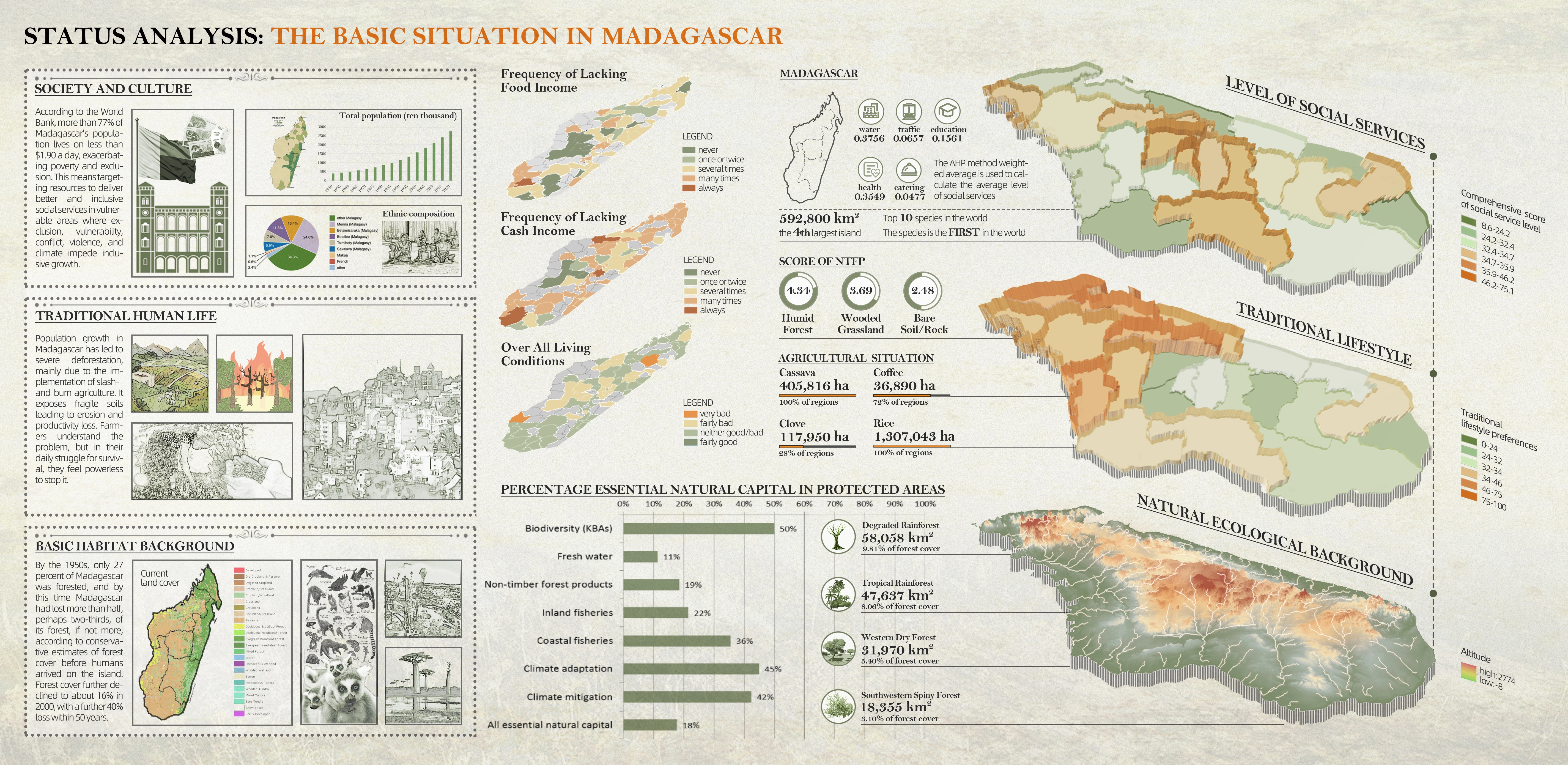
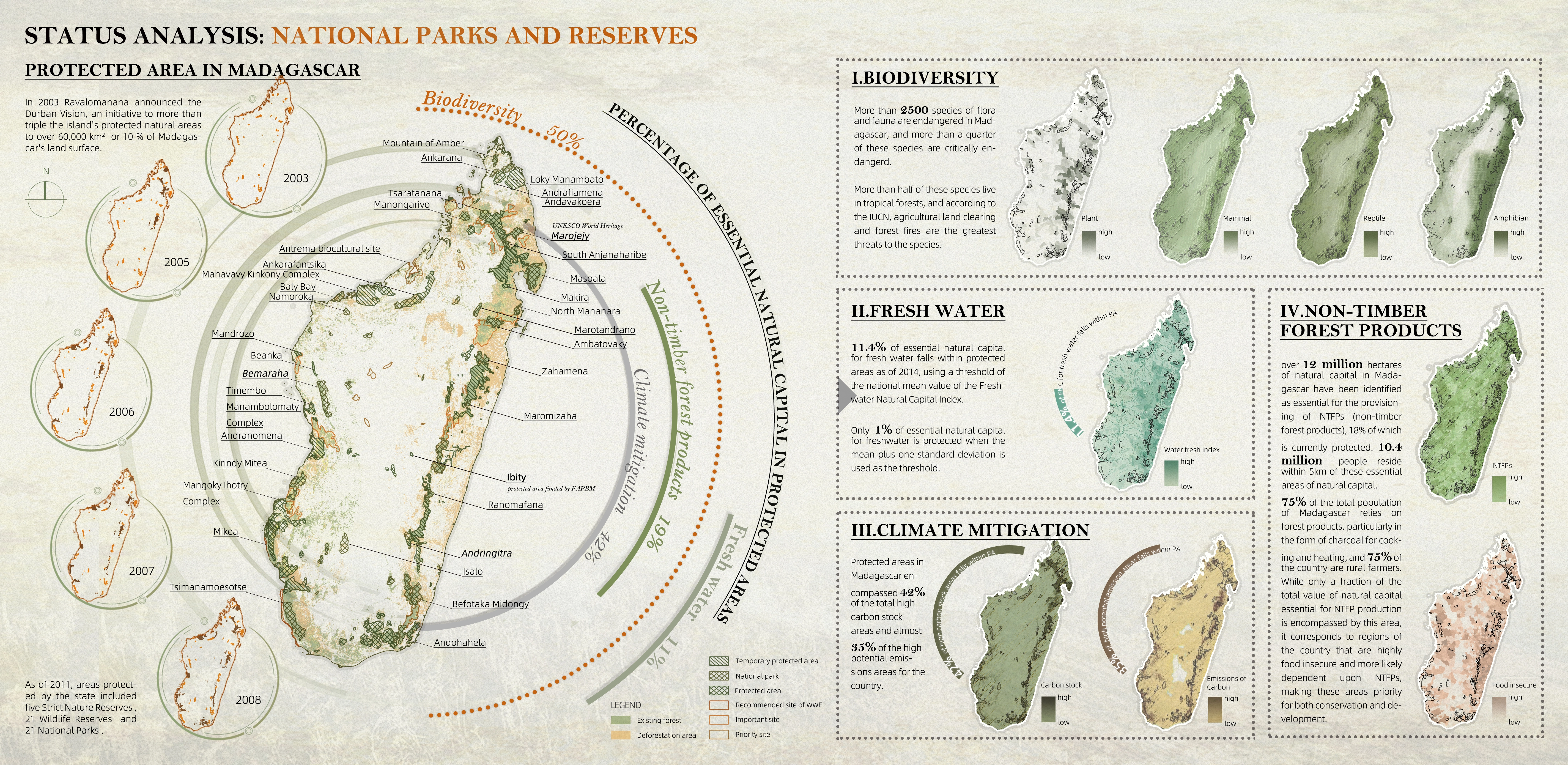
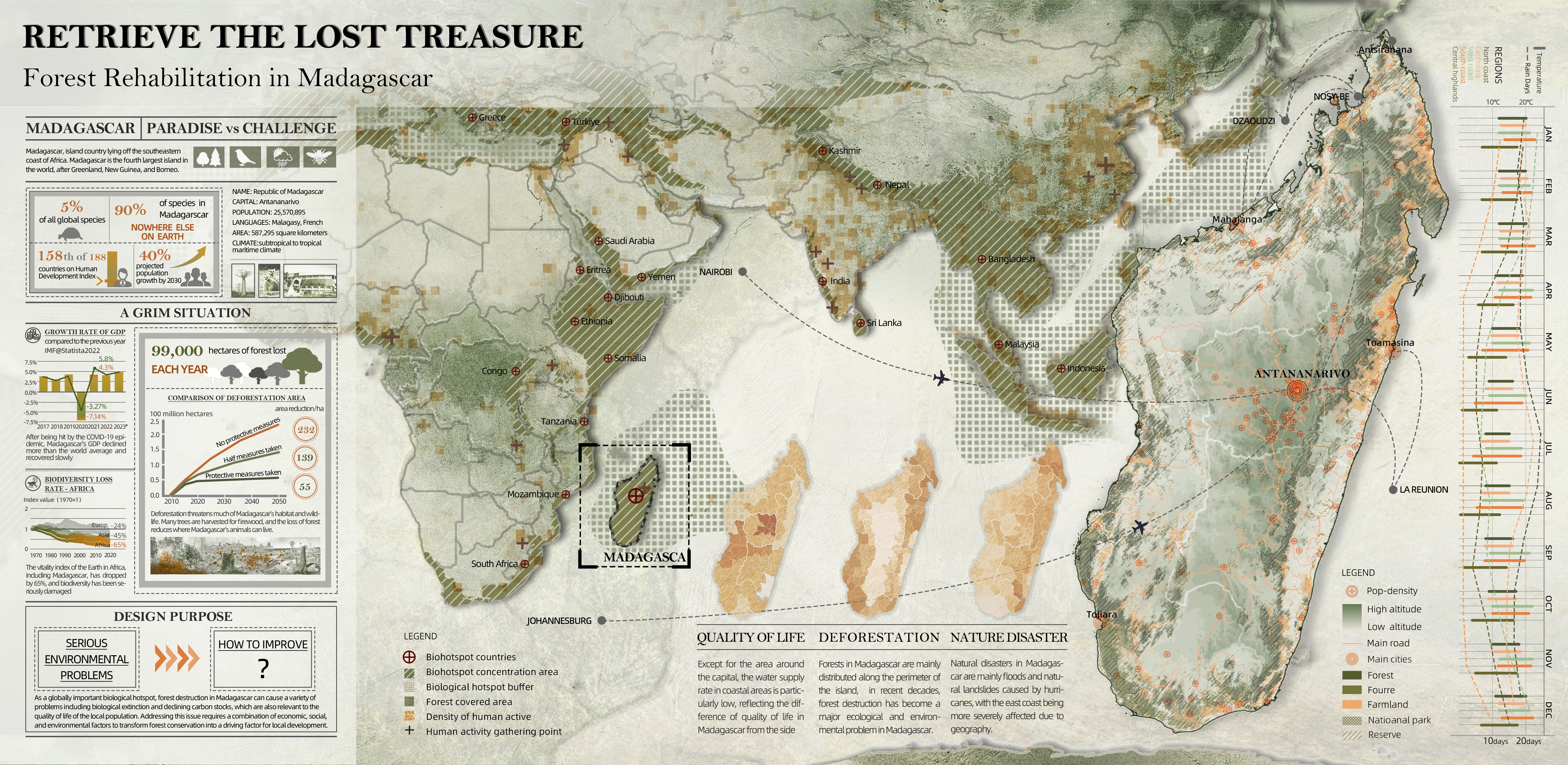
Madagascar, the world's fourth-largest island, has a diverse range of ecosystems that sustain a diverse array of specialized flora and wildlife. Nonetheless, deforestation in Madagascar is an urgent environmental problem, endangering the island's remarkable biodiversity. Over 2,500 plant and animal species are threatened on the island, with a fifth listed as severely endangered. Agriculture, livestock rearing, and illicit logging are the primary causes of deforestation, altering ecosystems and putting endangered species at risk. While efforts to expand protected areas were initiated in 2003, the impact of these efforts in reducing forest destruction remains unknown.
The Unsustainable Development Status
Traditional slash-and-burn farming is a serious impediment to forest conservation. This unsustainable practice involves the burning of trees for land clearance, which causes soil degradation, erosion, and decreased forest regrowth. It has an impact on agricultural output, food security, local climate patterns, and the depletion of natural resources. Furthermore, valuable timber species are unlawfully taken from protected areas in response to domestic and international demand. These practices have negative socioeconomic effects because populations rely on forest resources for a living.
Creating a Model of Sustainable Development
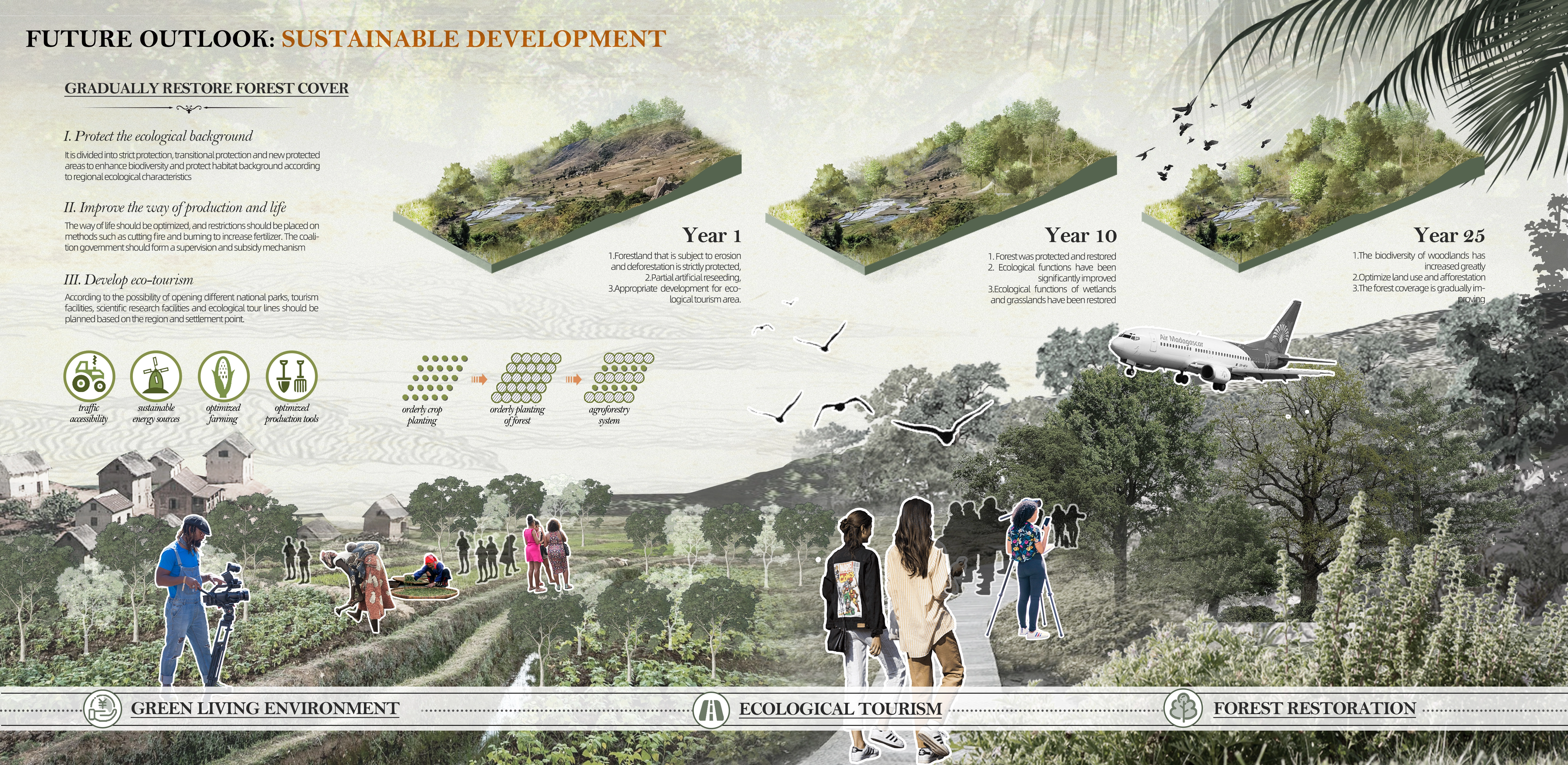
Addressing deforestation in Madagascar necessitates a comprehensive and coordinated approach, which can be divided into three categories, all of which aim to promote sustainable development while protecting the natural environment.
Forest Preservation and Restoration
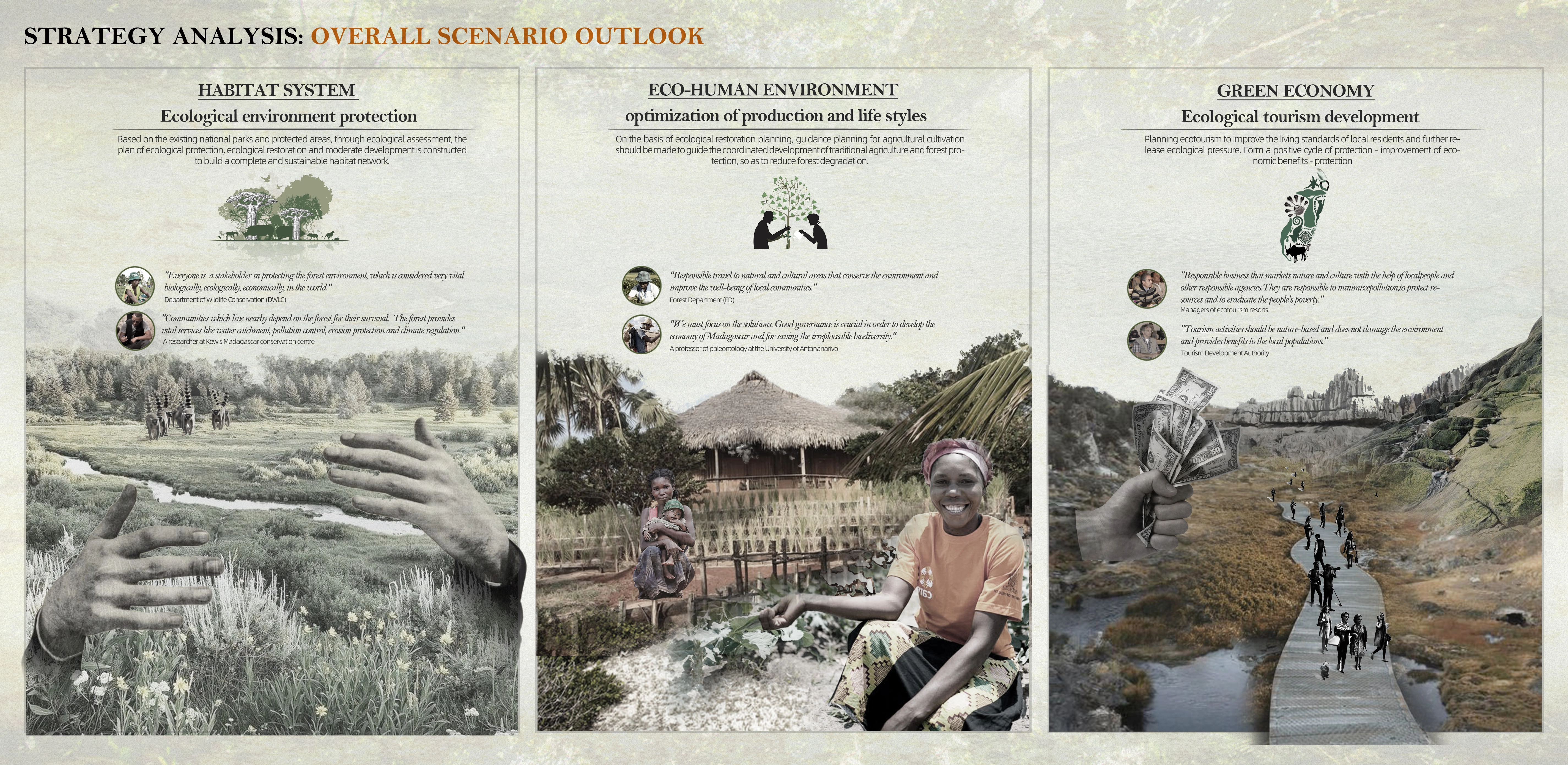
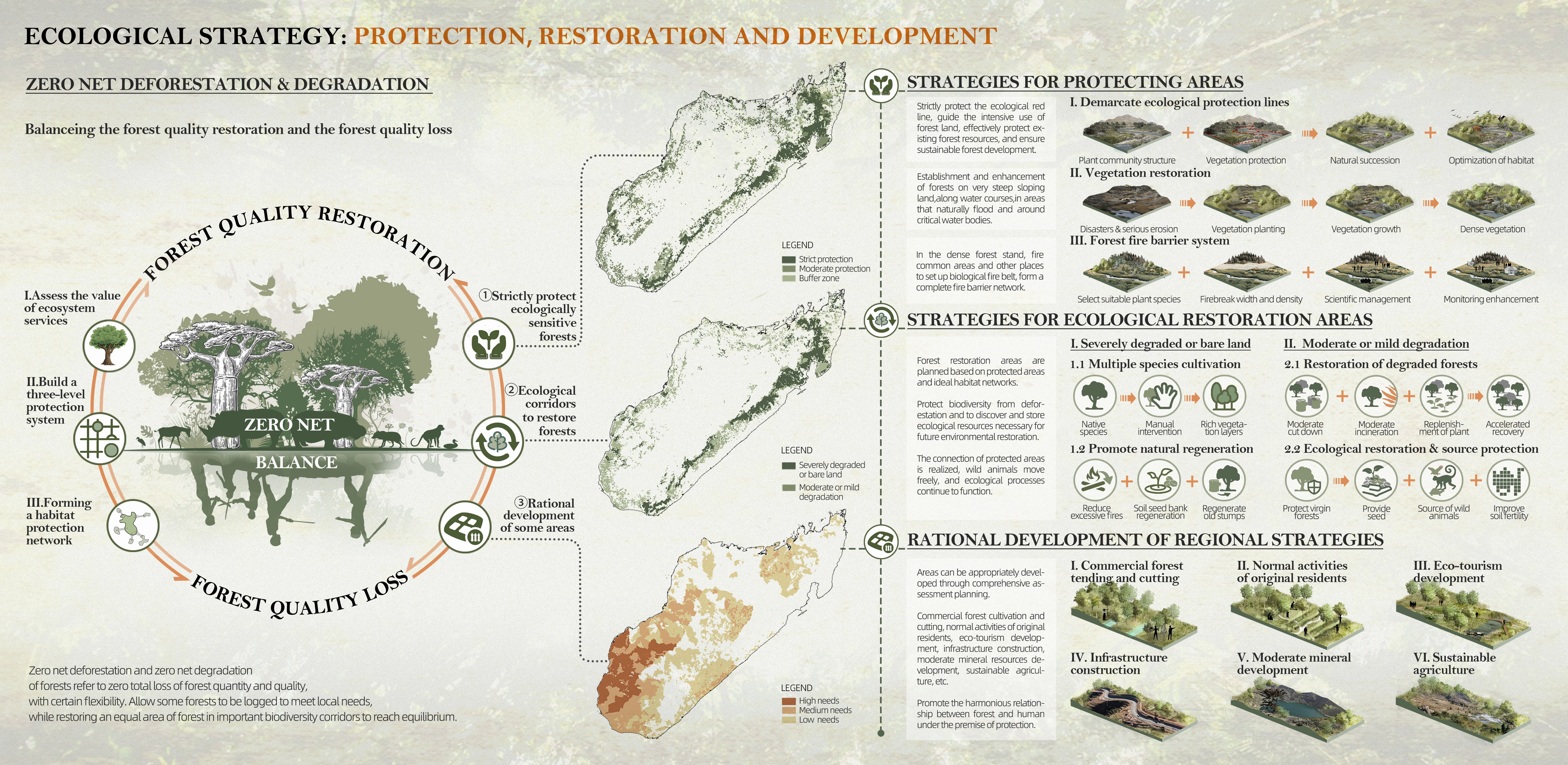
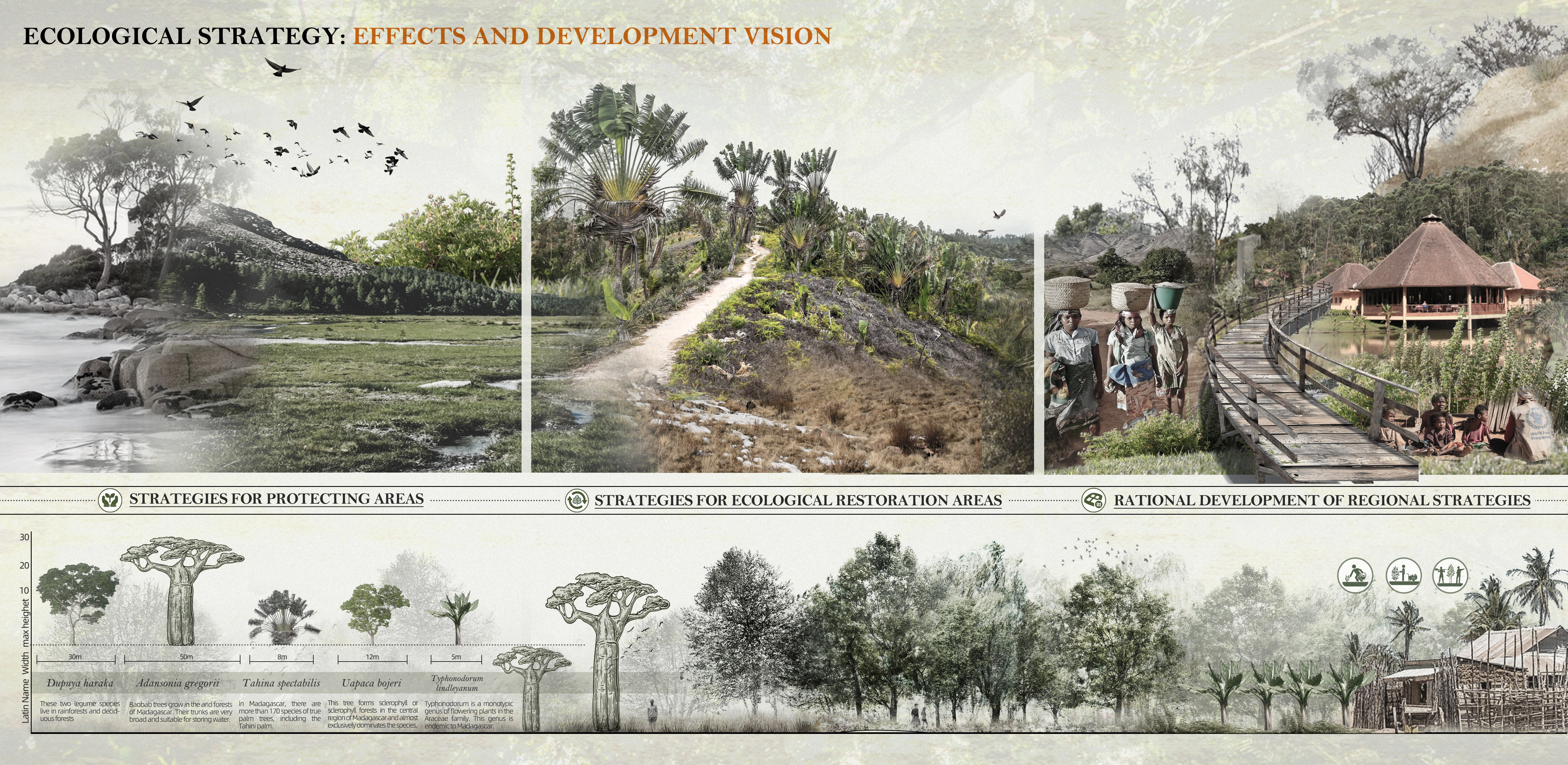
To achieve zero net deforestation and forest degradation in Madagascar, a delicate balance of economic development and environmental conservation is required. The creation of ecological protection lines, based on the ecological network, delineates areas that require special conservation care. Furthermore, sustainable commercial forest management is stressed, assuring responsible and environmentally conscious timber harvesting practices such as selective logging and reforestation activities.
Production and Lifestyle Promotion
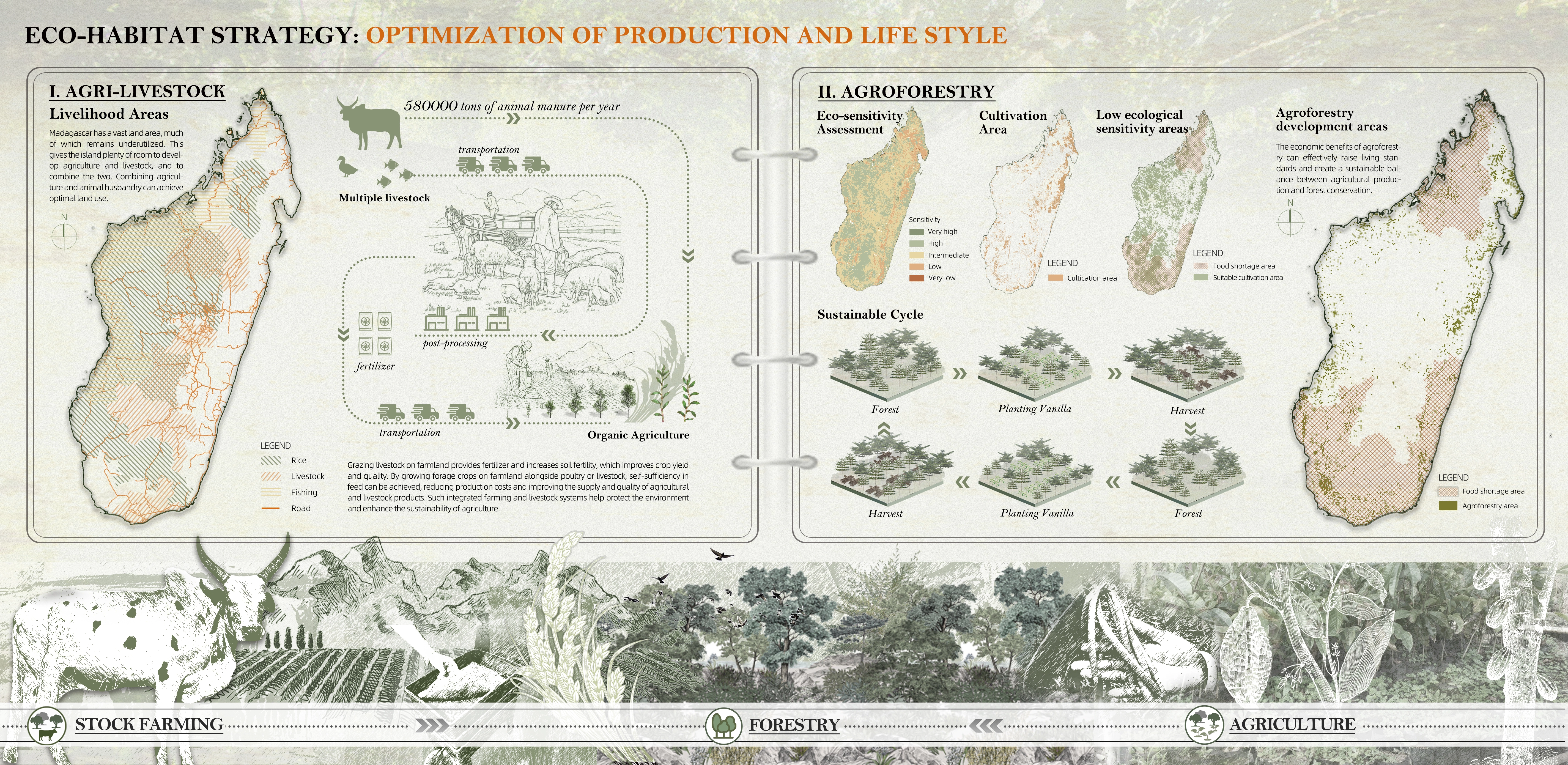
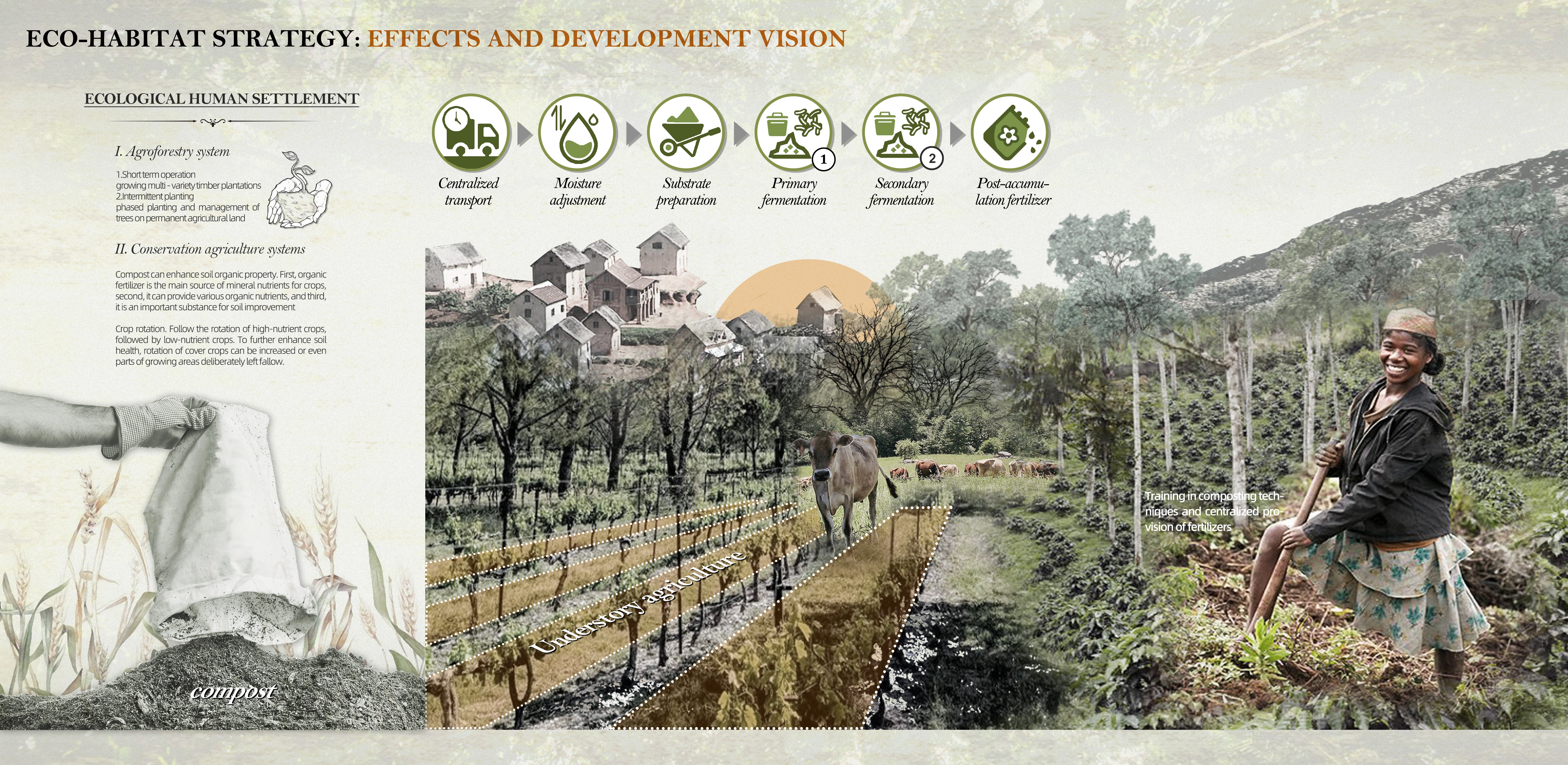
There are a variety of sustainable production approaches as alternatives to slash-and-burn practices, including livestock management, agroforestry, and the provision of training for farmers on composting techniques, as well as the centralized provision of fertilizers, with the goal of mitigating environmental impact and fostering the long-term well-being of ecosystems. The evaluation allows for the implementation of the most appropriate optimization strategies in various locations, allowing for the effective development of living conditions as well as the health and resilience of forest ecosystems.
The Green Economy Strategy
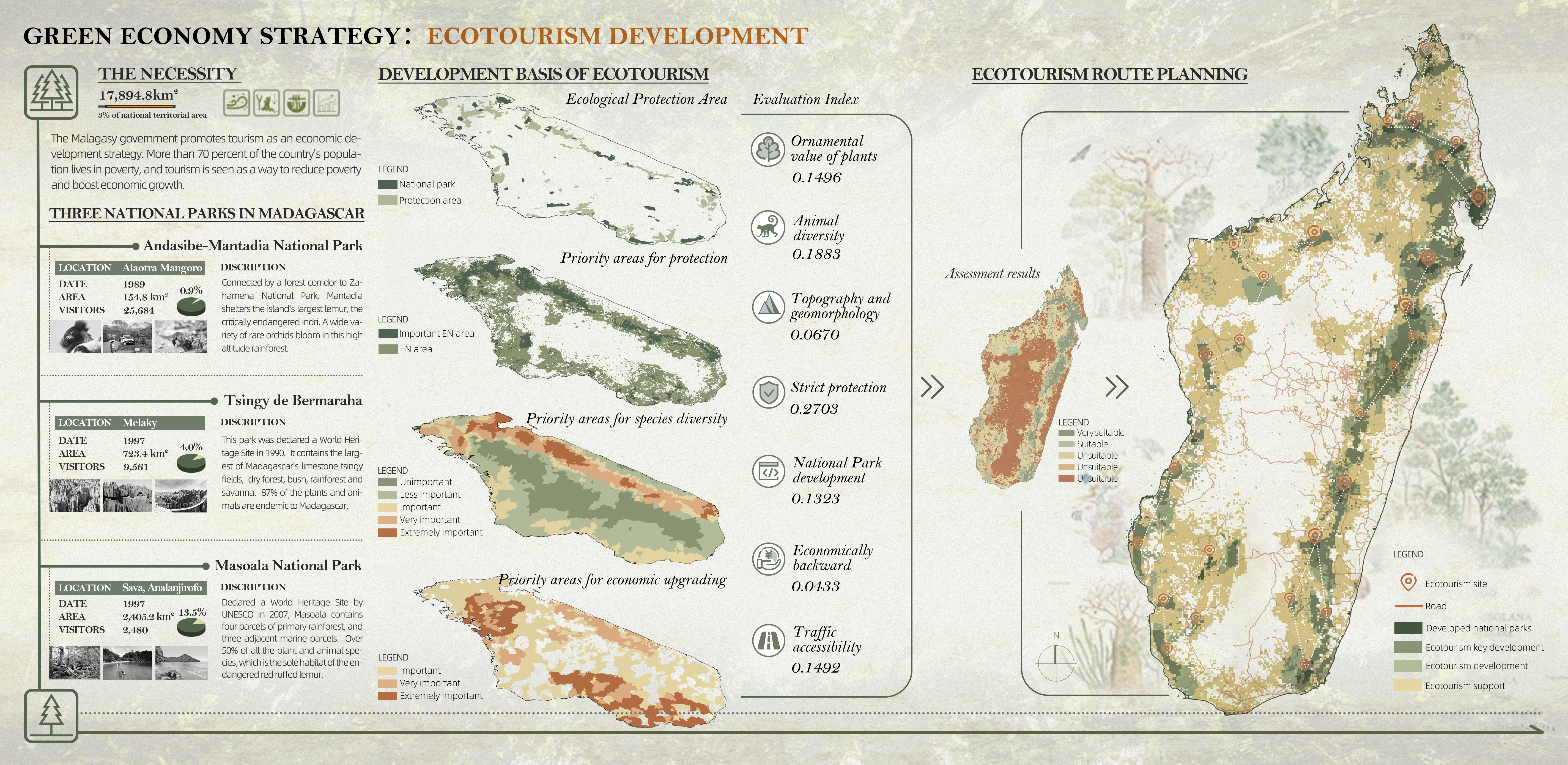
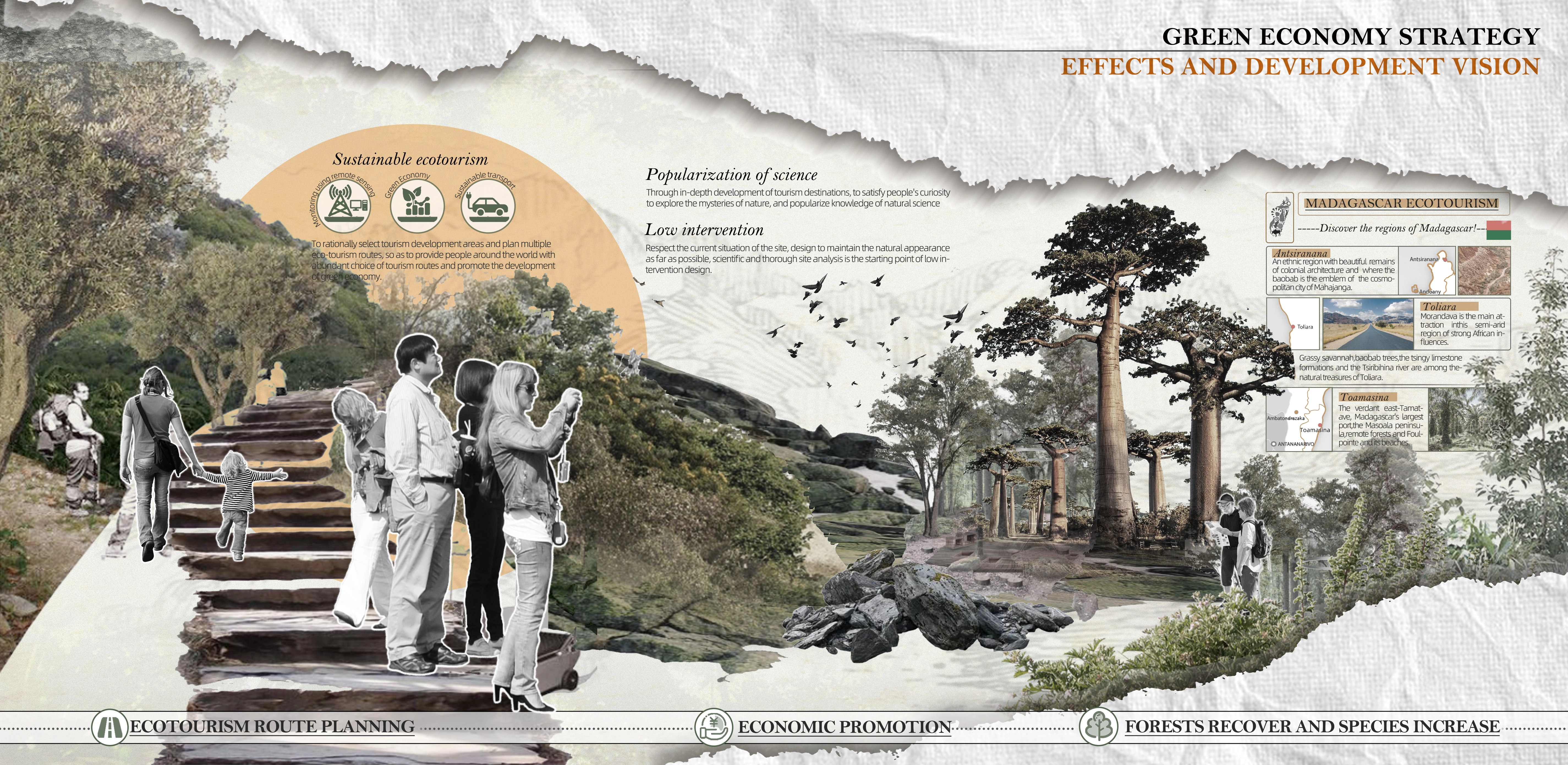
The green economy strategy lays a strong emphasis on ecotourism, which tries to maintain the natural environment while also tackling poverty and replicating economic growth. Ecotourism can supply visitors from all over the world with a varied choice of tourism offerings while reducing negative environmental impacts. Furthermore, the discipline of natural sciences is popularized through the immersive development of tourism locations, offering opportunity for visitors to explore and enjoy nature's beauty. This strategy improves the educational value of tourism experiences and helps to raise environmental consciousness.
-
- Cordyla Haraka (Dupuya haraka)
- Baobab (Adansonia gregorii)
- Tahina palm (Tahina spectabilis)
- Tapia (Uapaca bojeri)
- Water banana (Typhonodorum lindleyanum)