
.webp?language=en-US)


-
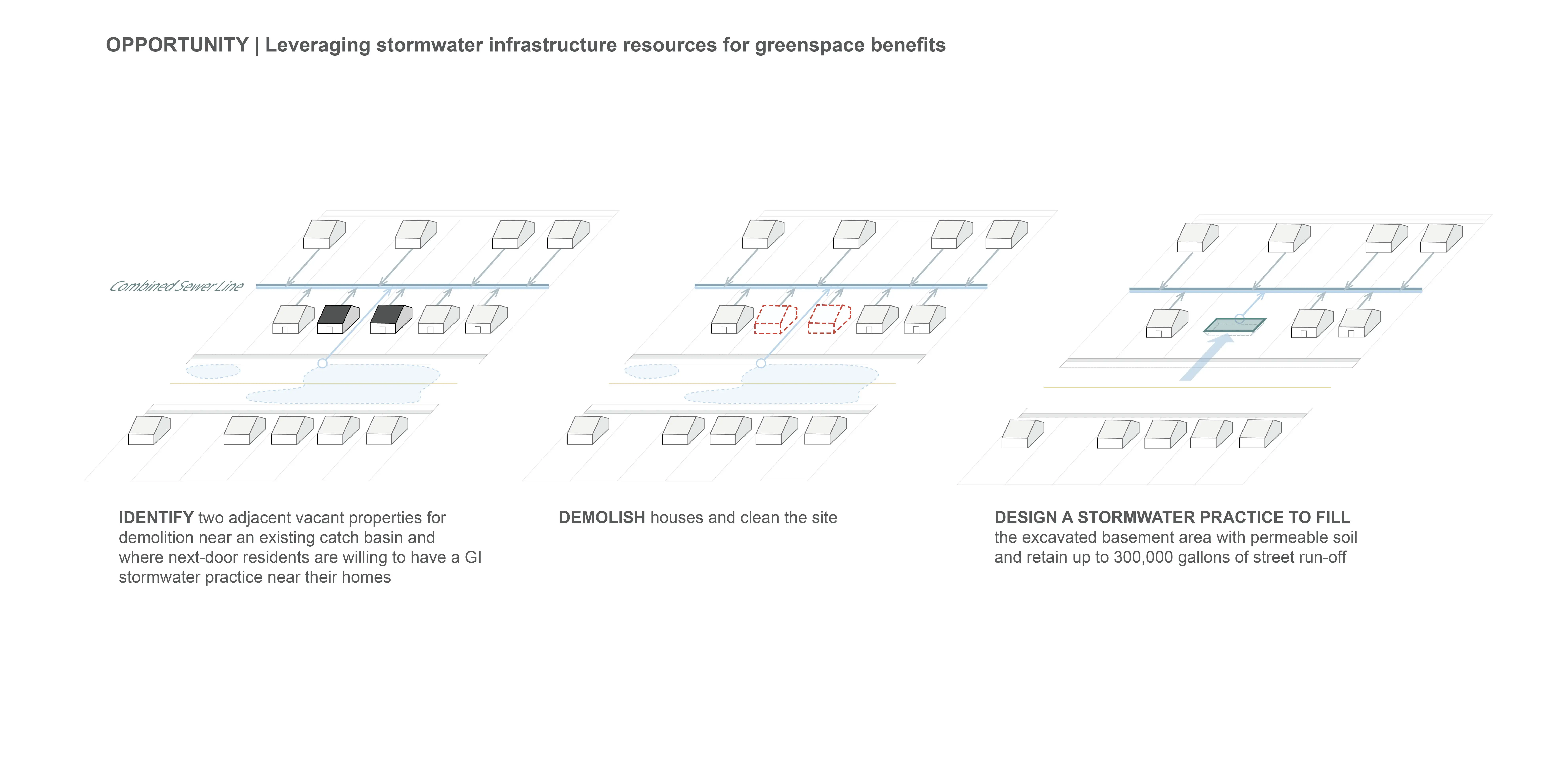
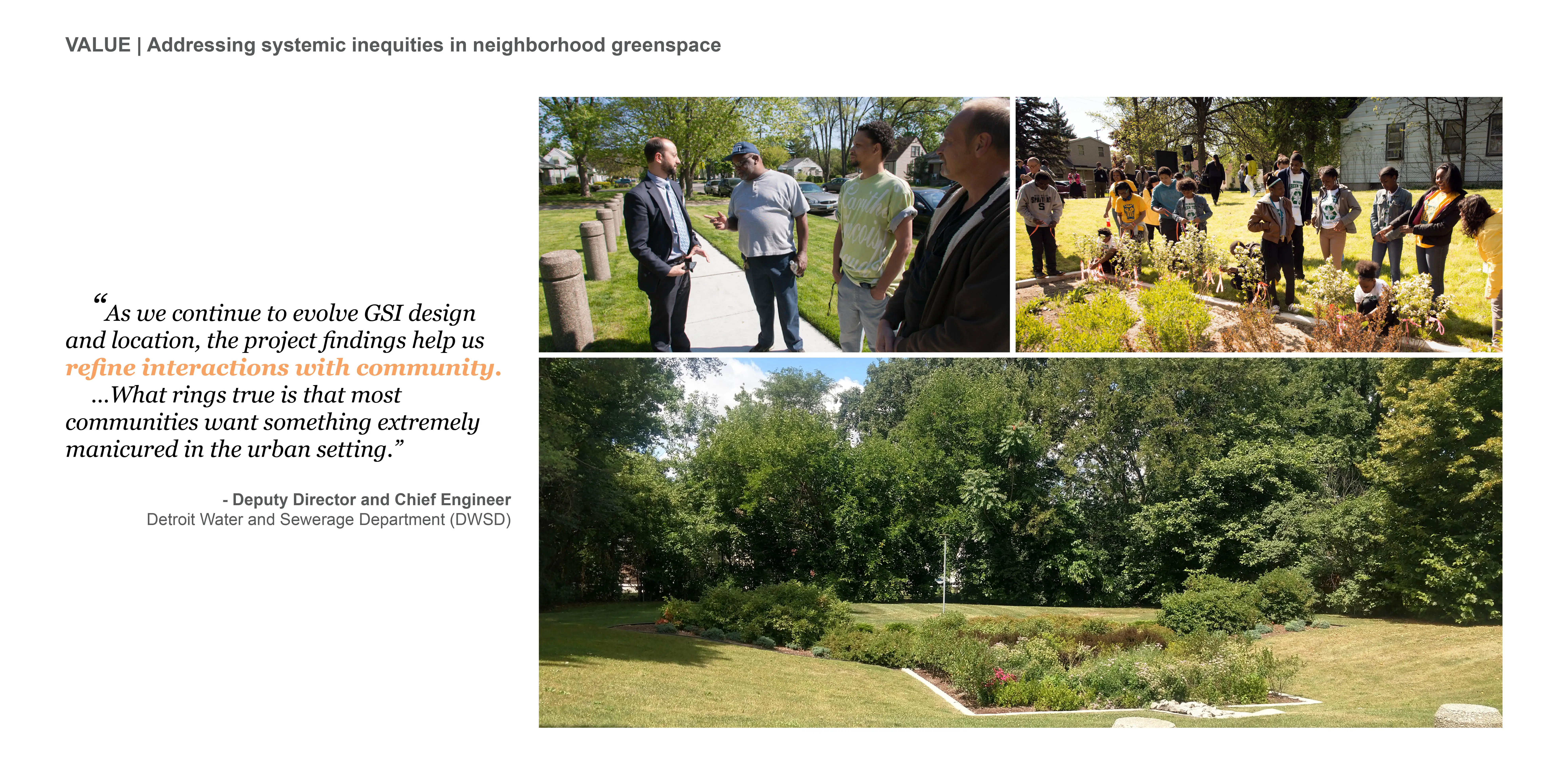
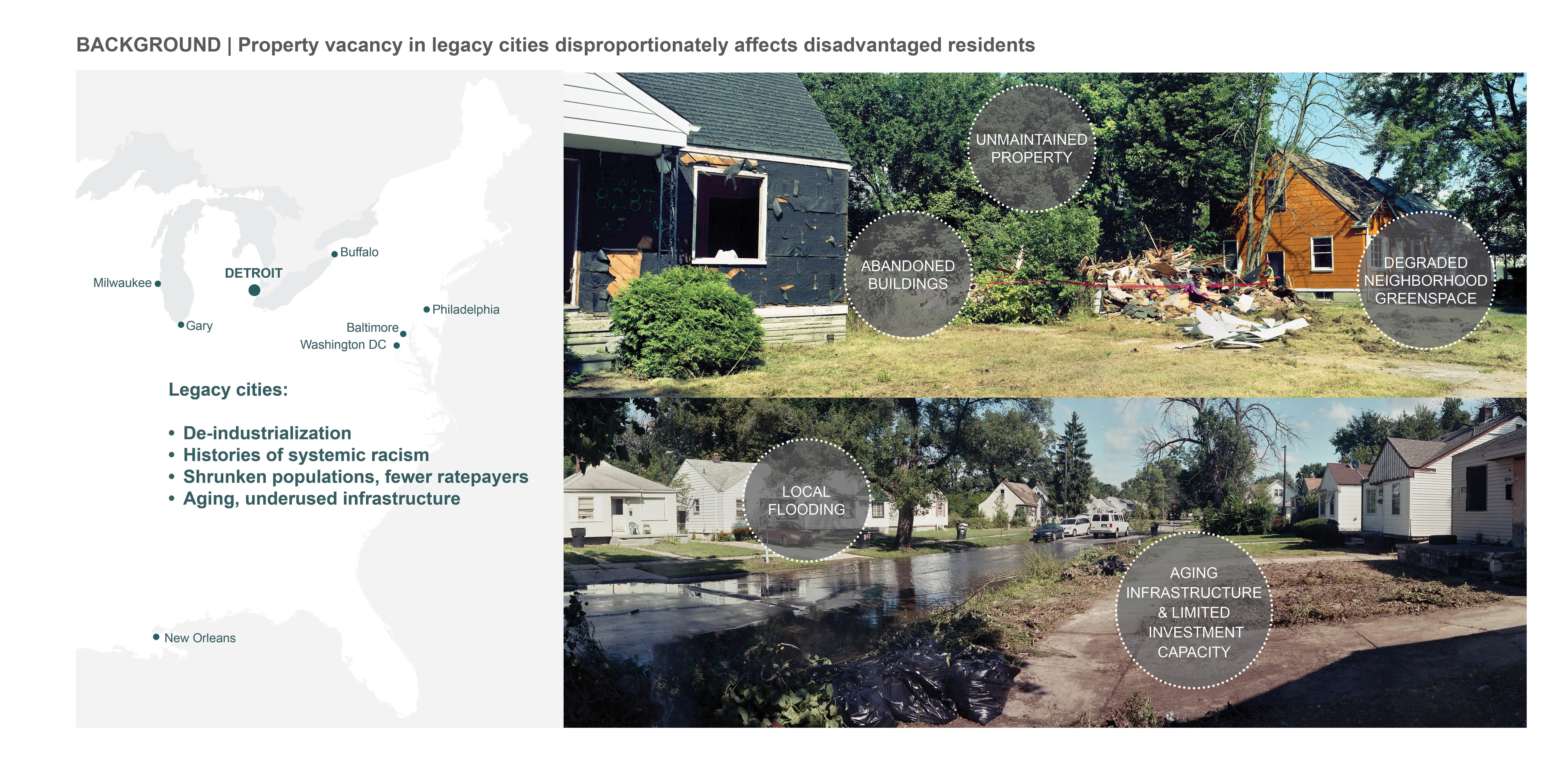
This multi-year transdisciplinary research project in Detroit, MI, USA, addressed the relationship between greenspace and residents’ well-being in neighborhoods struggling with widespread vacant property. Leveraging green stormwater infrastructure (GSI) investments by the water utility to create new neighborhood greenspaces, it investigated which design elements were essential to well-being, and which had the greatest effect on well-being of residents. Detroit, like many legacy cities, has a history of deindustrialization, racist housing policies, and years of disinvestment contributing to depopulation. Poverty and property vacancy disproportionately affect disadvantaged residents in some neighborhoods. These residents’ experiences with vacant property undermine their well-being, personal safety and property values. Greening of vacant lots may promote well-being, depending upon how residents experience the qualities of greenspace landscapes. However, maintenance to ensure that vacant lots are well-cared-for is challenged by budgetary limitations of legacy cities. For this reason, understanding how to select GI design elements that can be maintained over time and that will make a difference in residents’ well-being is essential to landscape architecture’s capacity to address systemic inequities in legacy cities.
-
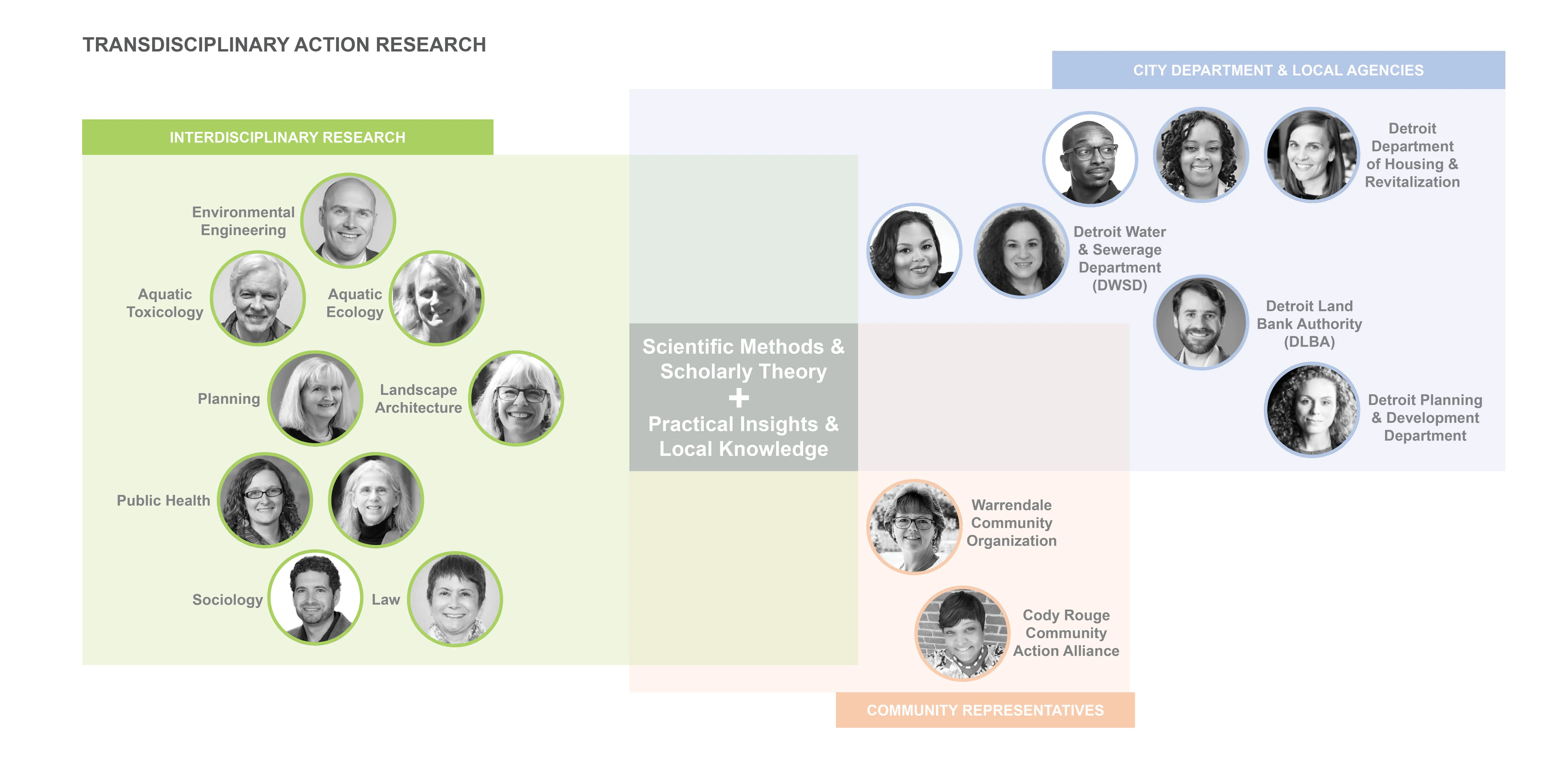
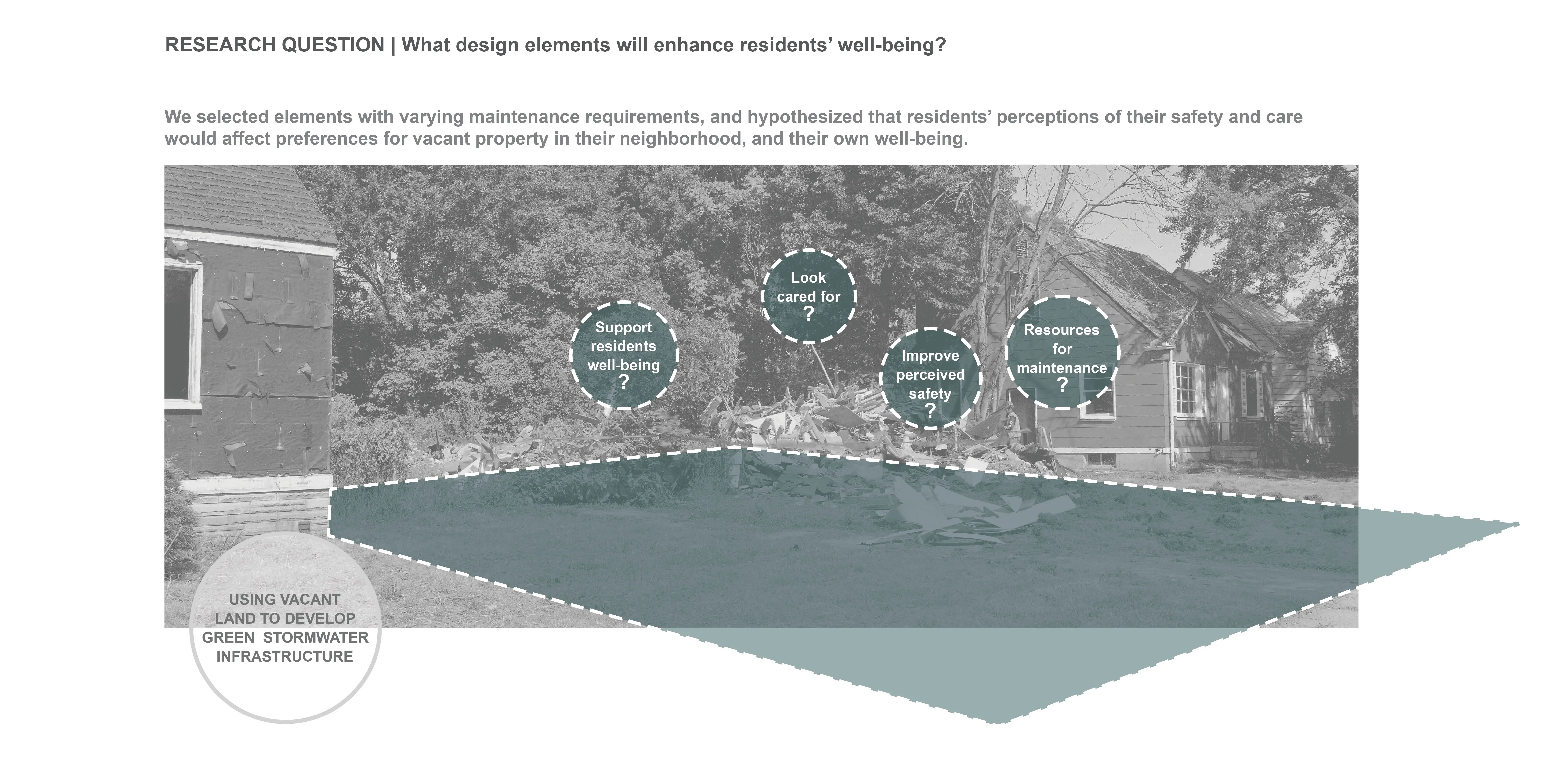
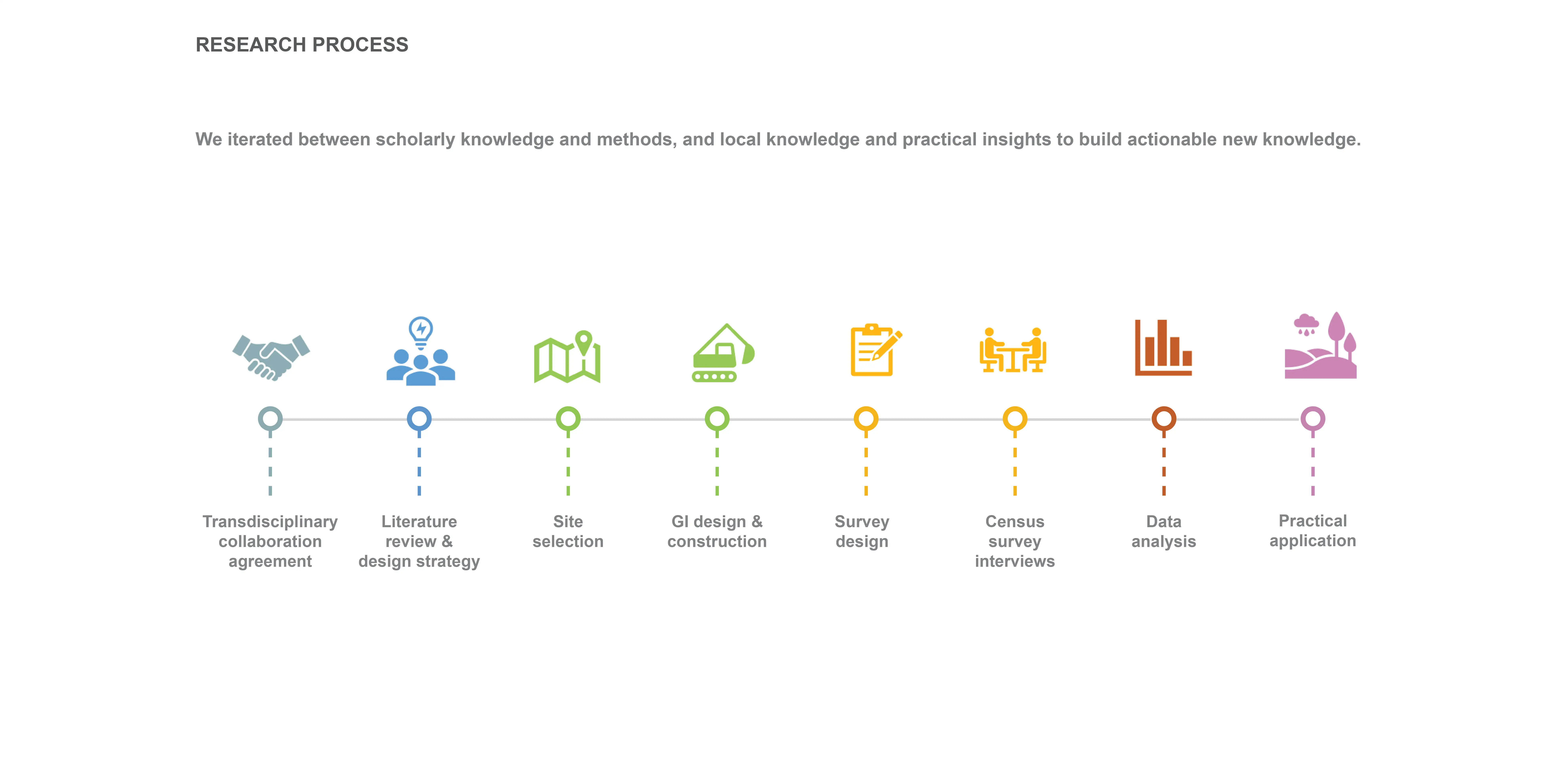
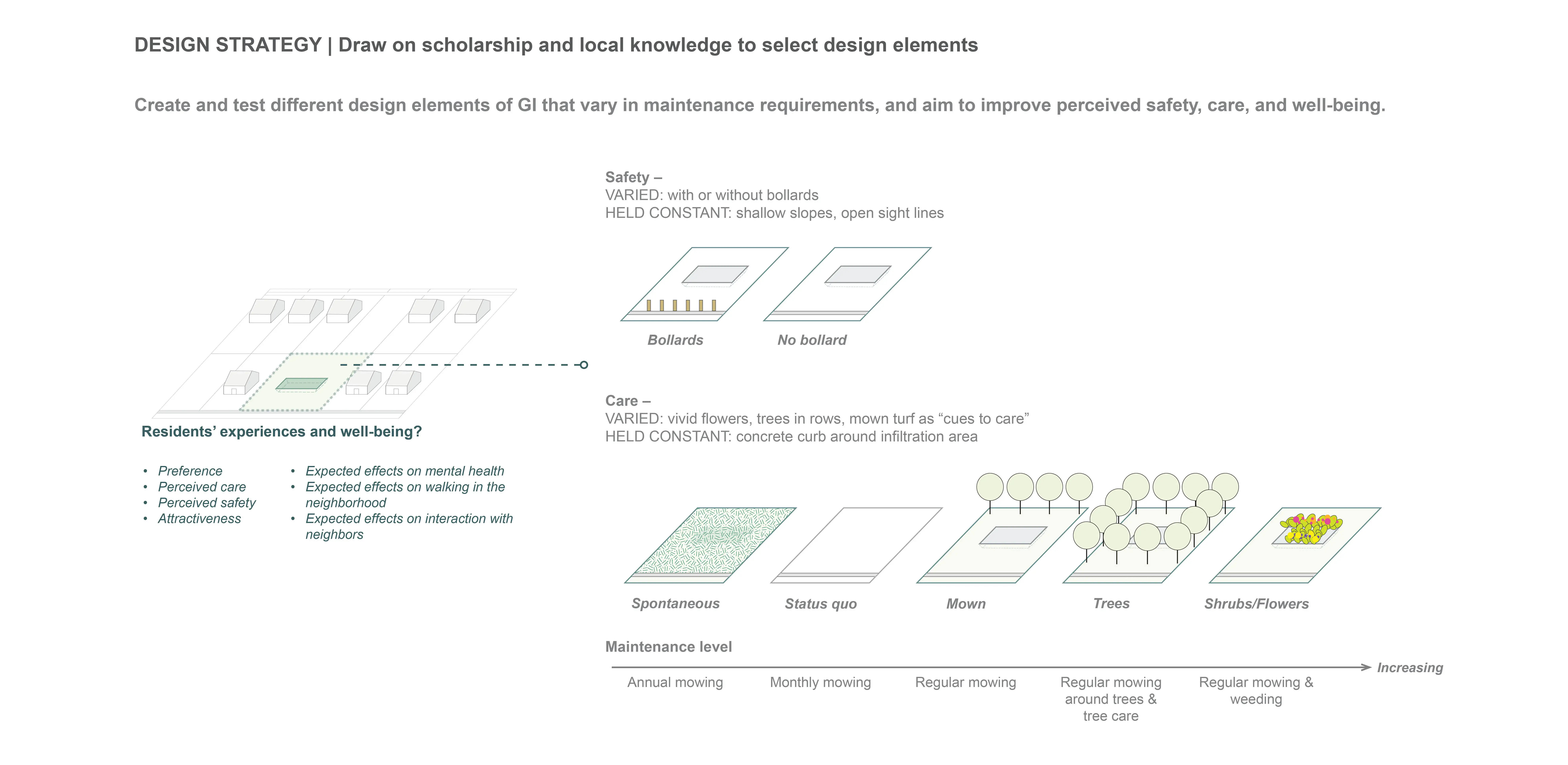
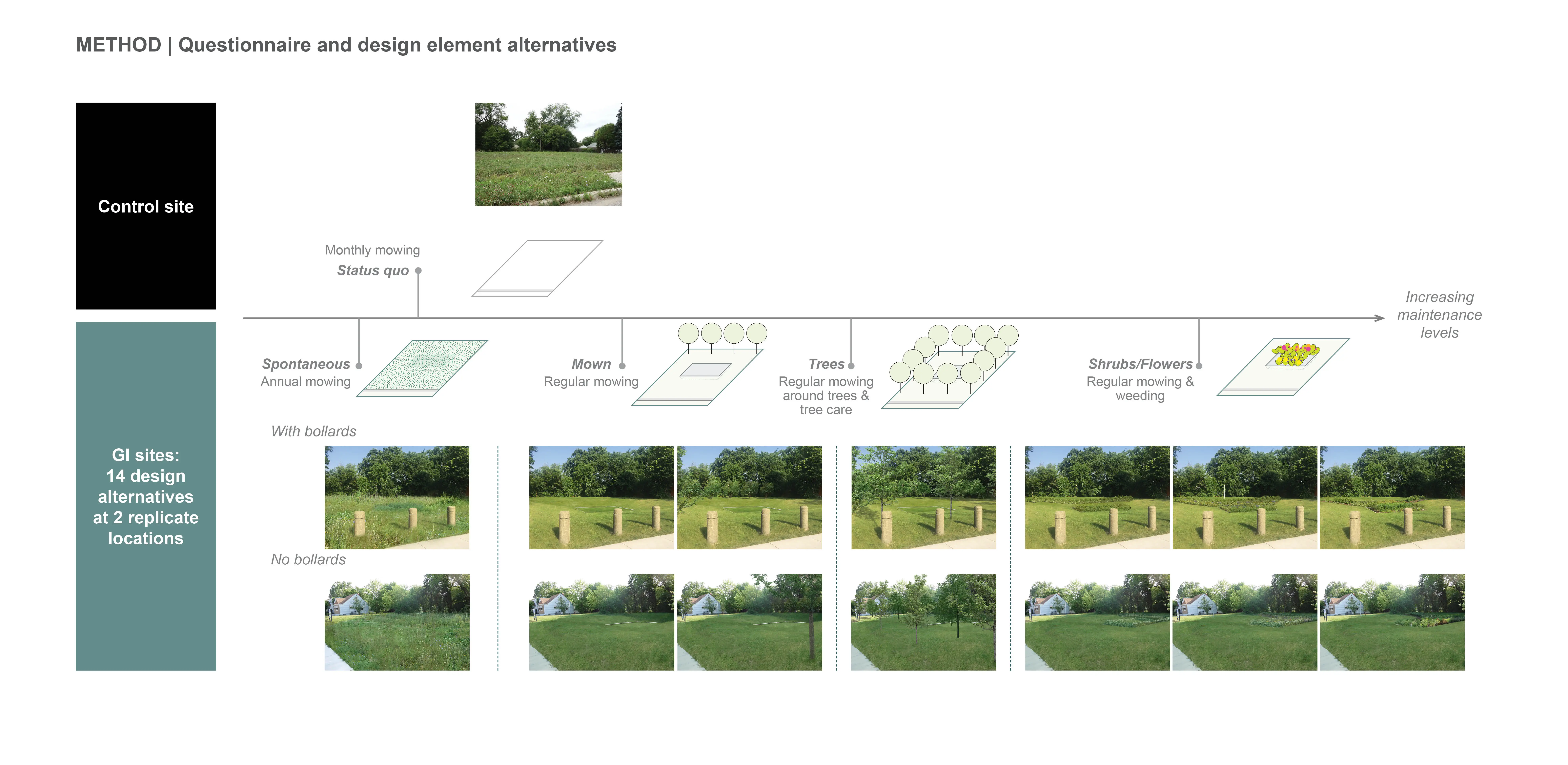
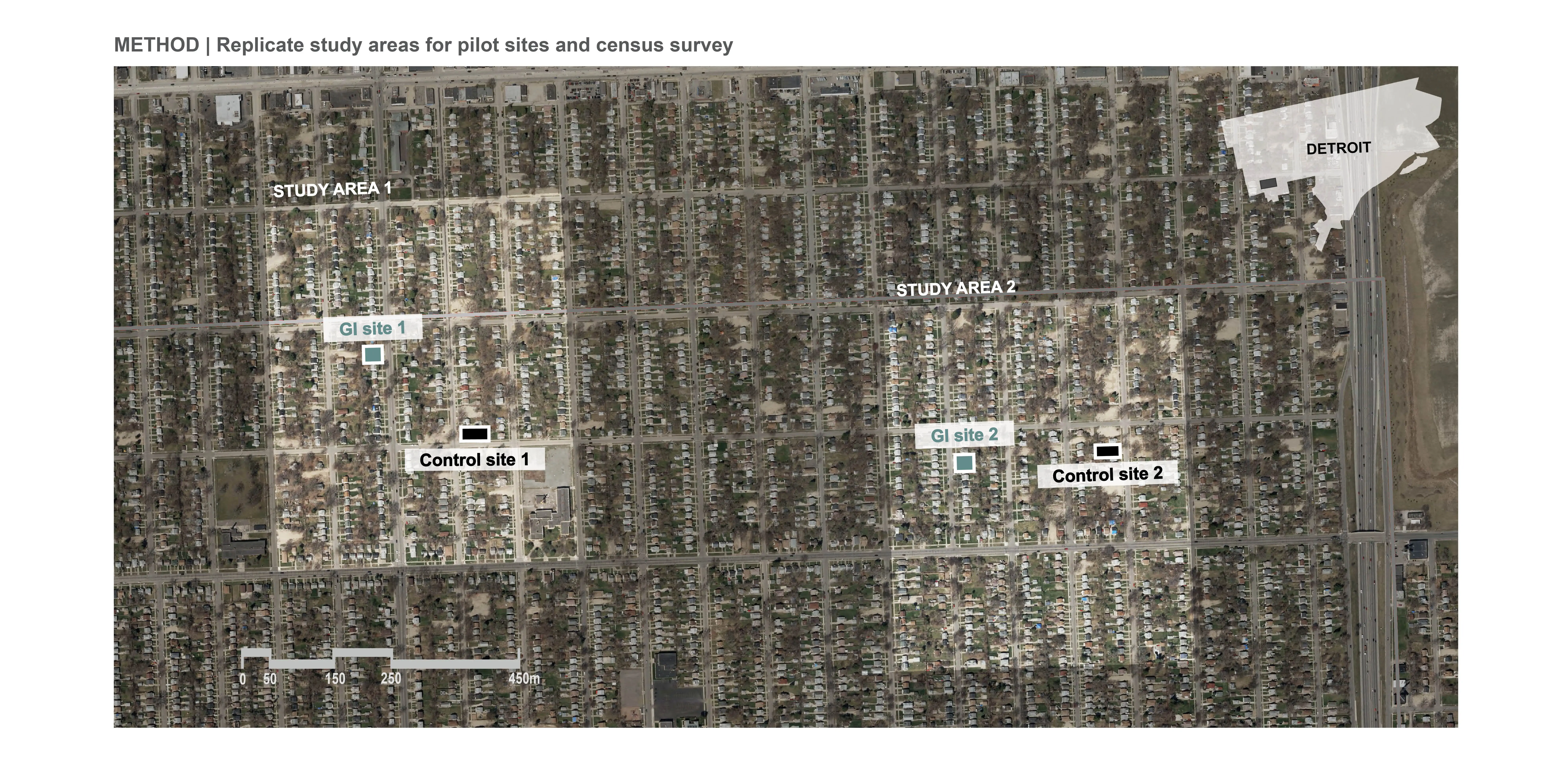
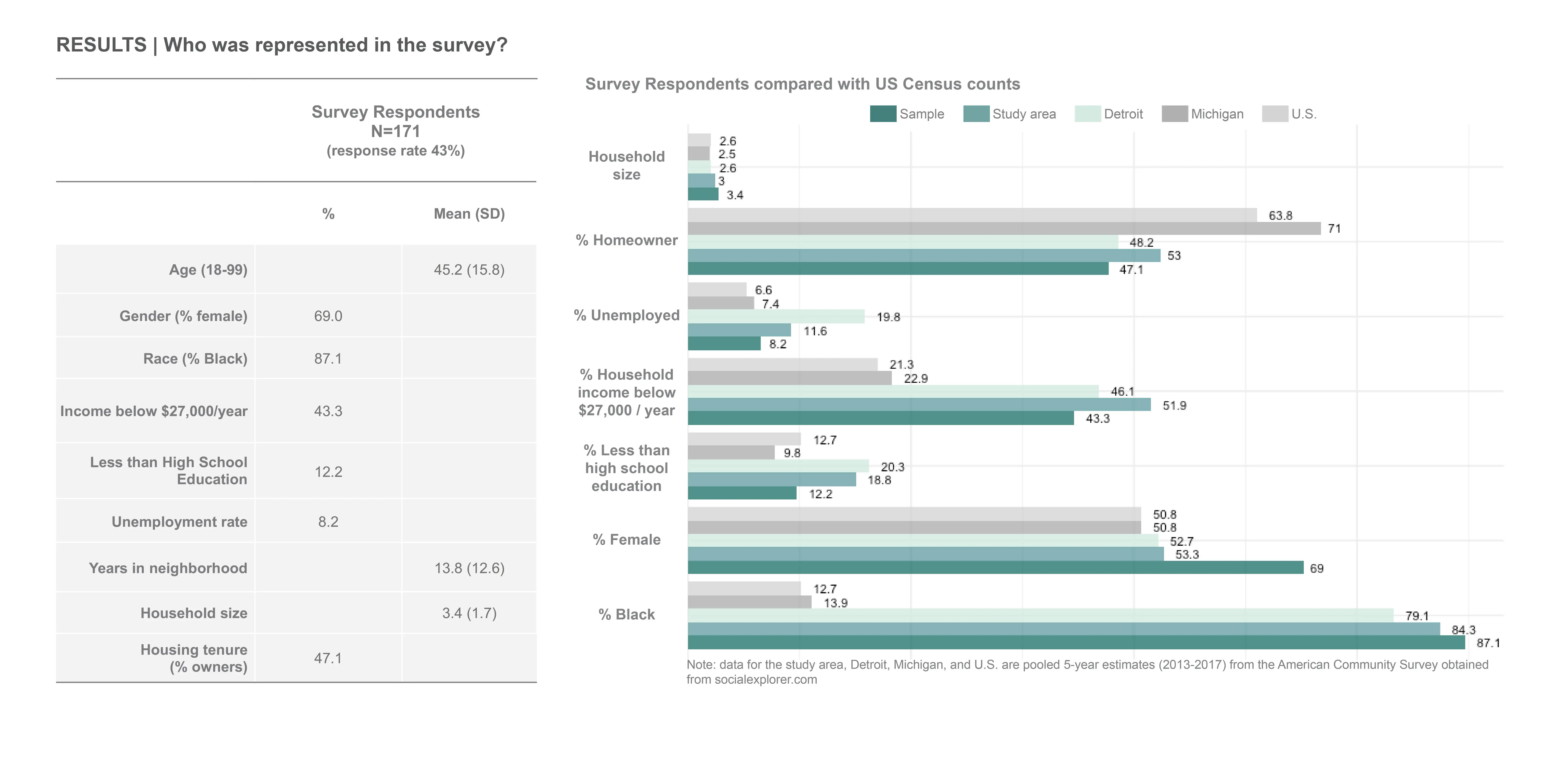
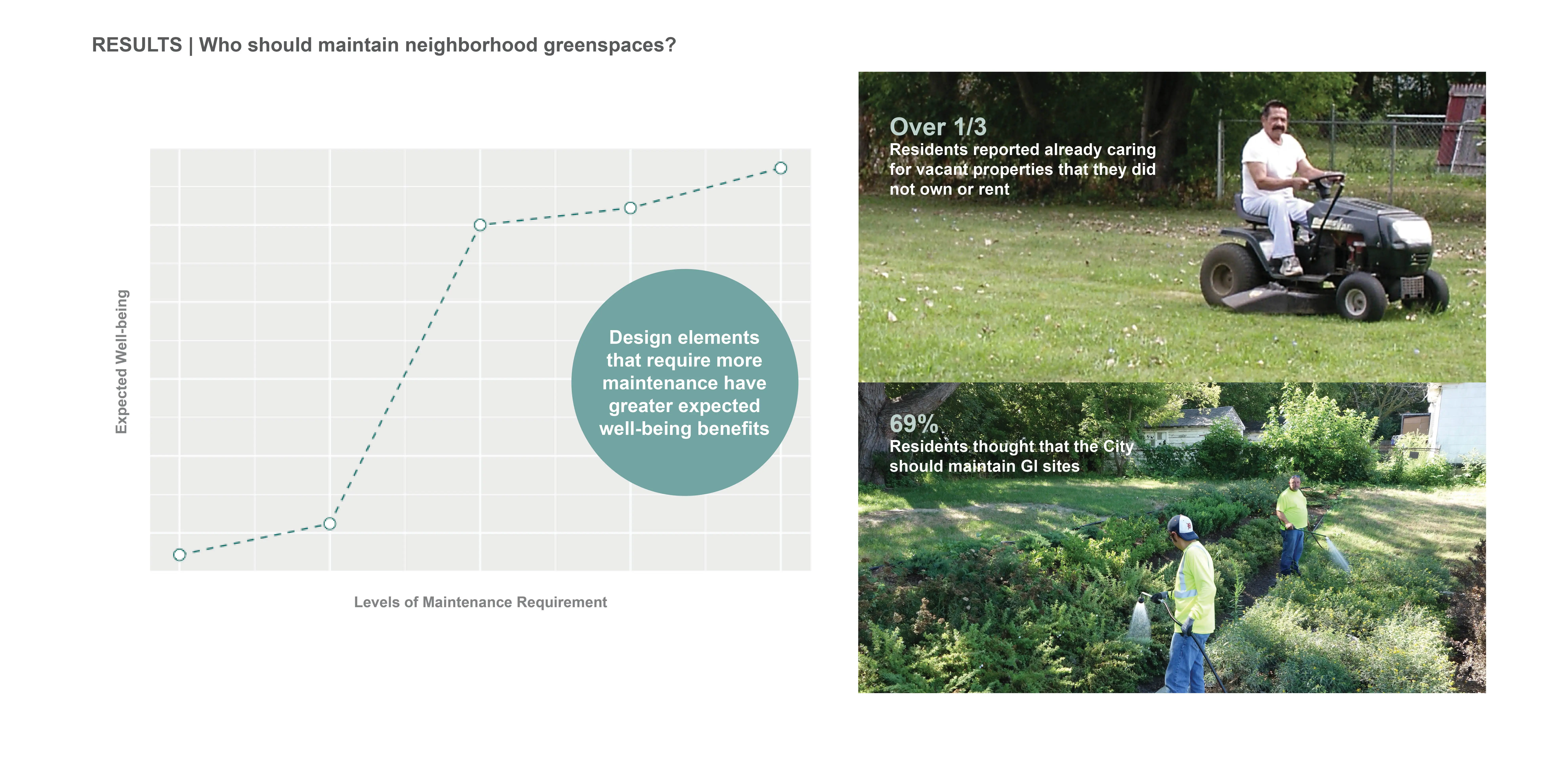
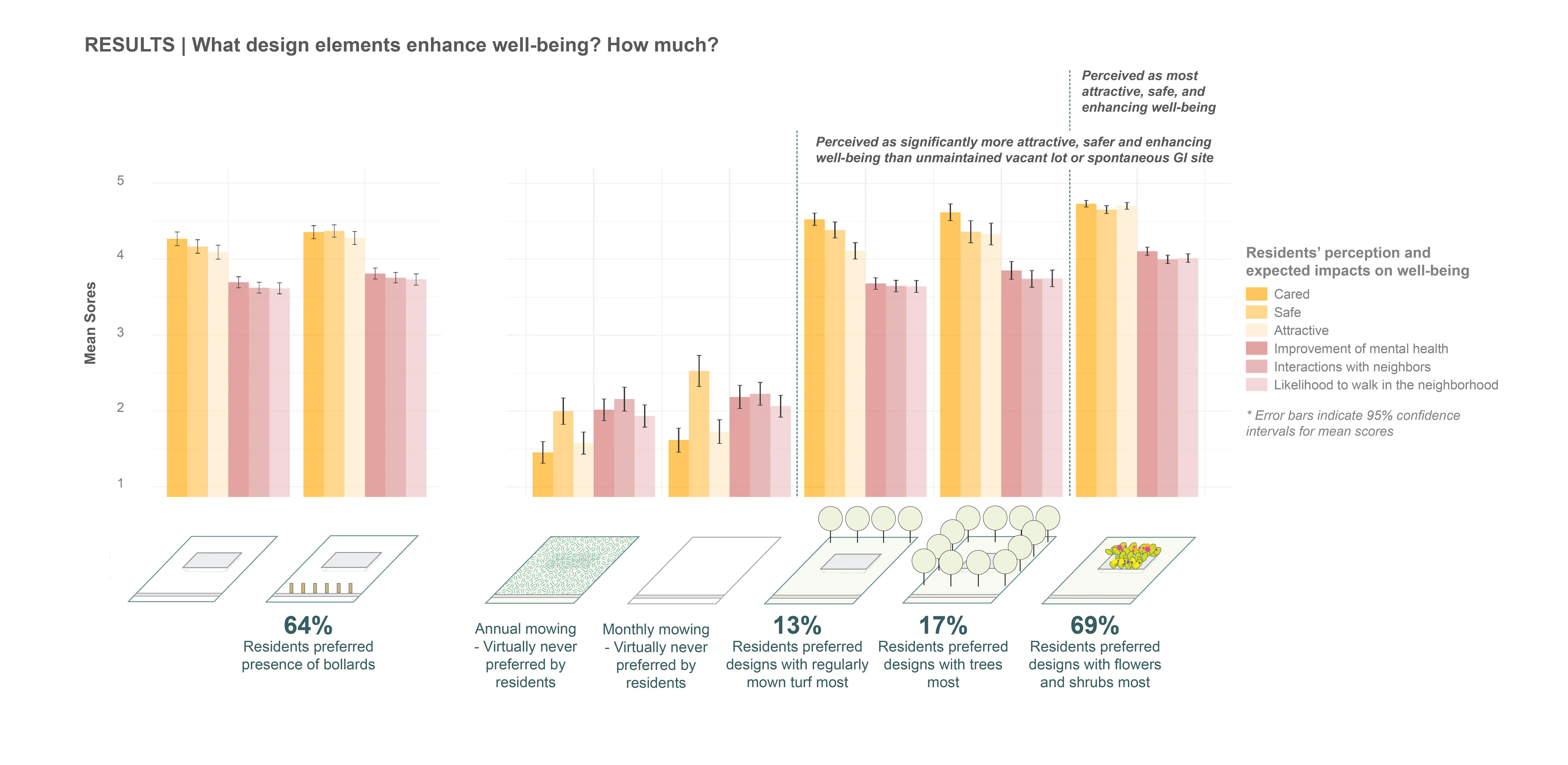
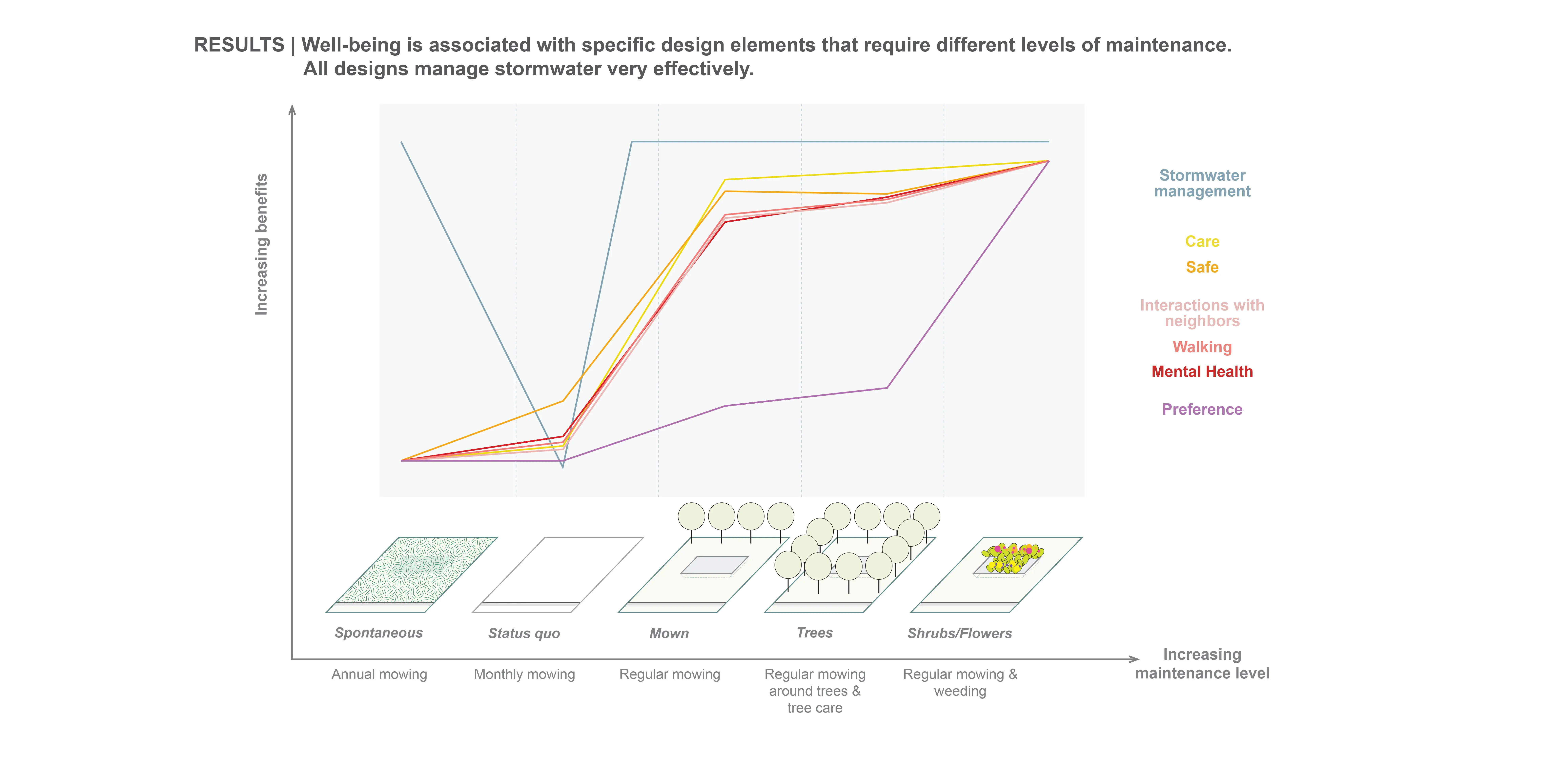
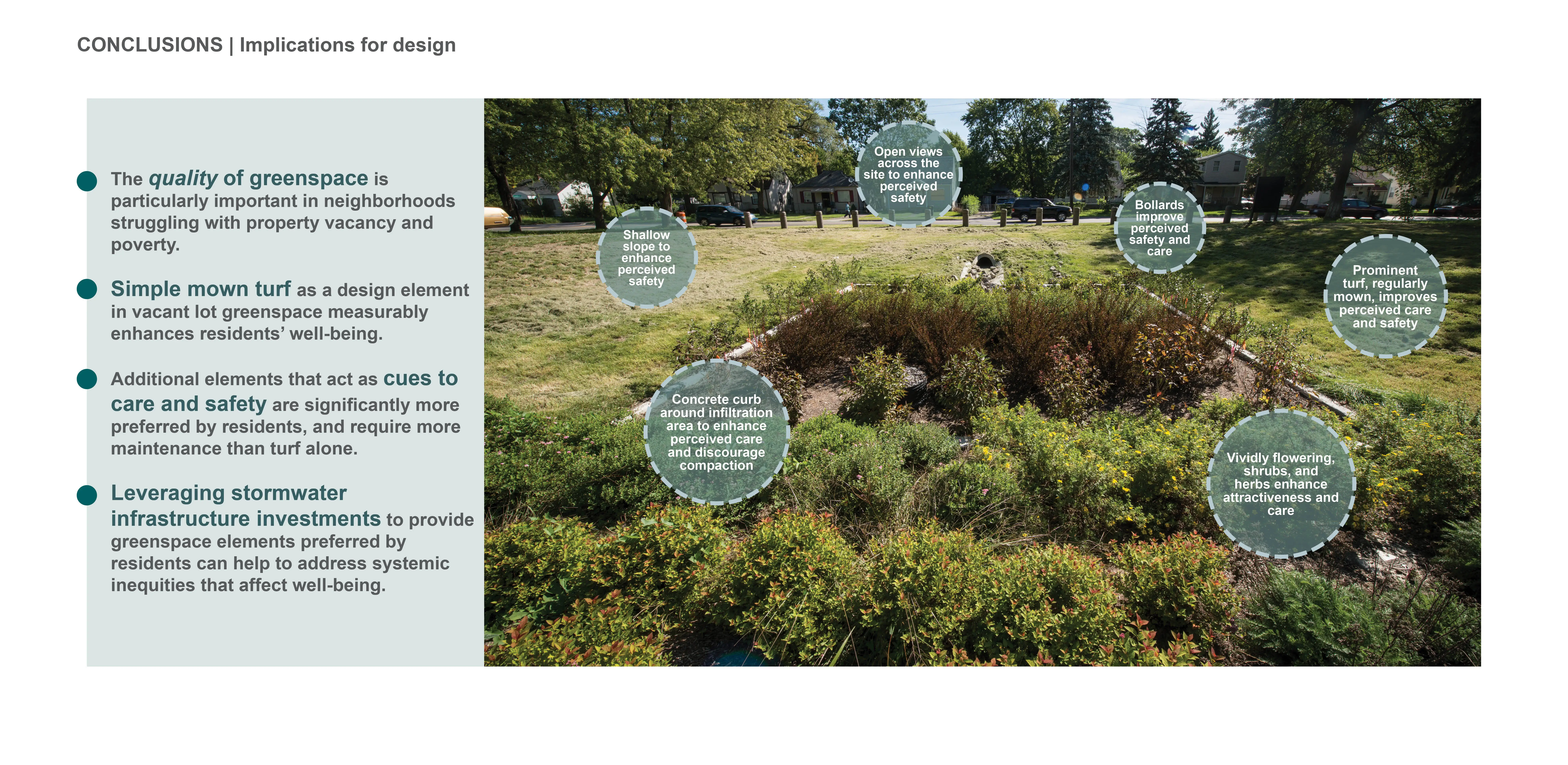
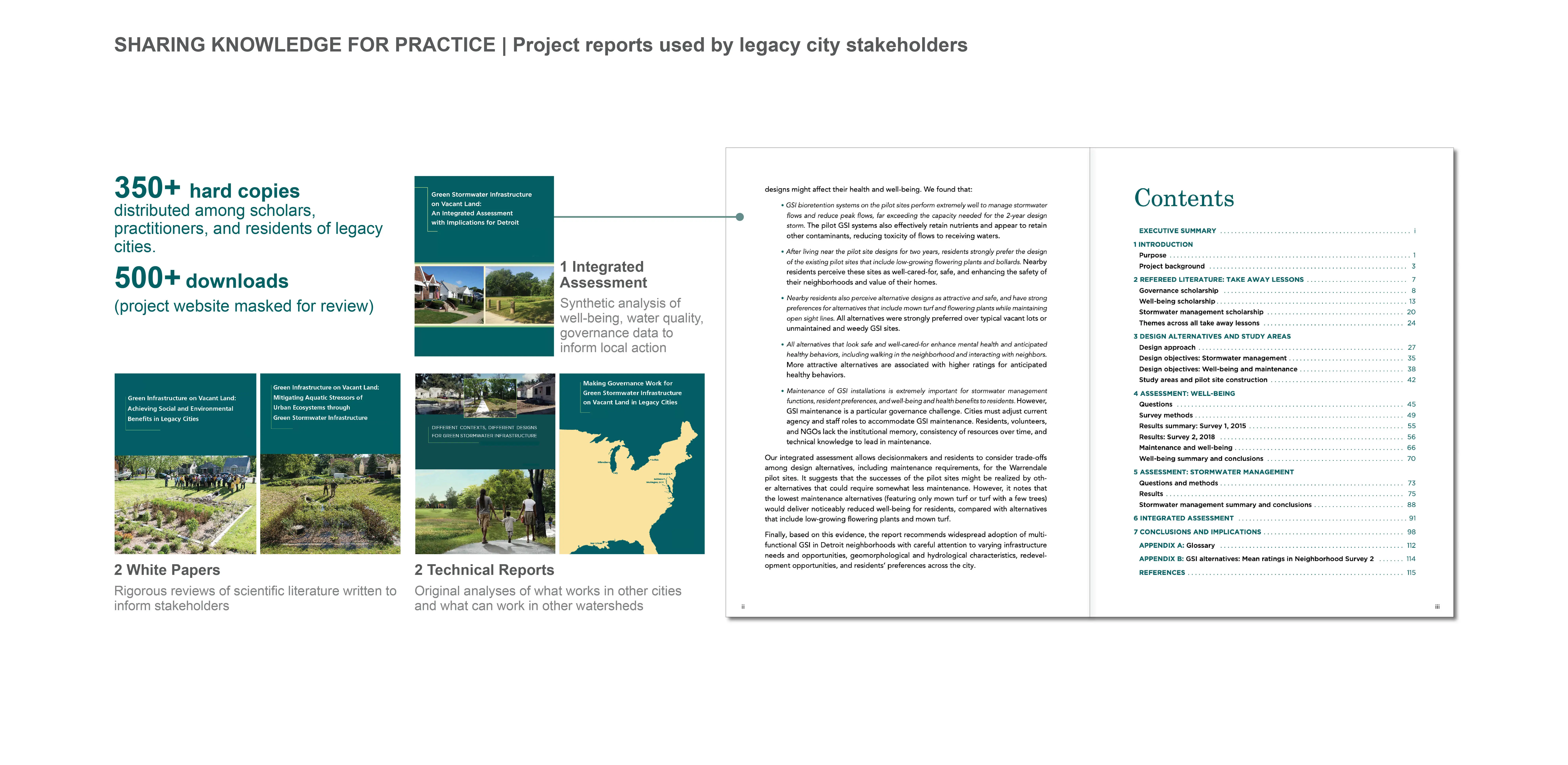
Importance of Research Goals Our overarching goal was to inform design strategies that can address inequities in the quality of neighborhood greenspace, especially where property vacancies and inadequate maintenance have changed neighborhood landscapes in legacy cities. Quality of greenspace may affect the well-being of residents. Well-being is known to be associated with access to greenspace, and inequitable greenspace distribution is understood to be a driver of health disparities. However, health disparities research has not focused on greenspace quality: the small scale design elements that landscape architects routinely select. This is particularly important in neighborhoods characterized by widespread property vacancy, which undermines perceptions of safety and care. Neighborhood greenspace quality affects residents’ experiences as they look out the windows of their home, use their yard, or walk down their block. Compared with access to large public greenspaces, these experiences more immediately confront residents with glaring disparities between their neighborhoods and others’. This project built new knowledge to help landscape architects meaningfully contribute to resolving these inequities. Research Problem Our research problem was to identify how much small-scale design elements of neighborhood greenspace that presented different maintenance requirements could enhance residents’ well-being. Framing the problem in this way, we could focus on well-being of residents while also tuning results to address maintenance challenges of legacy cities. We conceived of this problem on two complementary levels, both essential to the rigor of this actionable research: 1. Basis in practical understandings and local knowledge: a transdisciplinary action research process that produced immediate change in a disadvantaged neighborhood. This required intensive iterative collaboration among agencies, NGOs, neighborhood residents and an interdisciplinary research team over seven years. It led us to understand that neighborhood greenspaces in legacy cities should be maintained by agency staff rather than relying on volunteers. Accepting the limited revenues of legacy cities, we framed our research questions around design alternatives that offered a range of maintenance efficiencies. 2. Basis in scholarly theory: testing the effects of landscape design elements on residents’ well-being in a replicable way that was informed by thorough review of the scholarly literature about well-being, preferences, and perceptions of neighborhood greenspace. Related to well-being, we identified a need to understand how small scale landscape elements might affect residents’ mental and emotional health, as well as their social and physical behavior that may affect health. Related to perceived care and safety, ample scholarly literature suggests that perceived care and safety of neighborhood greenspace affects well-being of residents of legacy cities, and many studies identify design elements that act as cues to care or safety. However, there is a need to put the pieces together to address inequity in neighborhood greenspaces - experimentally varying design elements to quantify their relationship to preferences, perceptions, and well-being. Research Questions Drawing on knowledge at both levels, we identified these design elements for investigation as cues to care or safety that could affect well-being: bollards, low-growing vividly flowering shrubs and herbs, deciduous trees in rows, mown turf. We operationalized the research problem with these specific questions: • What combinations of these elements do residents most prefer for a nearby vacant lot? • How does perceived safety, care, and attractiveness affect what residents prefer? • How do residents expect different alternatives to affect their well-being, including mental or emotional health, interactions with neighbors, and likelihood to walk in their neighborhood? • Considering the need to minimize maintenance requirements, which elements are essential to enhanced well-being? Which most greatly enhance well-being? Methods Study area and site selection. In an area that the Detroit Water and Sewerage Department (DWSD) had prioritized for GSI implementation, we selected replicate study areas separated by more than 2415 m to reduce spillover effects across study areas. Each study area had a mix of occupied homes and vacant properties; overall vacancy was 39%. Each had majority black populations and a majority of households with incomes below $25,000/year (poverty level as per the US Department of Health and Human Services). Within each study area our team identified potential sites for GSI construction on vacant properties owned by the Detroit Land Bank Authority (DLBA), and a control vacant lot for “typical” management. As part of site selection, the possibility of constructing GSI on each site was vetted with nearby neighbors. Then, in 2015 our team designed and constructed two different GSI designs on two pilot sites operated by the DWSD in each study area. These pilot sites were the base sites for design alternatives tested in the 2017 census survey that we report upon here. Development of questionnaire and design alternatives. To answer our research questions, we developed a questionnaire including visualizations of 10 design alternatives (randomly selected from among 15 developed for each study area), and items related to perceived care, safety, well-being, and residents’ preferences for converting nearby vacant lots to neighborhood greenspace. The visualizations represented a factorial combination of the design elements we hypothesized to affect these outcomes. Based on insights of residents on our transdisciplinary team, we designed all alternatives to have open sight lines from the street and to discourage public entry. Census Survey. We conducted a census interview survey of all occupied households within 250m of the pilot sites in 2017. Survey interviewers were current or past Detroit residents, and their local knowledge helped us determine our final area frame of occupied households (N=399). They attempted to interview each household at least three times over eight months. Response rate was 43.0% (N=171/399). This met requirements of the power analyses we conducted prior to administration of the survey, which indicated that a sample of at least 160 was needed for detecting significant effects. Results Considering race, education, income, and home ownership, the 171 households responding to our survey were representative of the 14 US Census Block Groups across both study areas. Respondents were more often female and older than in the Census, an expected result given than only a household members over age 18 was eligible to complete the survey. Data analysis determined that: • Residents significantly preferred designs combining mown turf with prominent low-growing flowering plants over those with trees. They preferred alternatives with bollards over those with no bollards. Many fewer preferred alternatives dominated by turf or trees. • Residents’ perceptions of the safety, care and attractiveness of design alternatives track their preferences. However, even mown turf with few trees was perceived as much safer, more well-cared-for, and attractive than a typical vacant lot in their neighborhood. • Comparing any maintained designed alternative with a typical vacant lot or design without regular maintenance, residents expected their mental or emotional health to be better, interactions with neighbors to be more frequent, and to walk more often in the neighborhood. • Considering the need to minimize maintenance requirements, mown turf is the landscape element most essential for enhancing well-being of residents. However, other landscape elements, especially low-growing vividly flowering shrubs and herbs significantly enhance well-being compared with mown turf alone. Conclusions and Significance The project immediately benefited Detroit residents by leveraging DWSD stormwater investments to design and construct greenspace pilot sites on vacant lots in disadvantaged neighborhoods. Further, it identified design elements that residents expected to measurably improve their well-being, and showed how different design elements with different maintenance efficiencies affect how much residents may benefit. Importantly, small-scale elements can make a big difference to well-being, helping to resolve inequities in the quality neighborhood greenspace that may contribute to health disparities. This action research project tightens the relationship between landscape architecture practice and scholarship by aiming rigorous scholarship at plant and materials choices that are routinely manipulated by landscape architects. Further, it exemplifies how research with practical implications also can advance socio-environmental theory-building - by grappling with immediate human experiences and probing inequities in the design and management of urban landscapes.
-
- Palencia Mobley - Deputy Director and Chief Engineer, Detroit Water and Sewerage Department/Advisory Committee Chair
- Katy Trudeau - Deputy Director, Detroit Planning & Development Department/Advisory Committee Member
- Kevin Robishaw - Manager, Inventory, Detroit Land Bank Authority/Advisory Committee Member
- Matthew Williams - Planner, West Region, Detroit Planning & Development Department/Advisory Committee Member
- Khalil Ligon - Lead Urban Planner, East Region, Detroit Planning & Development Department/Advisory Committee Member
- Kenyetta Campbell - Executive Director, Cody Rouge Community Action Alliance/Advisory Committee Member
- Lisa Wallick, P.E. - Stormwater Management Group Manager, Detroit Water and Sewerage Department/Advisory Committee Member
- Barbara Matney - President, Warrendale Community Organization/Advisory Committee Member
- Betsy Palazzola - General Manager, Detroit Department of Housing and Revitalization/Advisory Committee Member
- Jodee Raines - Ex-officio - Vice President of programs, Erb Family Foundation/Advisory Committee Member
- Carol Hufnagel - Ex-officio- National Wet-Weather Practice Leader, Tetra Tech/Advisory Committee Member
- Alicia Alvarez - Law School, University of Michigan/Researcher
- Allen Burton - School for Environment & Sustainability, University of Michigan/Researcher
- Margaret Dewar - Urban & Regional Planning Program, Taubman College of Architecture & Planning, University of Michigan/Researcher
- Shawn McElmurry - Department of Civil & Environmental Engineering, Wayne State University/Researcher
- Catherine Riseng - School for Environment & Sustainability, University of Michigan/Researcher
- Natalie Sampson - Department of Health & Human Services, University of Michigan Dearborn/Researcher
- Amy Schulz - School of Public Health, University of Michigan/ Researcher
- Noah Webster - Institute for Social Research, University of Michigan/Researcher
- Erb Family Foundation - Project funder
-
- Red Beauty Yarrow
- Butterfly Weed
- Purple Coneflower
- Bee Balm
- Black-eyed Susan
- Morton Black Chokeberry
- Muskingum Gray Dogwood
- Little Henry Sweetspire
- Gold Drop Potentilla
- Little Devil Dwarf Ninebark
- Little Princess Spiraea
- Magic Carpet Spiraea
- Blue Star Japgarden Juniper
- Broadmoor Juniper
Related Awards
Honor Award, Research
Race and the Control of Public Parks
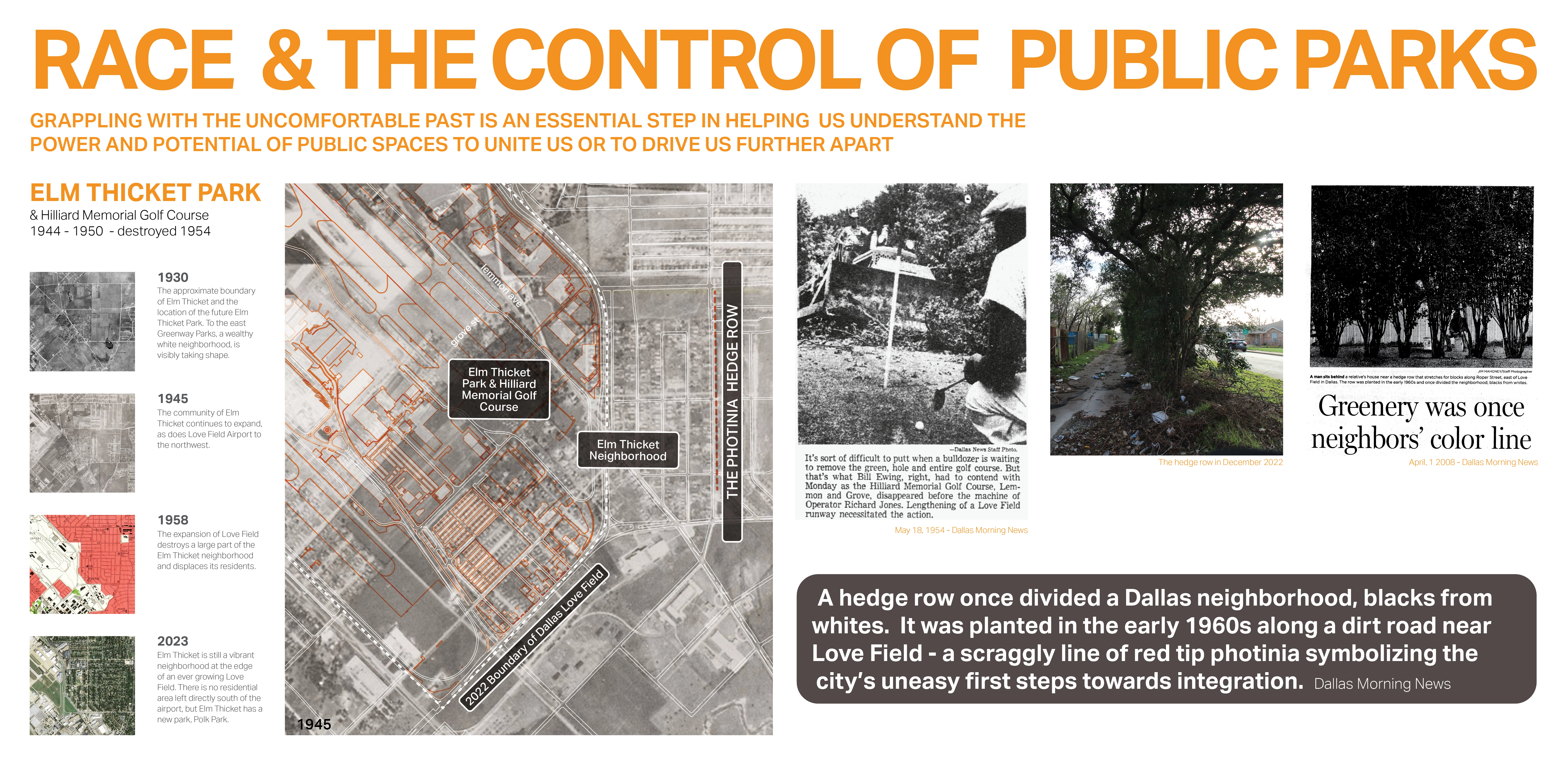
This research uses a century long historical analysis of the public park system in Dallas, Texas, USA to uncover the physical and psychological ways in which public landscapes and the works of landscape architects have segregated urban spaces and how we might fight against these design practices. Through reframing past practice this work seeks to create a method for informing design thought and practices that seek to create a more just built environment.