
.webp?language=en-US)


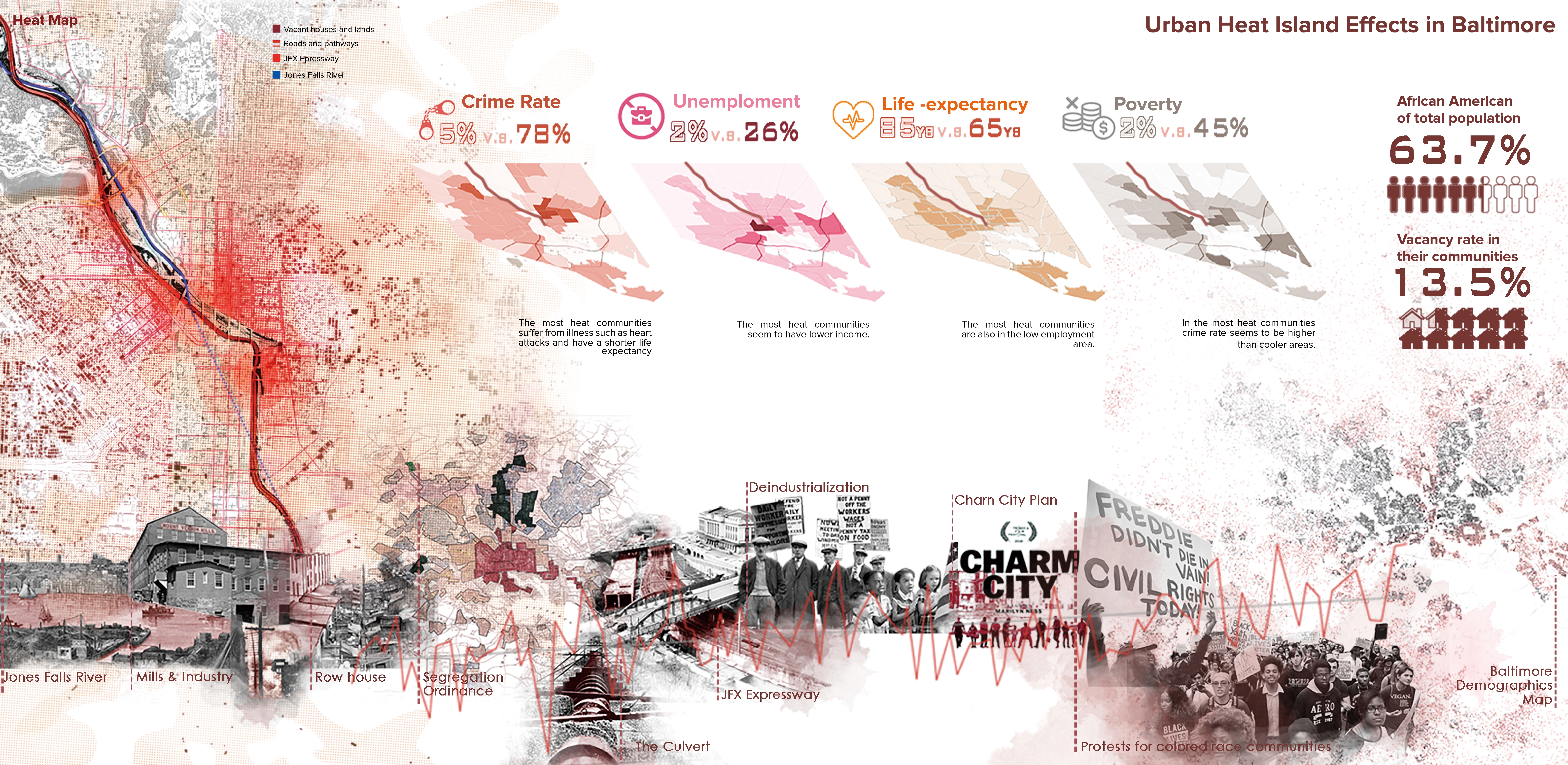
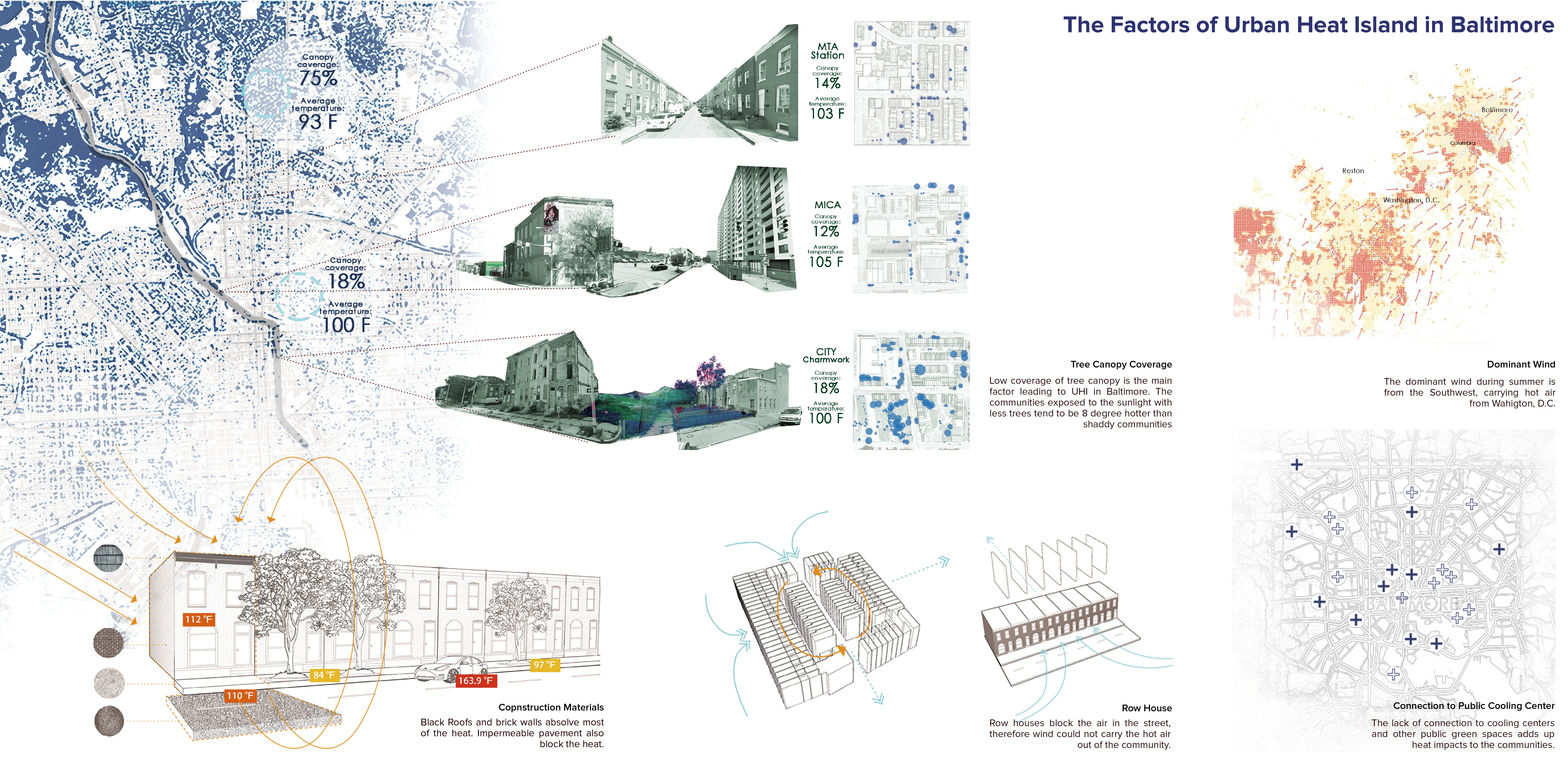
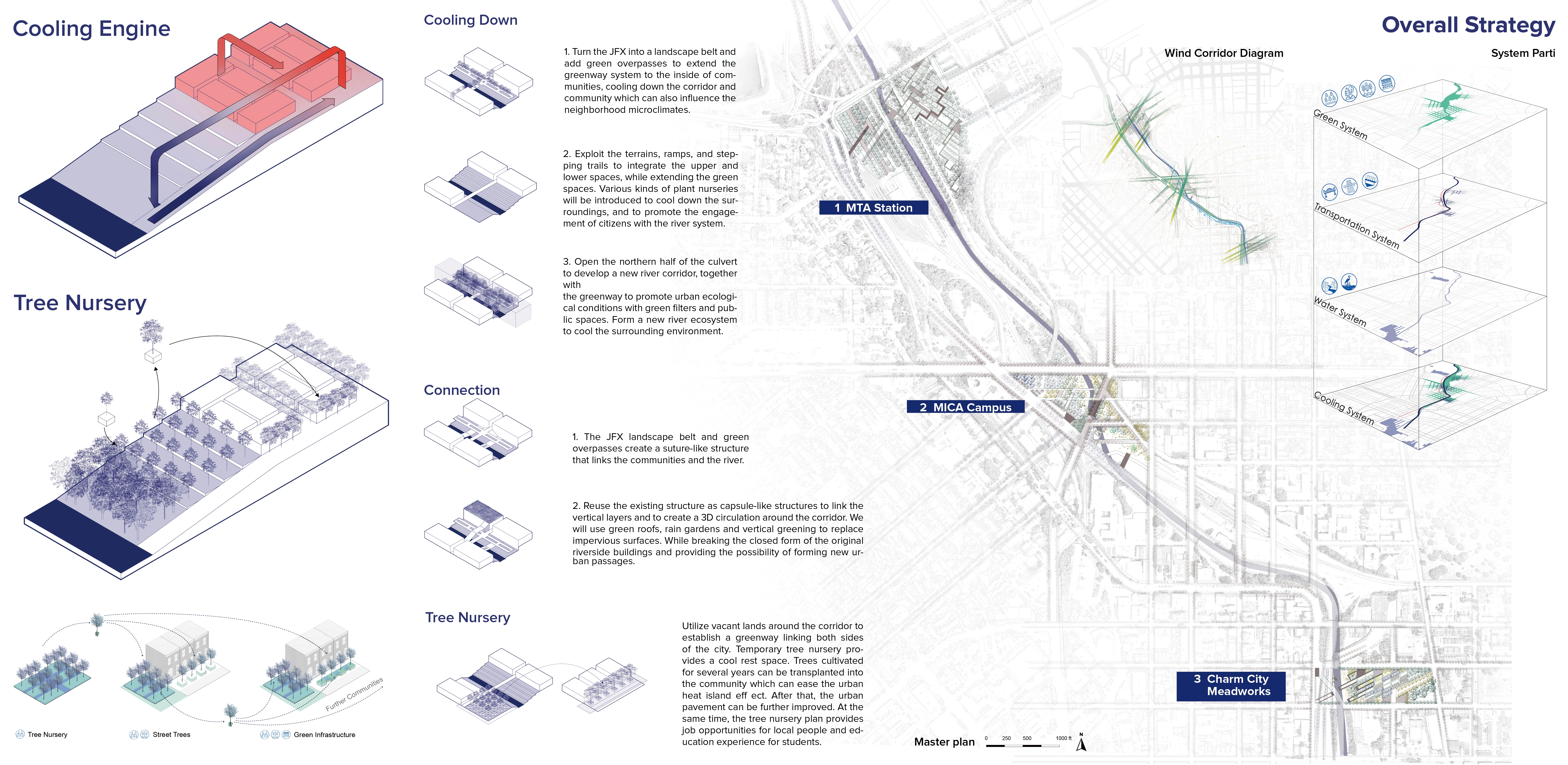
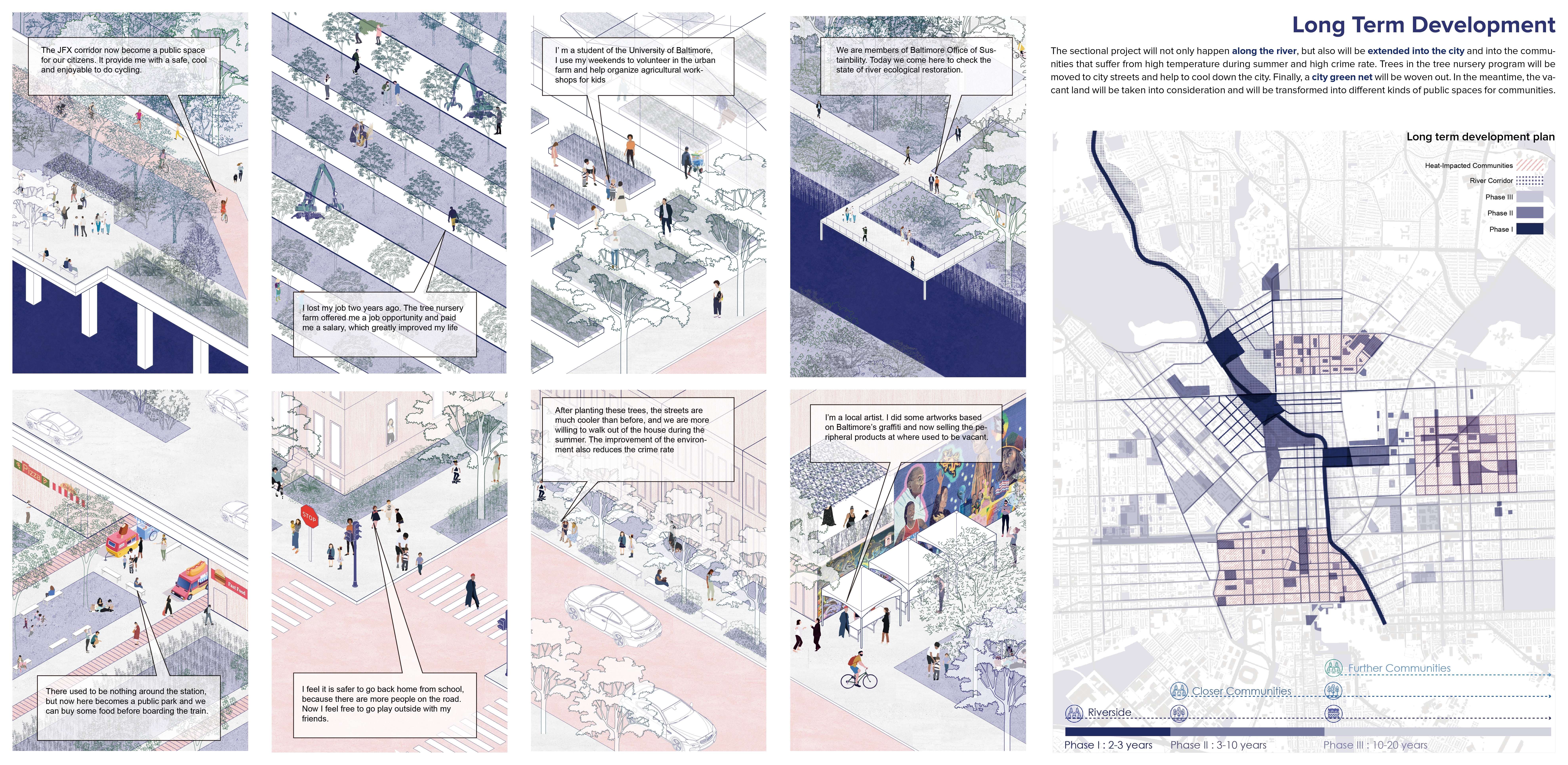
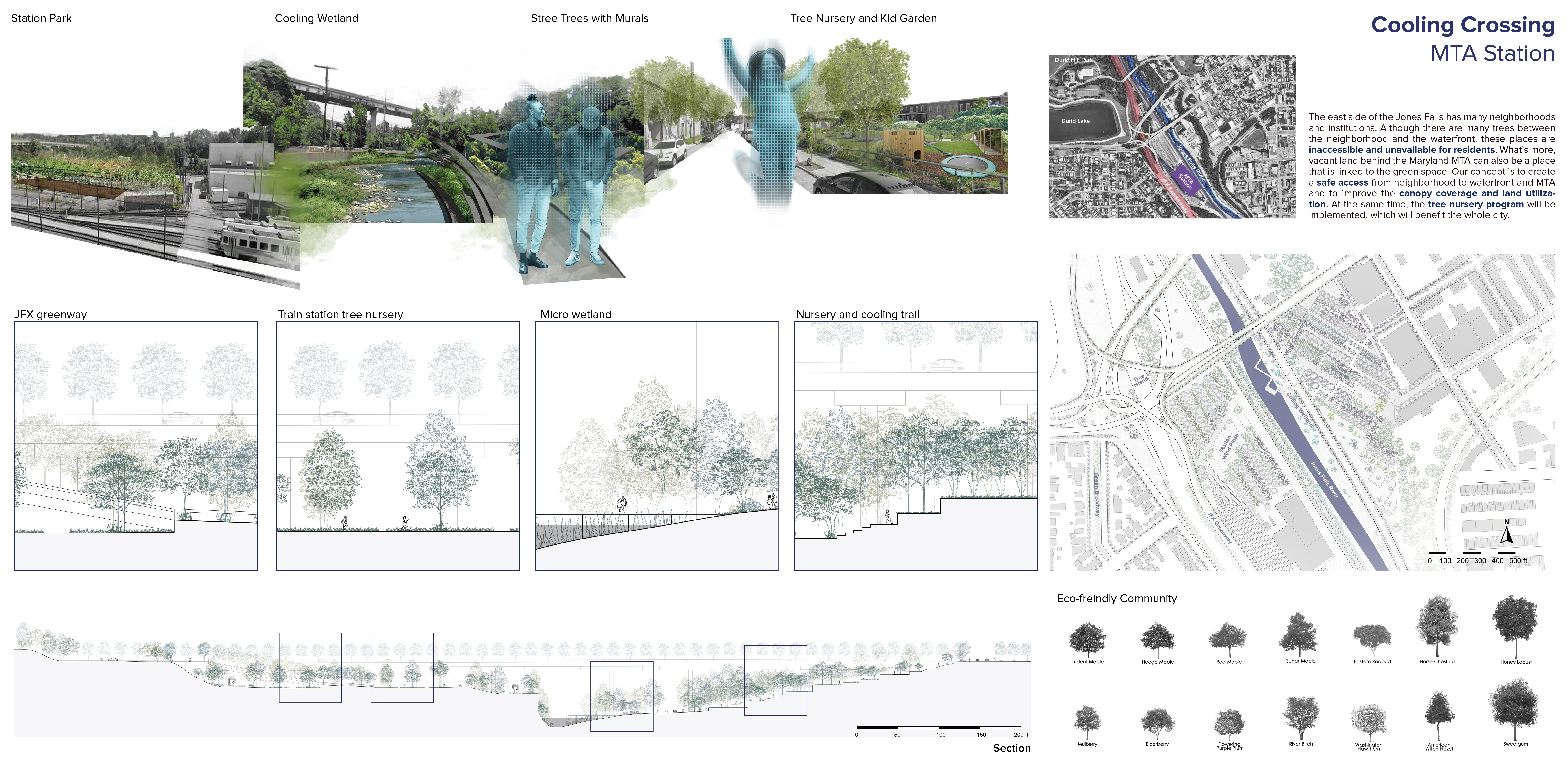
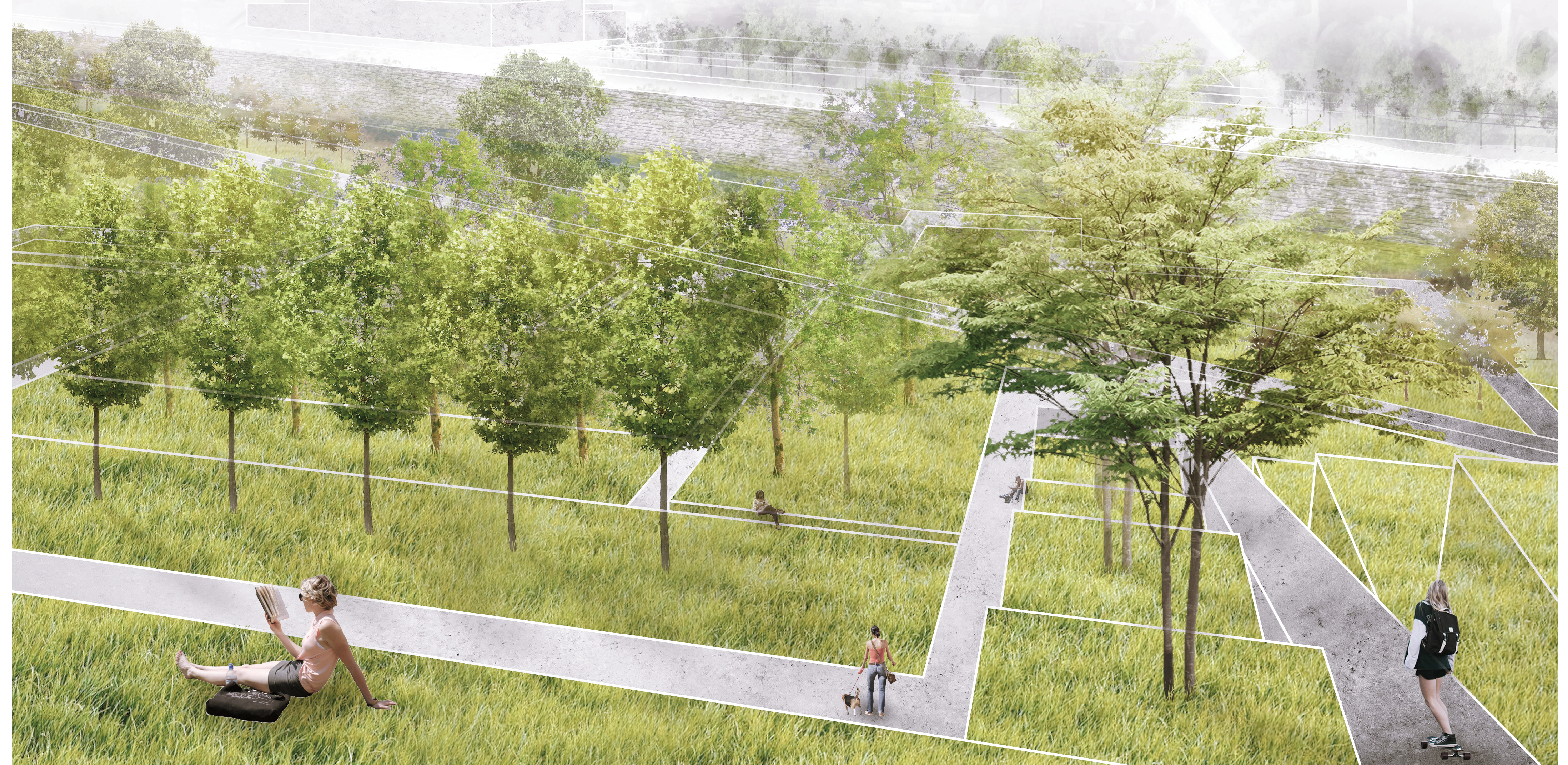

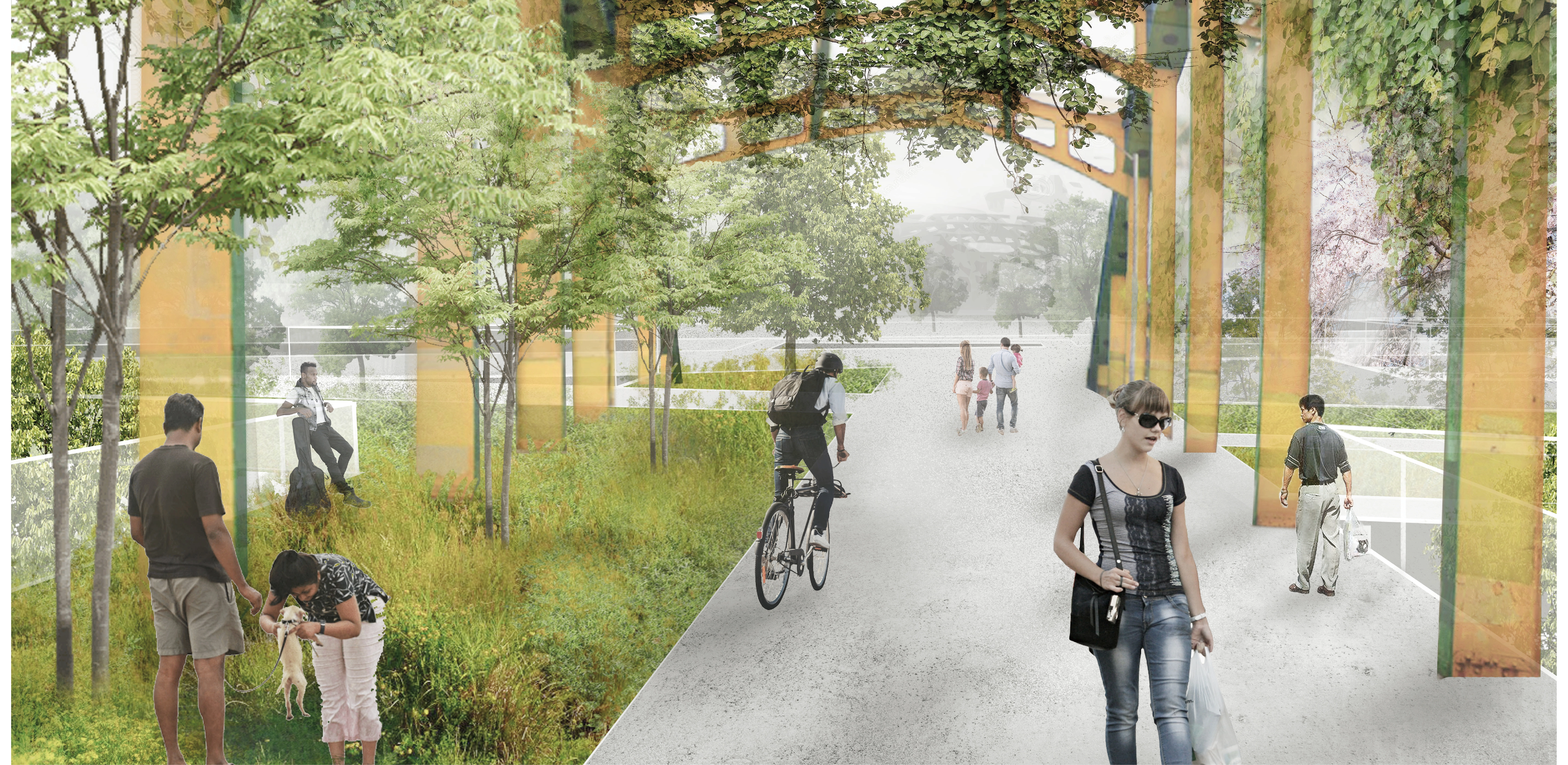

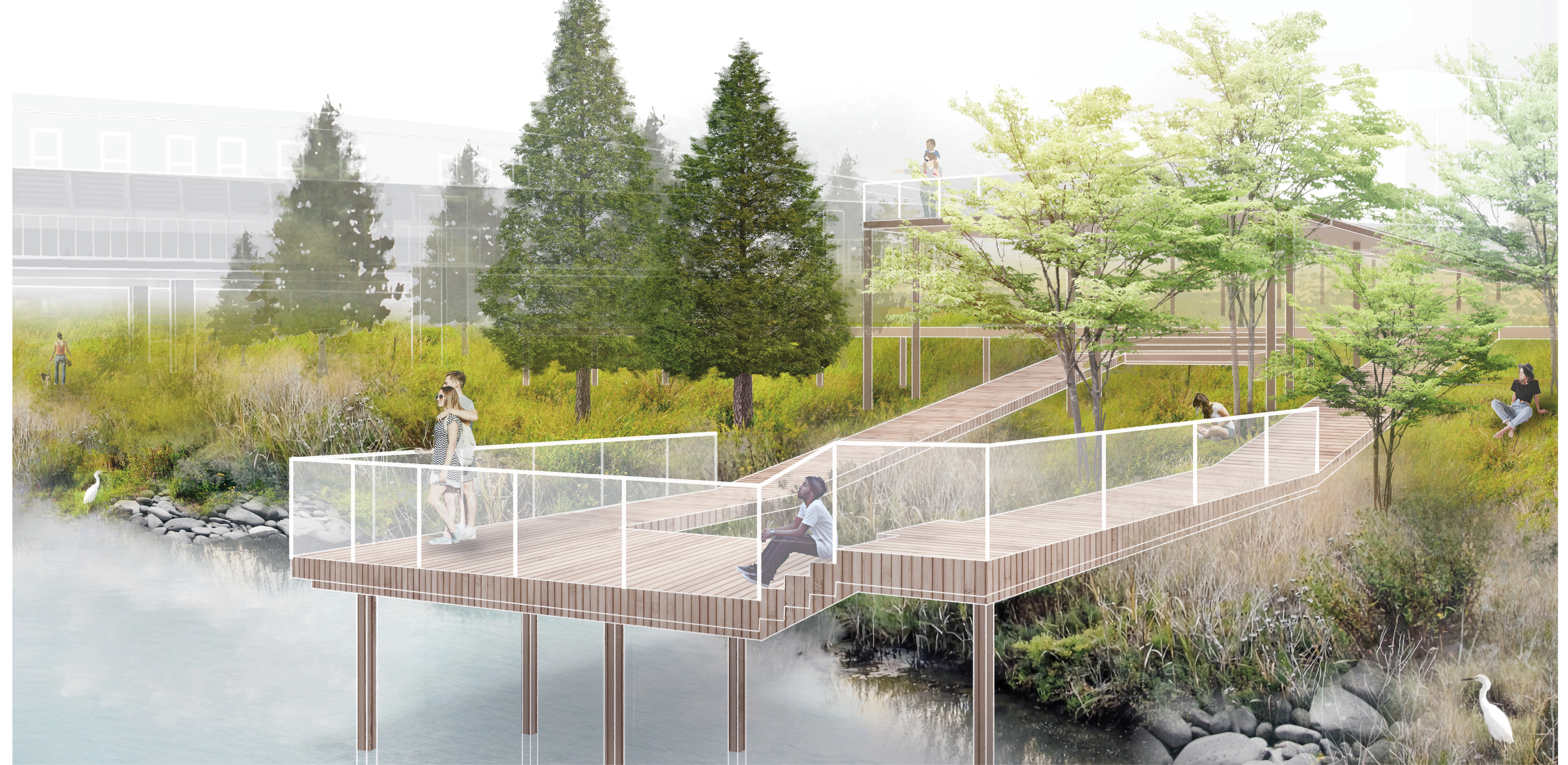

The urban heat island effect has far-reaching implications in Baltimore, from unemployment and poverty to crime rate and reduced life expectancy—and communities with the most heat experience the worst of these conditions. The Jones Falls Expressway (JFX), named after the river over which it runs, serves as a central axis and thoroughfare for the city, but also divides it into those communities with access to healthcare, food, and education, and those without. Lush linkages across and beneath the JFX convert blighted, infrastructure-adjacent areas into tree nurseries, which begin to address several of these issues at once: providing shaded gathering areas and local jobs, as well as trees for distribution throughout the city to further cool it down.
Awards Jury
-
Establish a central cooling landscape system and extend this system into communities, while leading people to the river by street green. As for the long term, tree nursery plan will deal with the social issue.
-
The City of Baltimore now suffers from a series of environmental and social problems that are related to the urban heat island effect, including high temperatures during summer, high crime rates, high poverty and high unemployment rates. The JFX corridor locates at the central axis of Baltimore and acts as a physical barrier in the city. With this barrier, several racial and discriminatory policies have further magnified the isolation of some residents in the city. Though adjacent to the east side of the corridor, many communities lack access to better infrastructure, struggling in areas that are deserts for food,healthcare, education and other resources. High rates of vacancy and high numbers of vacant lots in communities not only reduces the utilization and vitality of urban public spaces, but also creates instability and space for crime. Although these spaces are currently underutilized, they provide the opportunity to regenerate the city again through the implementation of green infrastructure throughout the whole city, which can cool the city down and bring a better social environment. Based on this idea, we want to establish a central cooling landscape system along the JFX corridor and extend this system into communities, increasing the tree canopy to cool the streets. This system will also serve to lead people in the communities to the river through green streets. We propose a wide range of strategies of rebuilding green spaces along the river to create both linkage between two sides of the corridor and a shared public space in the center. In the long term, this proposal will introduce a tree nursery program to the city. It will bring trees into inner communities and then solve social issues in the future. Eventually it will build a new type of urban public space attached to the existing JFX urban structure to ease urban heat island effect. Our proposal will gradually increase the plant coverage rate across Baltimore, and ultimately improve the community environment and impacts of urban heat island effect.
-
- Red Maple
- Sugar Maple
- Trident Maple
- Hedge Maple
- Eastern Redbud
- Kwanzan Cherry
- Yoshino Cherry
- Flowering Purple Plum
- Horse Chestnut
- Honey Locust
- Black gum
- SweetGum
- Washington Hawthorn
- American Elm
- White Oak
- River Birch
- American Witch-Hazel
- Shallow Sedge
- Rice Cutgrass
- Swamp Milkweed
Related Awards
Honor Award, Urban Design
Urban Balcony Embracing Rewilded Nature
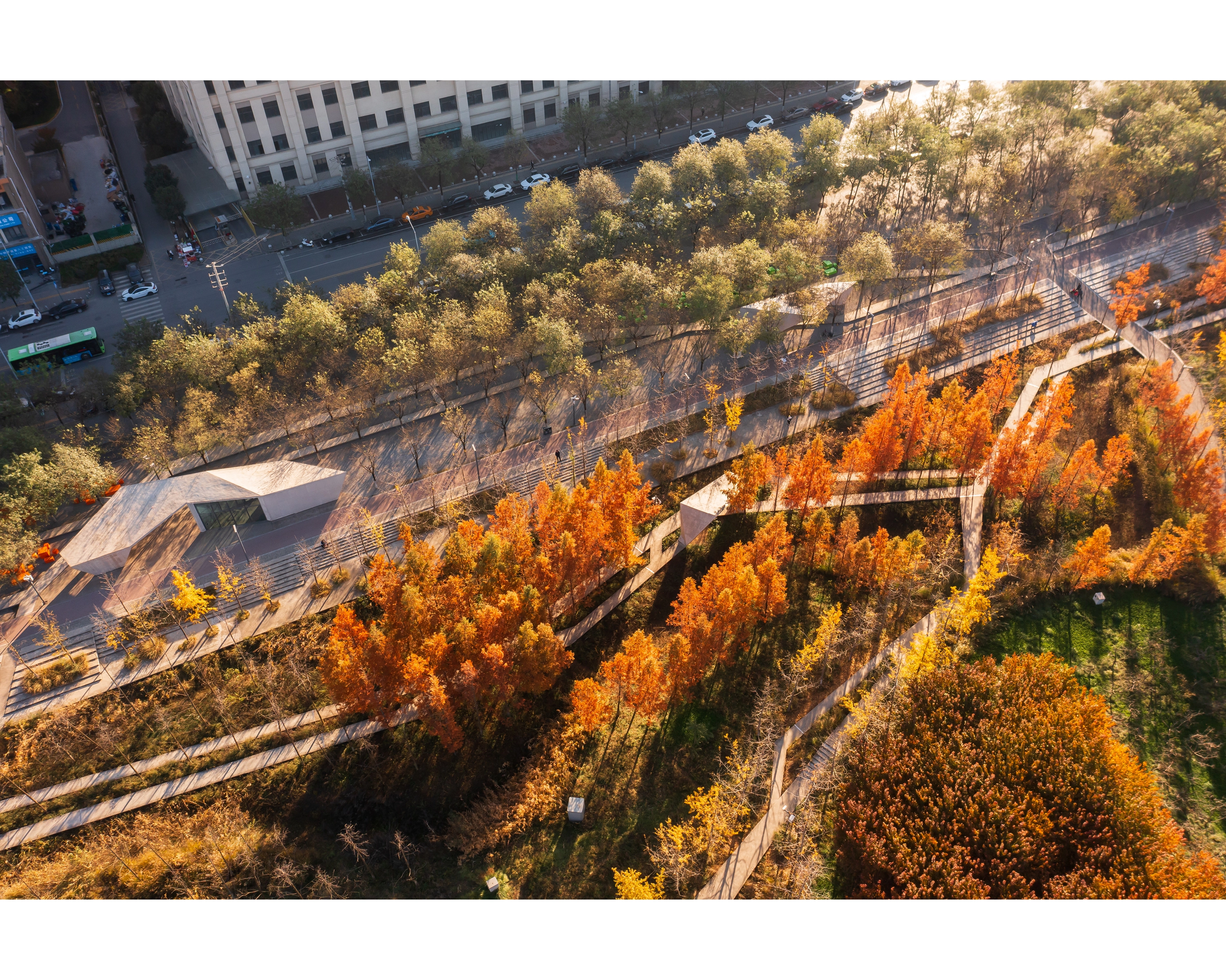
In a densely populated urban setting, this project unveils a rewilded natural area, revitalizing a former concrete waterway through innovative stormwater management. The design introduces a linear activity zone extending over four residential blocks, tailored for diverse social interactions. It underscores the vital role of landscape architecture in enriching the social and ecological aspects of urban living.