

.webp?language=en-US)


From Remnants to Resonance: Reimagine Coastal Fishing Villages
Luoman Ouyang, Student International ASLA; Zhiyi Guo; Jiaxin Jiang
-
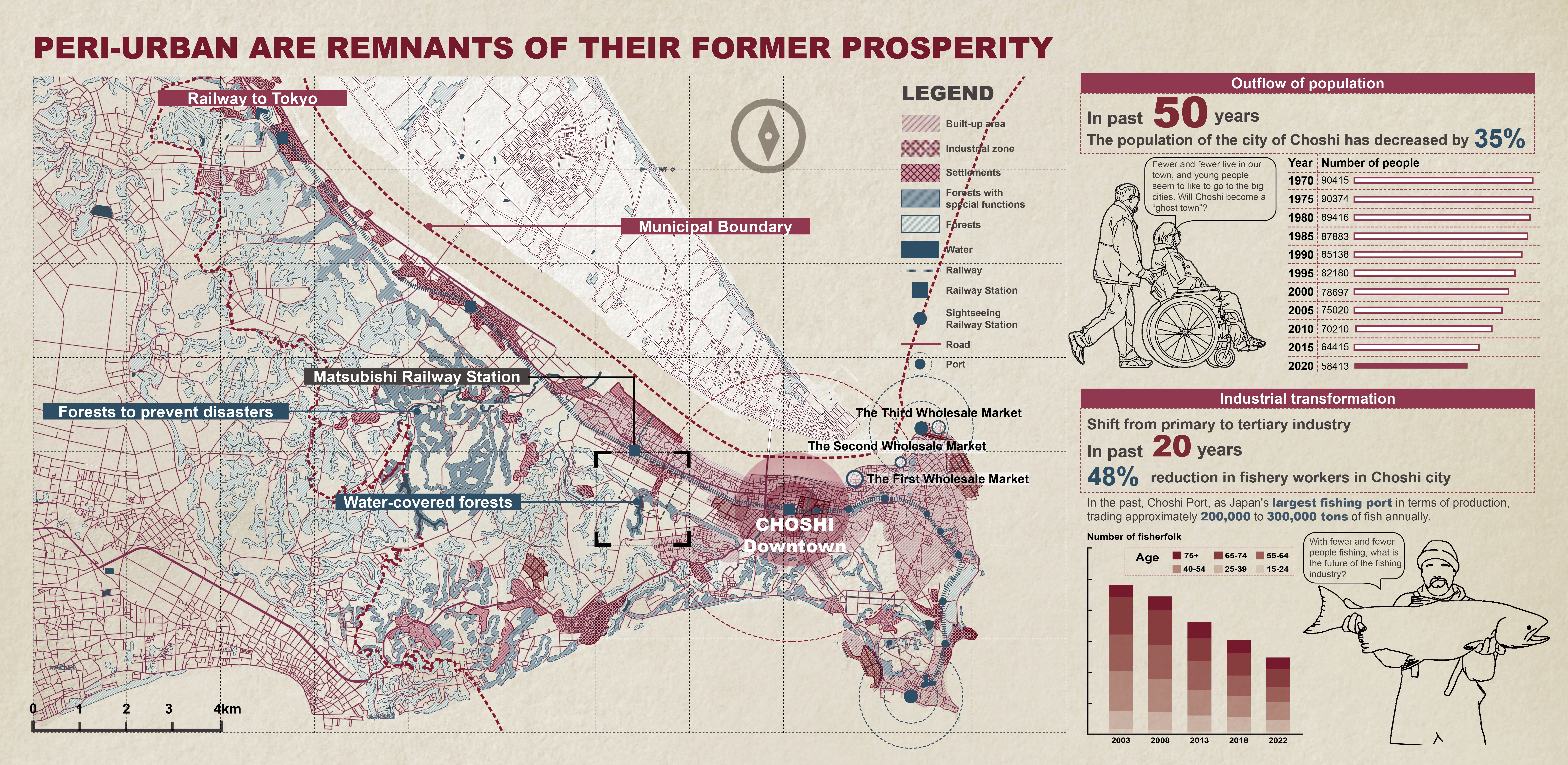
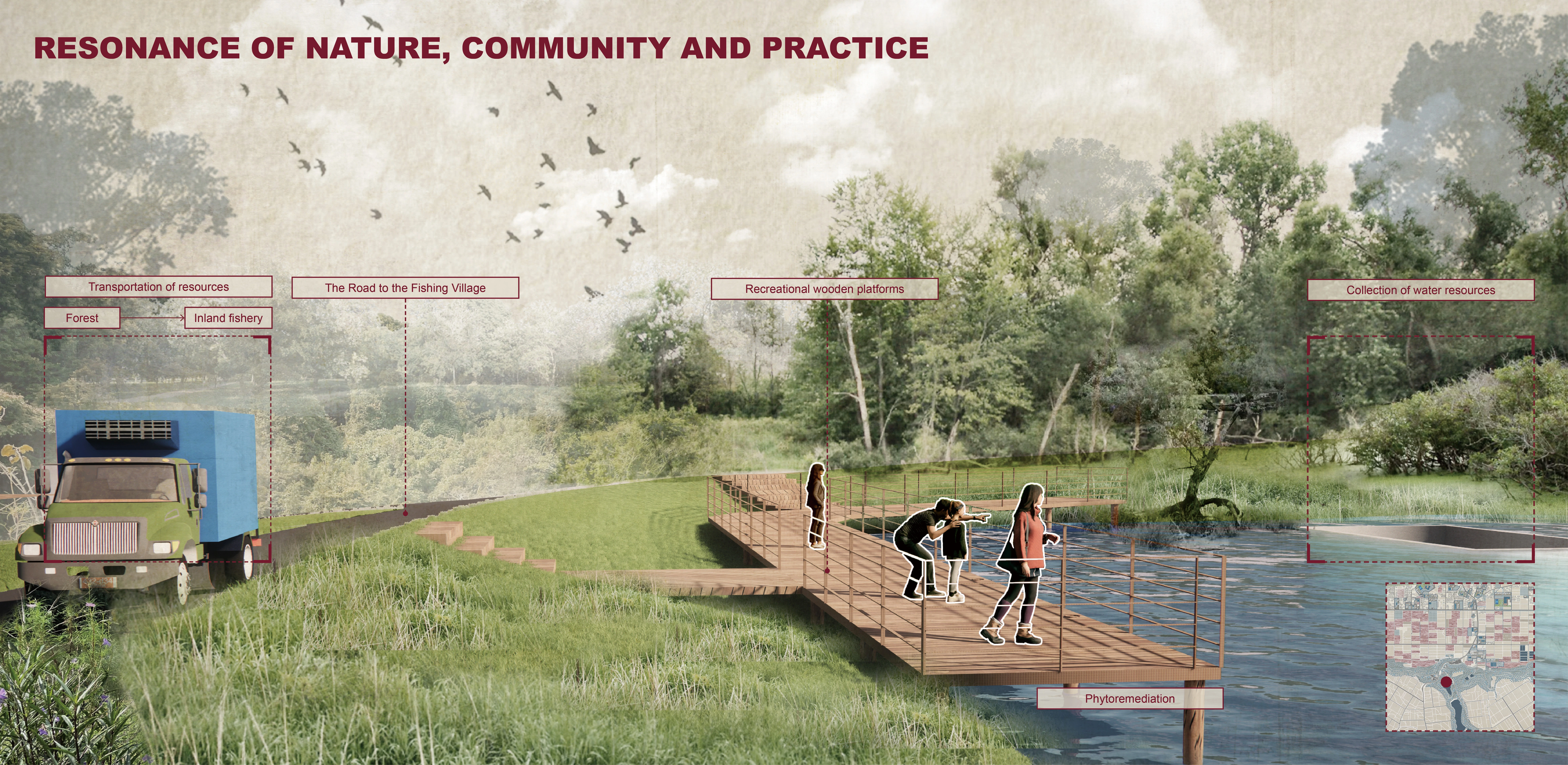
The discharge of nuclear wastewater in Japan in 2023 has significantly impacted the country's fishing industry. This project aims to address the ecological and social impacts of the Fukushima nuclear accident's wastewater discharge, providing a possible future for coastal fishing villages like Choshi. It seeks to help residents transform the coastline from remnants into resource landscapes for both humans and non-humans.
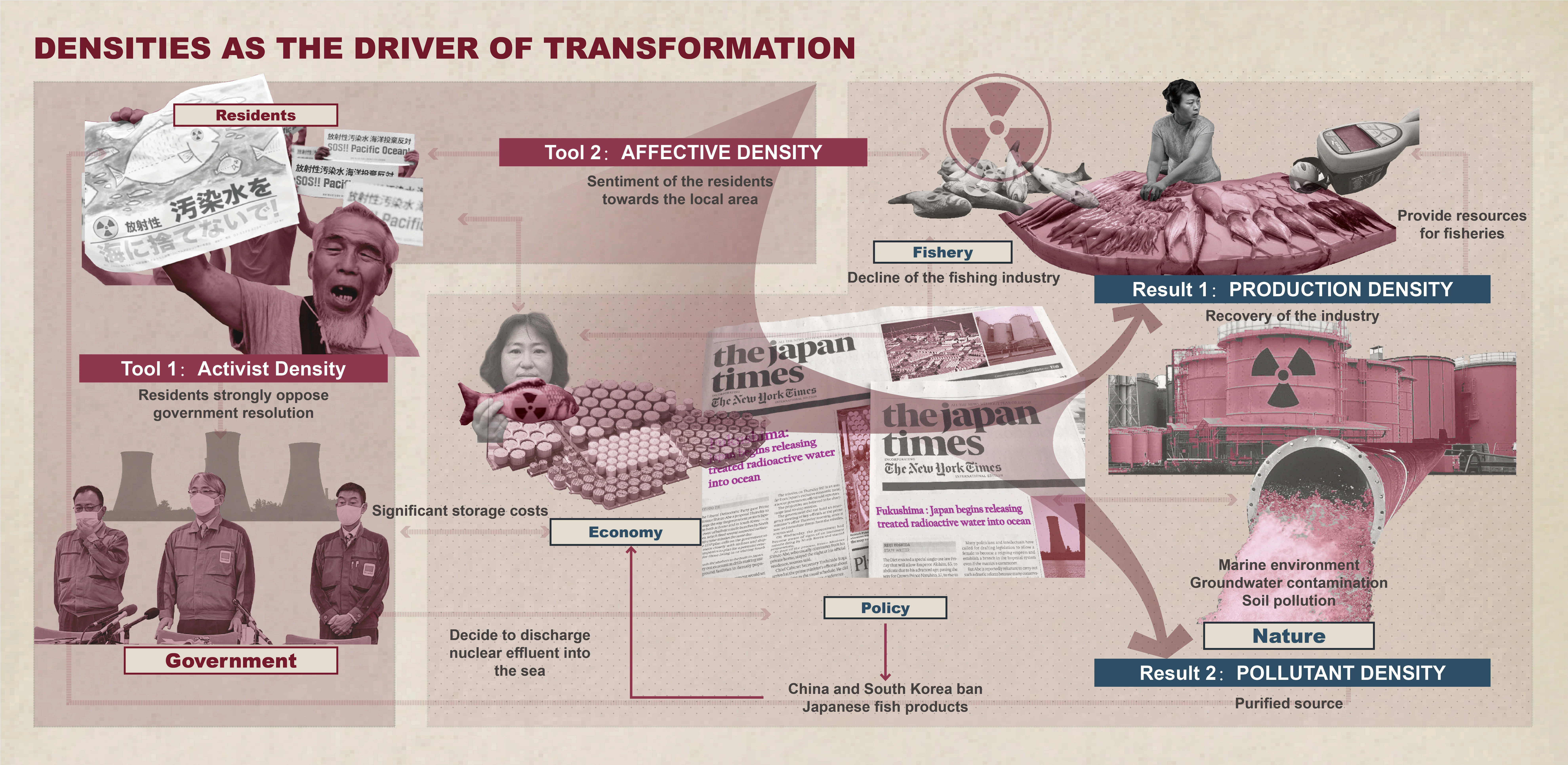
In the future, "Density" will become the invisible force driving evolution in Japan's coastal fishing villages, resonating beyond human boundaries and deeply influencing practices, society, ecology, and landscapes in all these seaside communities.
-
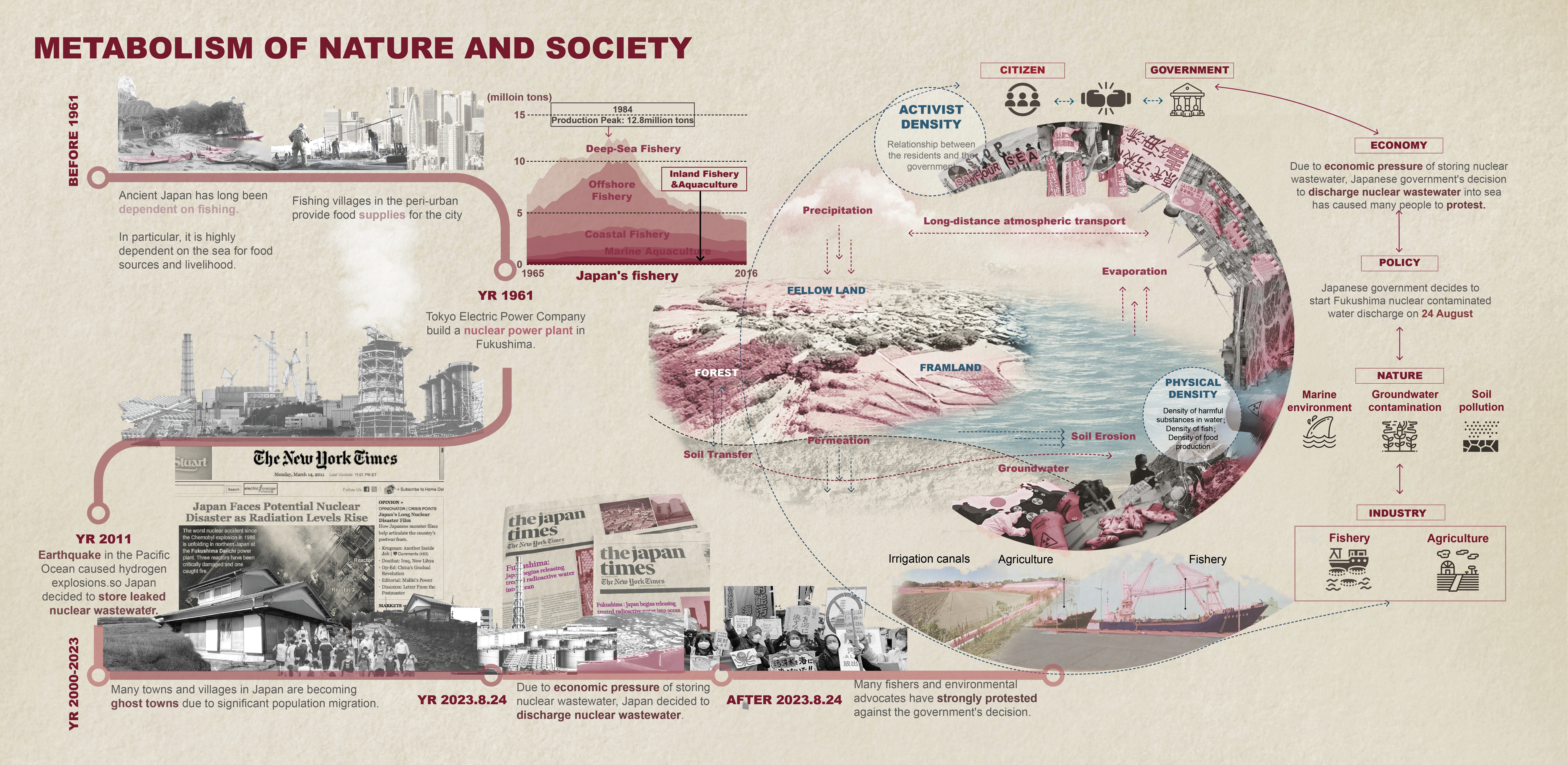
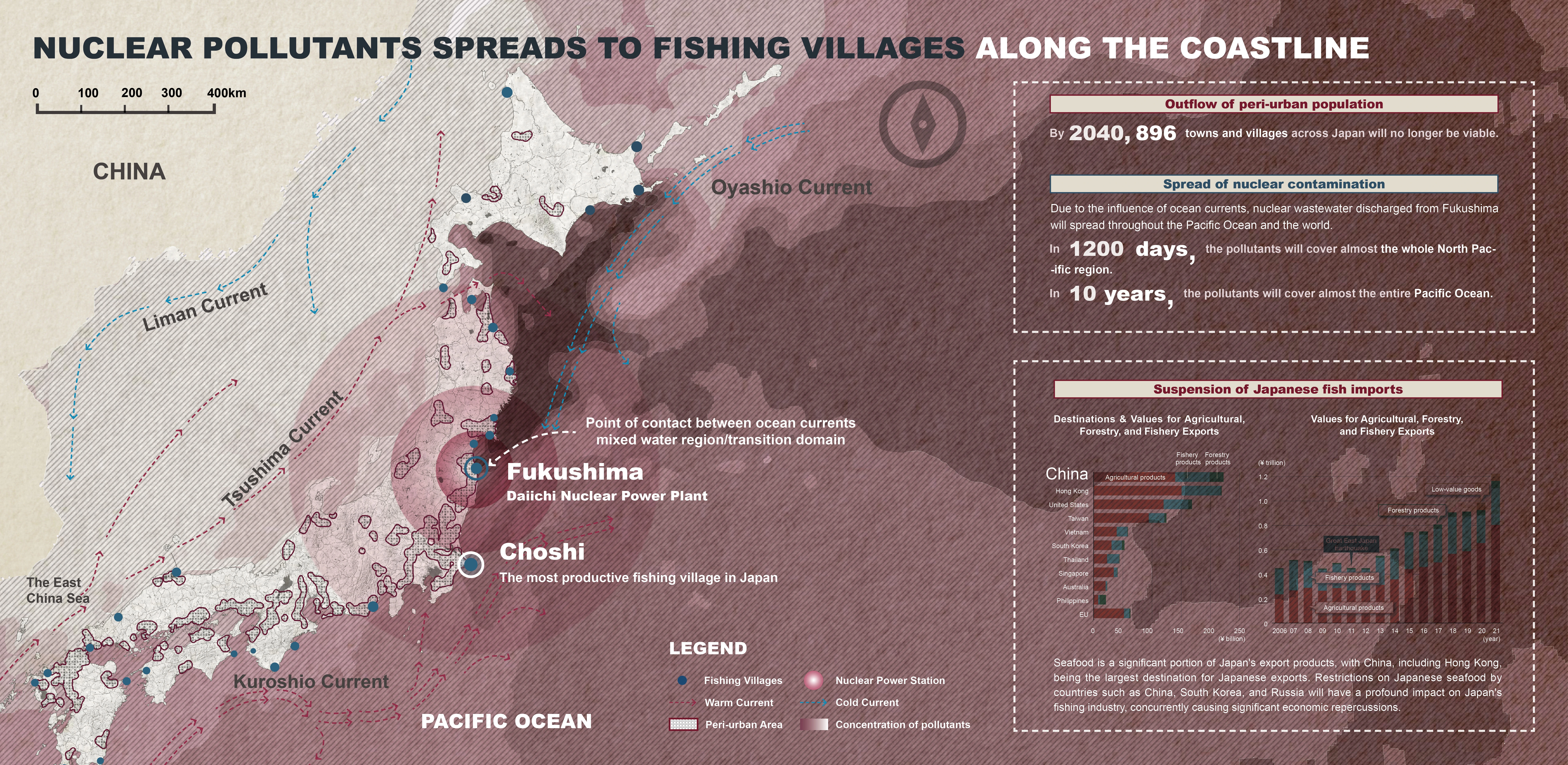
In 2011, following the earthquake and tsunami in the Pacific Ocean, a leak occurred at the Fukushima Daiichi Nuclear Power Plant. To avoid environmental harm, Japan stored the nuclear wastewater. Recently, due to storage cost issues, they decided to discharge it into the sea, affecting regions like Choshi. Choshi reflects the challenges faced by all fishing villages along Japan's eastern coast, which are remnants of a once-thriving past, now facing aging populations, declining agricultural productivity, and reduced fish catches. Nuclear pollutants can infiltrate natural habitats and the human body through metabolism. Consequently, the discharge of nuclear wastewater has sparked public protests, including fisherfolks in Choshi. The fishing industry, once a thriving sector in Japan, is now facing decline, and many fisherfolks are gradually changing careers, becoming casualties of Japan's industrialization. They are not beneficiaries of the nuclear industry but are unfairly exposed to the risks posed by nuclear wastewater.
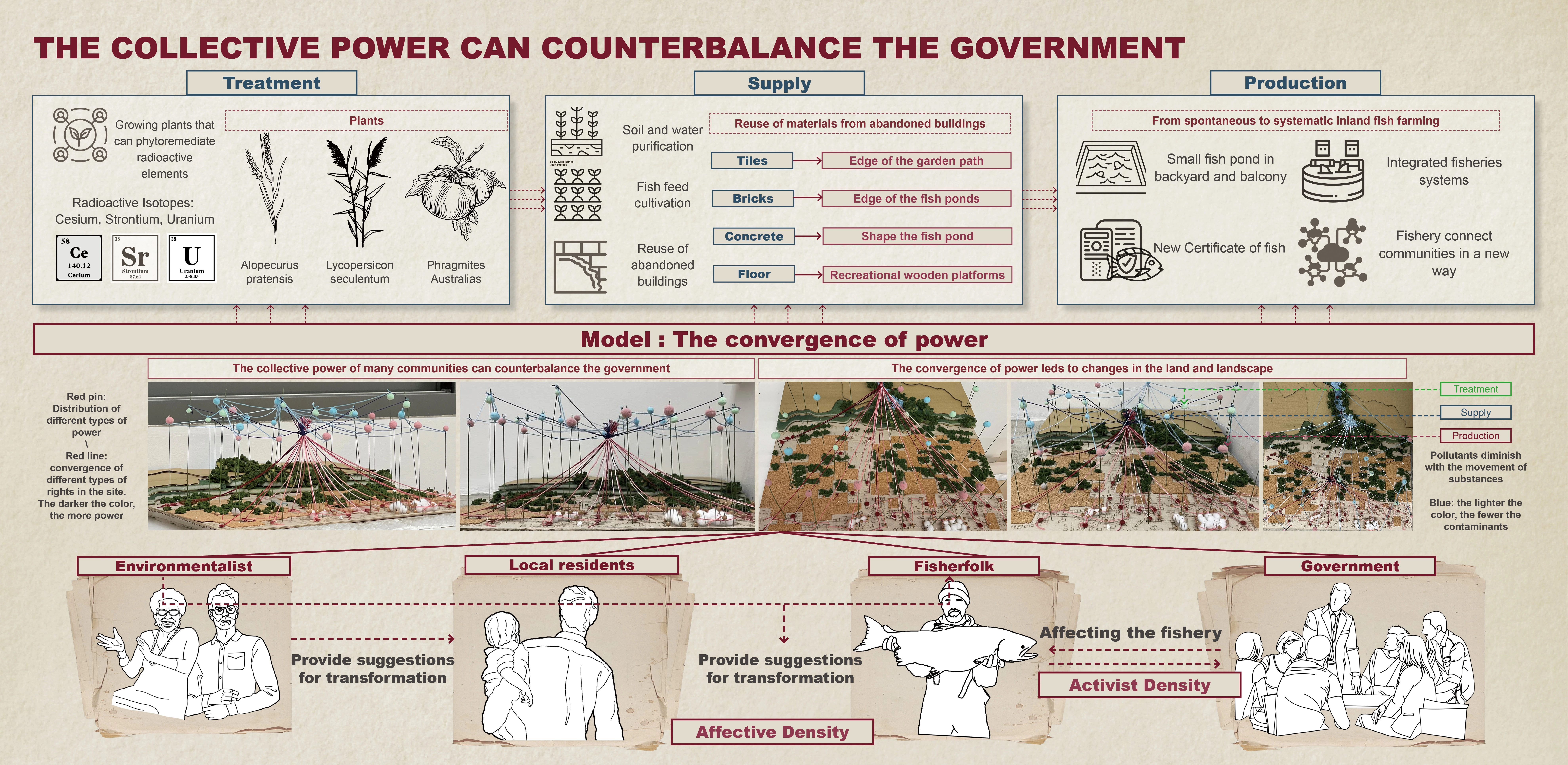
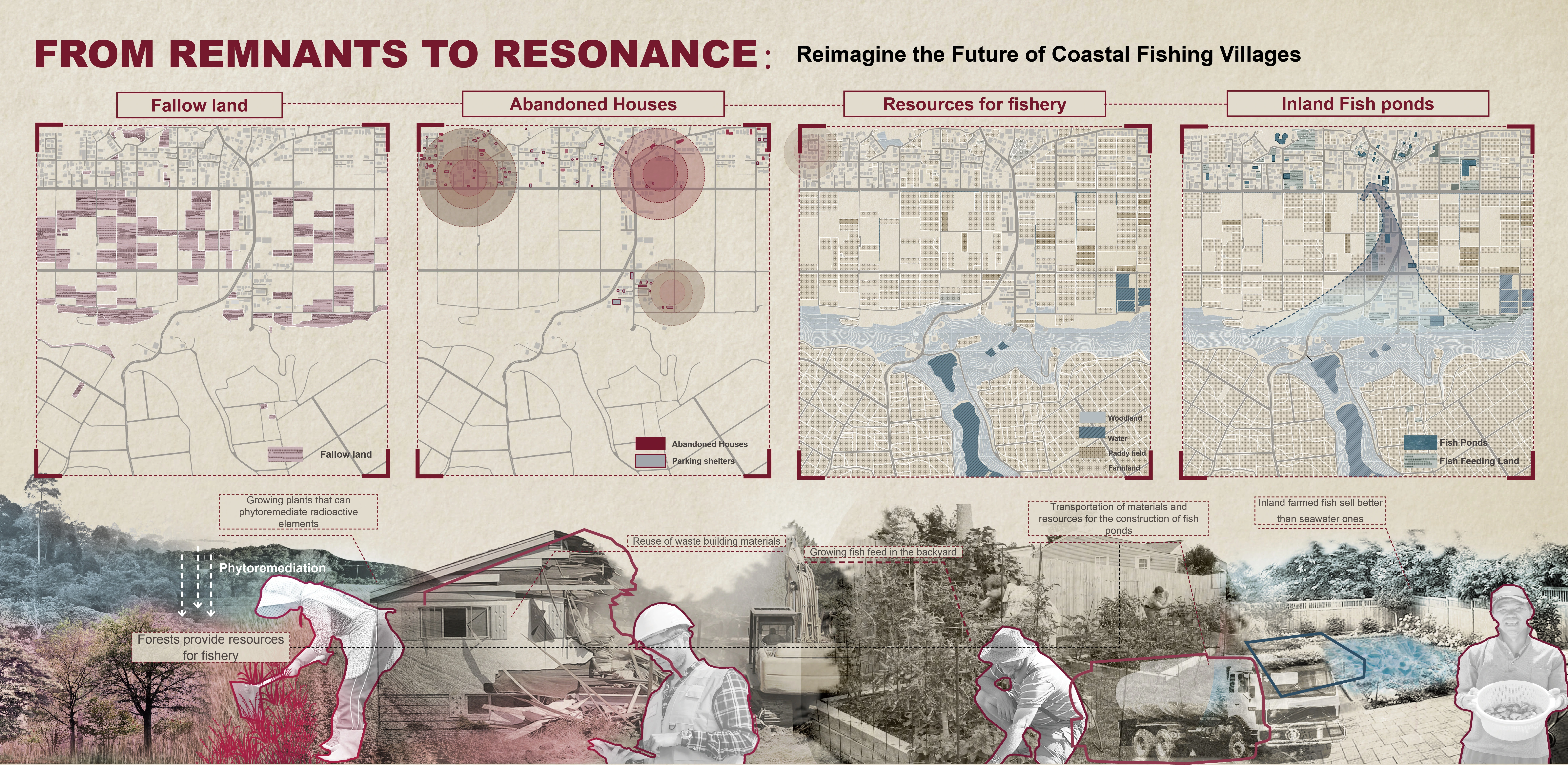
The project selected a 1km-by-1km site in Choshi City as a case study to envision a new sustainable model for the future development of Japanese fishing villages. The project adapts people's affective density to their home landscape and activist density to the impending pollution as a tool to drive the transformation of the fishing industry. The overall goal is to design a way for people to stay and to reconstruct the landscape structure together with them, aiming to increase the density of fish production, reduce the density of pollutants, and help residents transform the coastline from a wasteland into a resource landscape for both humans and non-humans.
The future vision involves three main developmental stages:
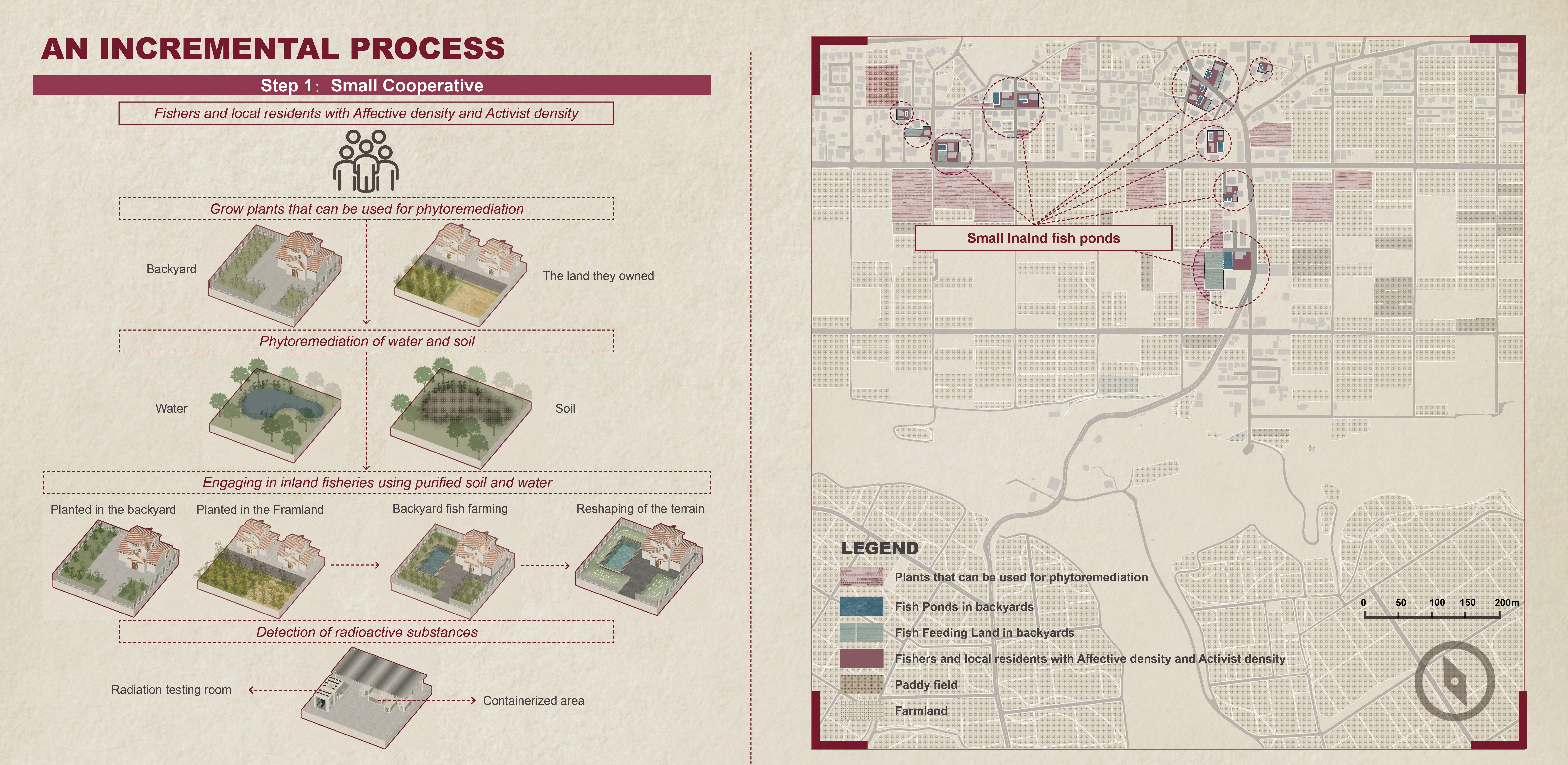
1. Small Cooperative
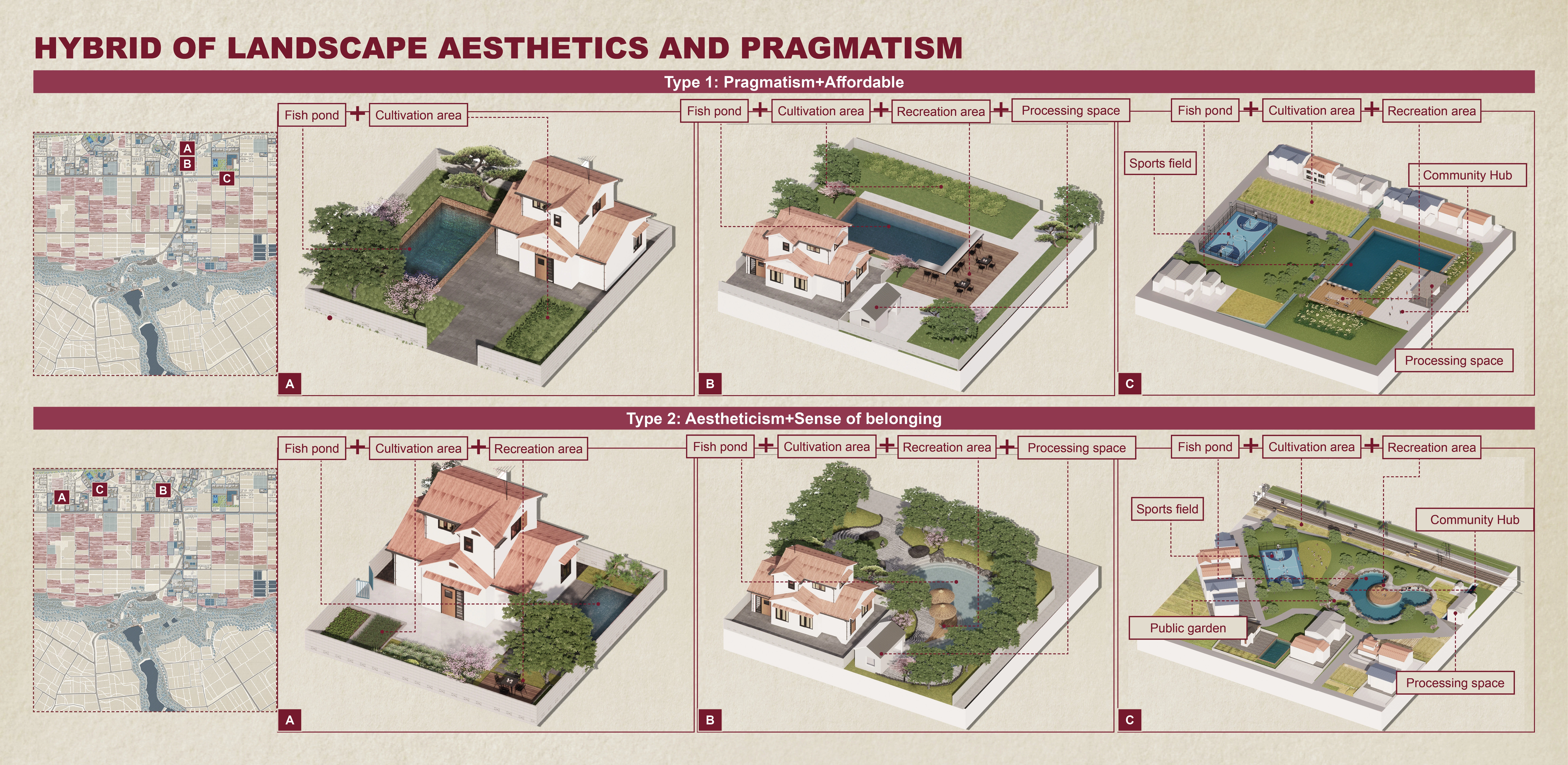
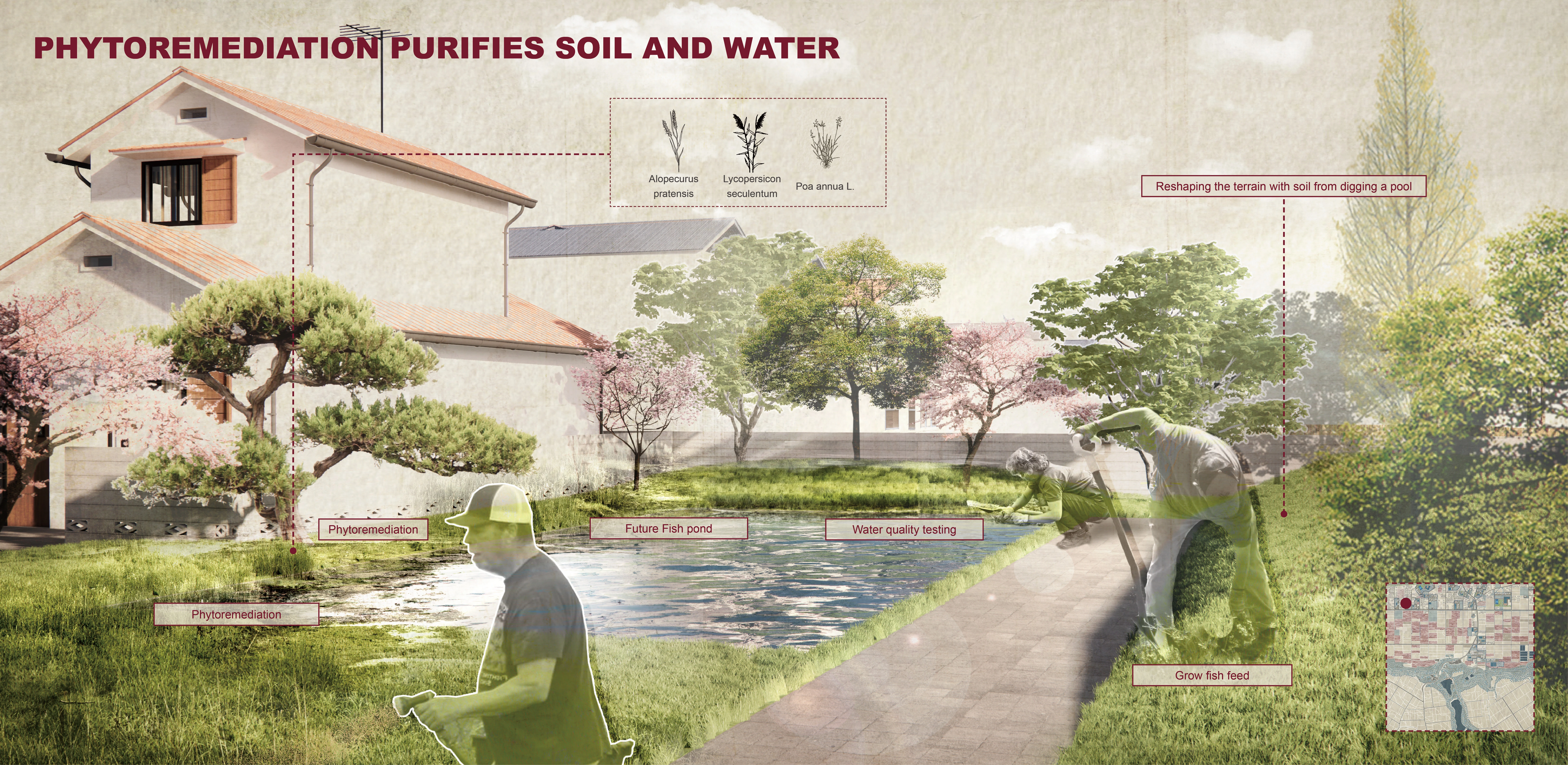
The first step involves forming small inland fishery cooperatives composed of fisherfolks and residents. They utilize land to plant new vegetation to restore the land and water sources, producing inland fish with lower radioactive content and better marketability. Their success attracts more cooperatives.
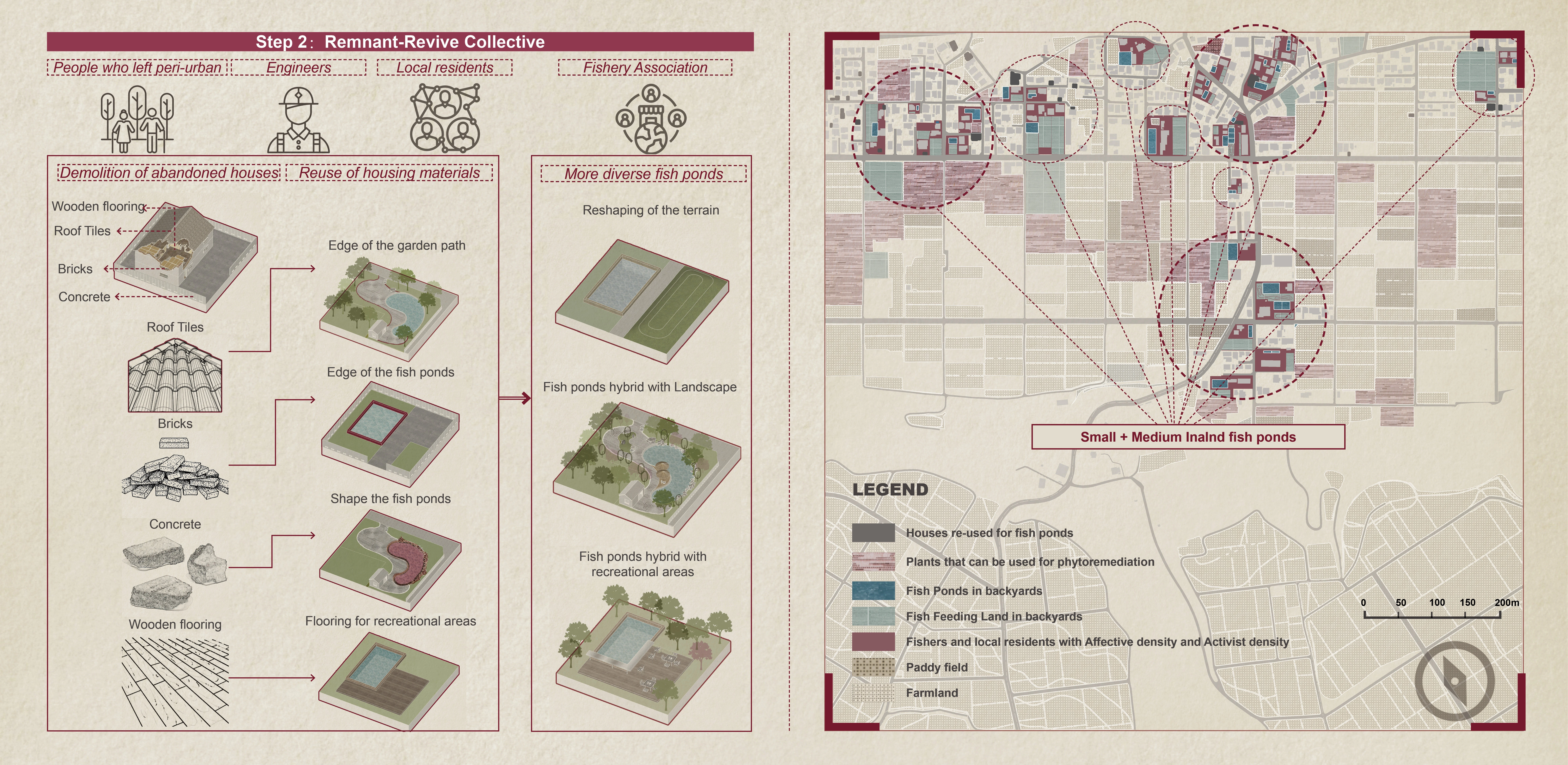
2. Remnant-Revive Collective
In the second stage, the "Remnant-Revive Collective" emerges, consisting of fisherfolks, residents, and the Choshi Fishery Cooperative Association, and concerned engineers, ecologists, and designers. They further restore resources by repurposing abandoned houses into fish ponds, increasing fishery output and economic benefits.
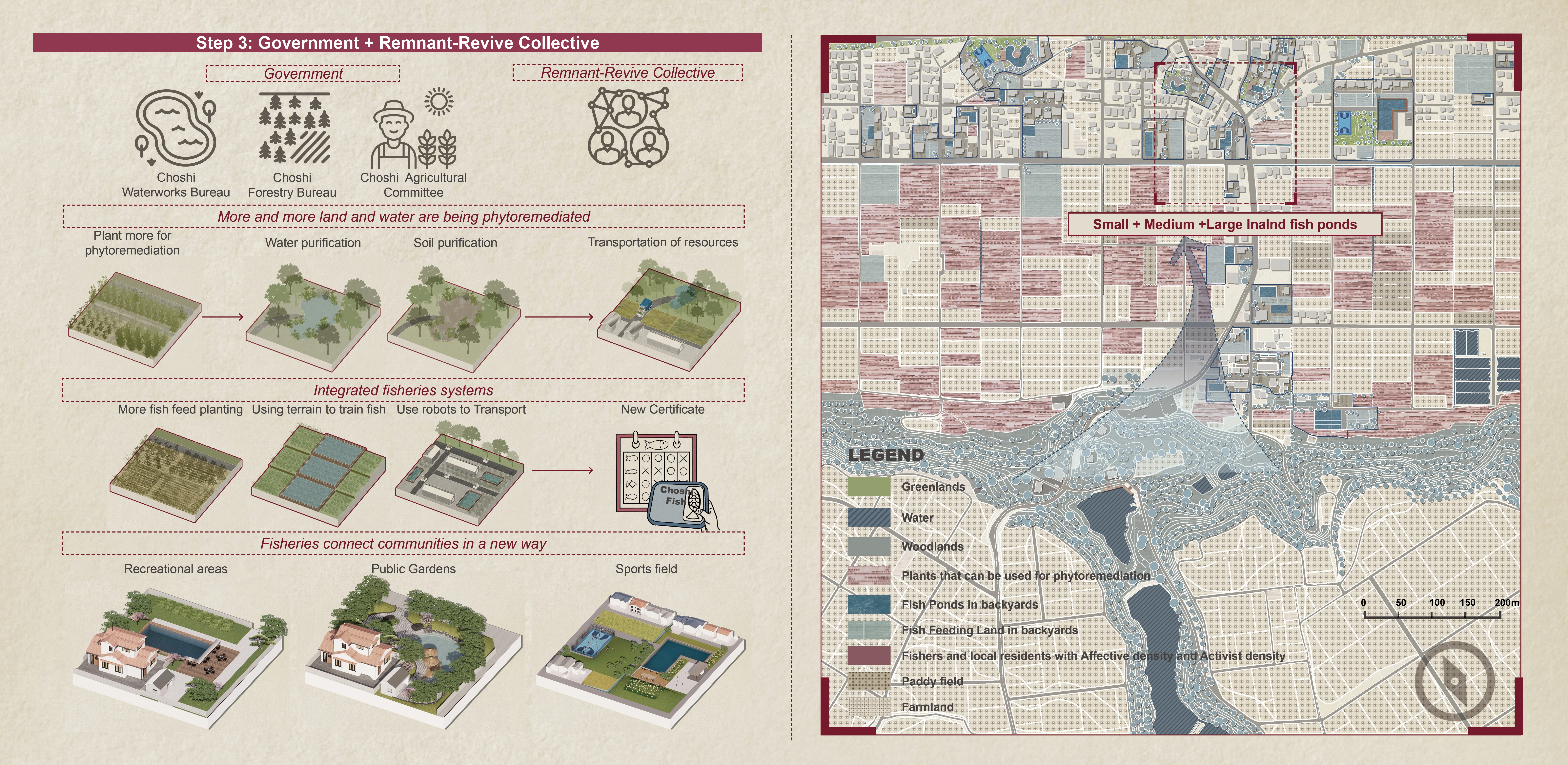
3. Government + Remnant-Revive Collective
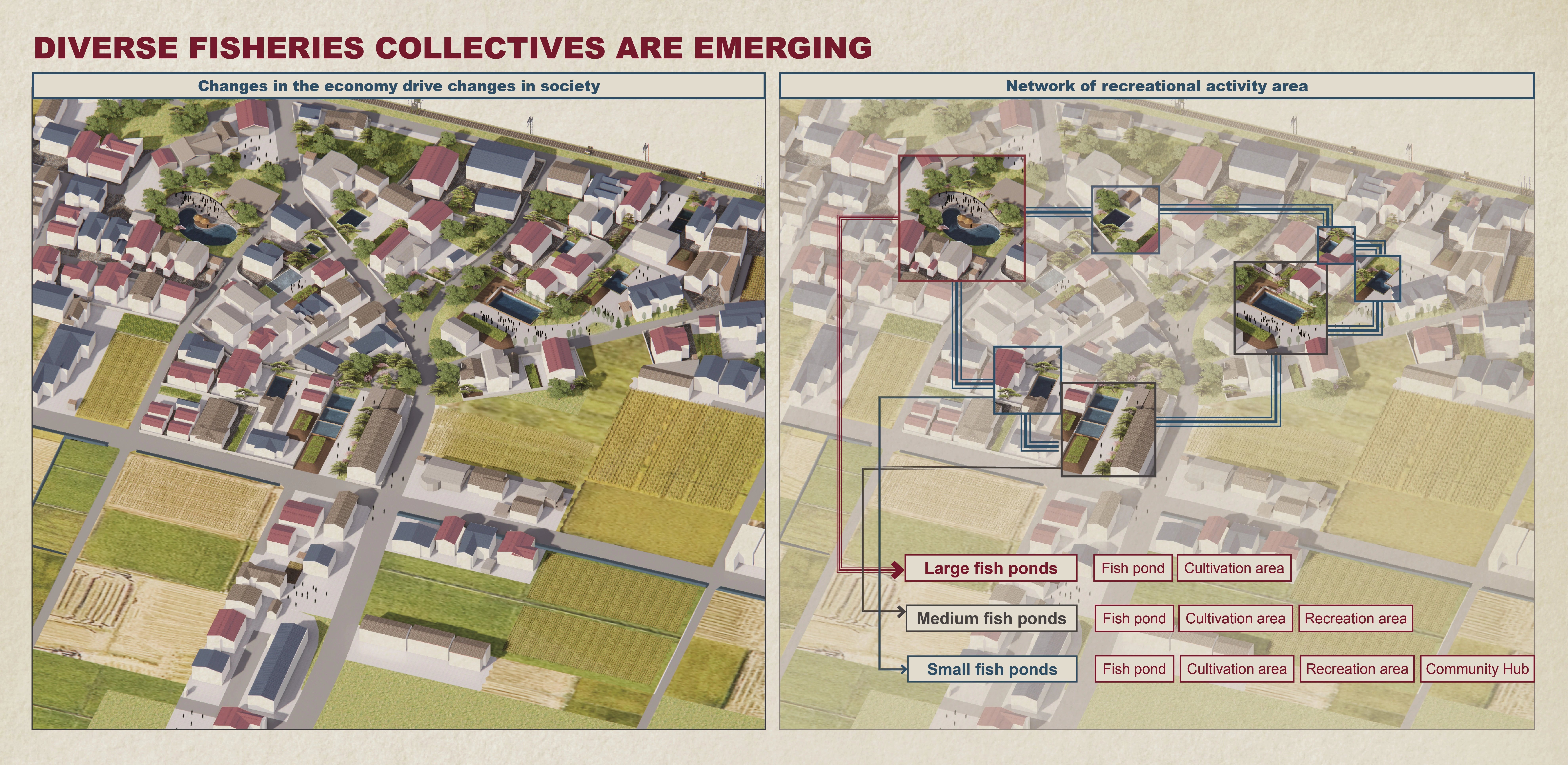
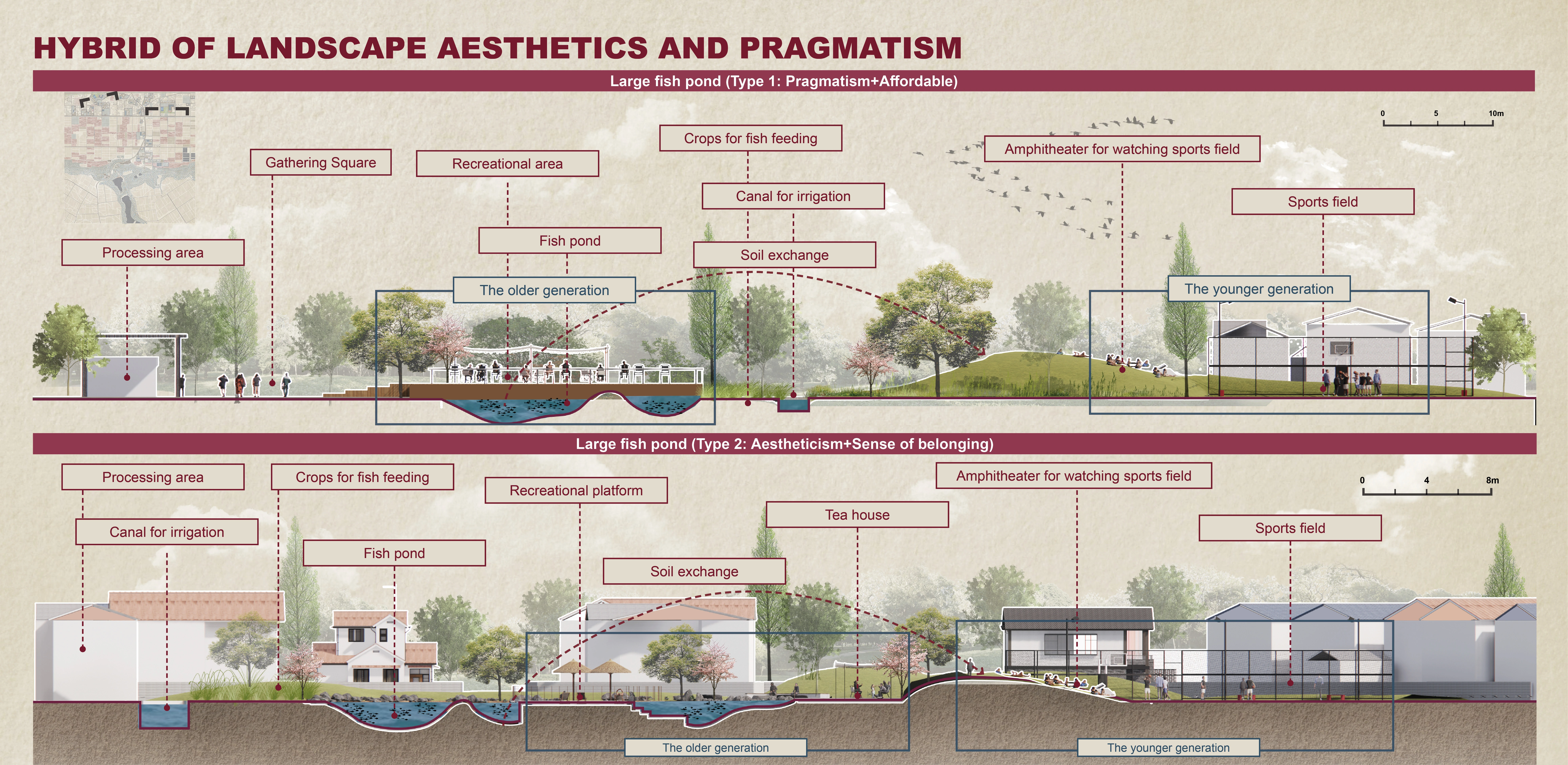
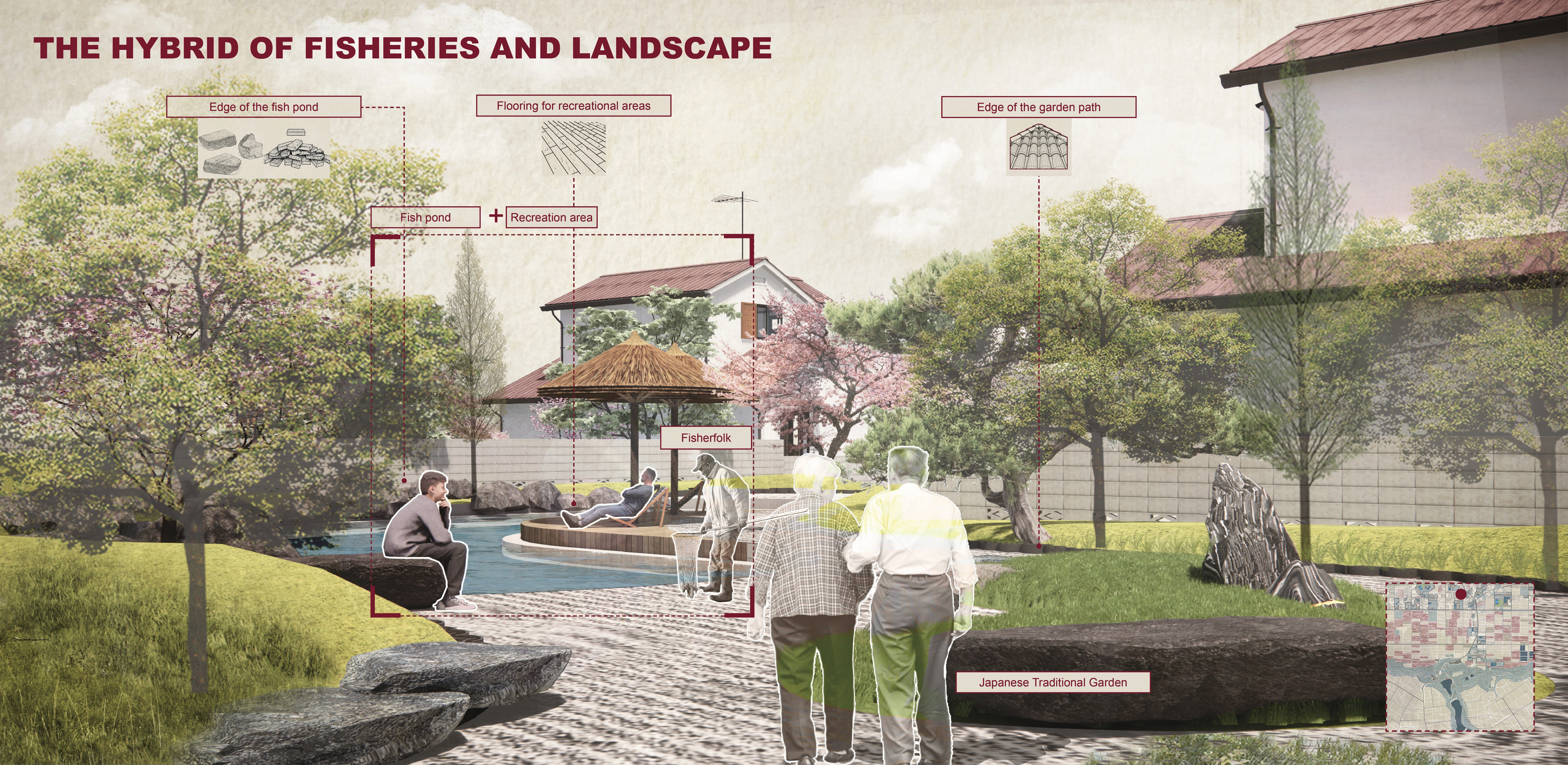
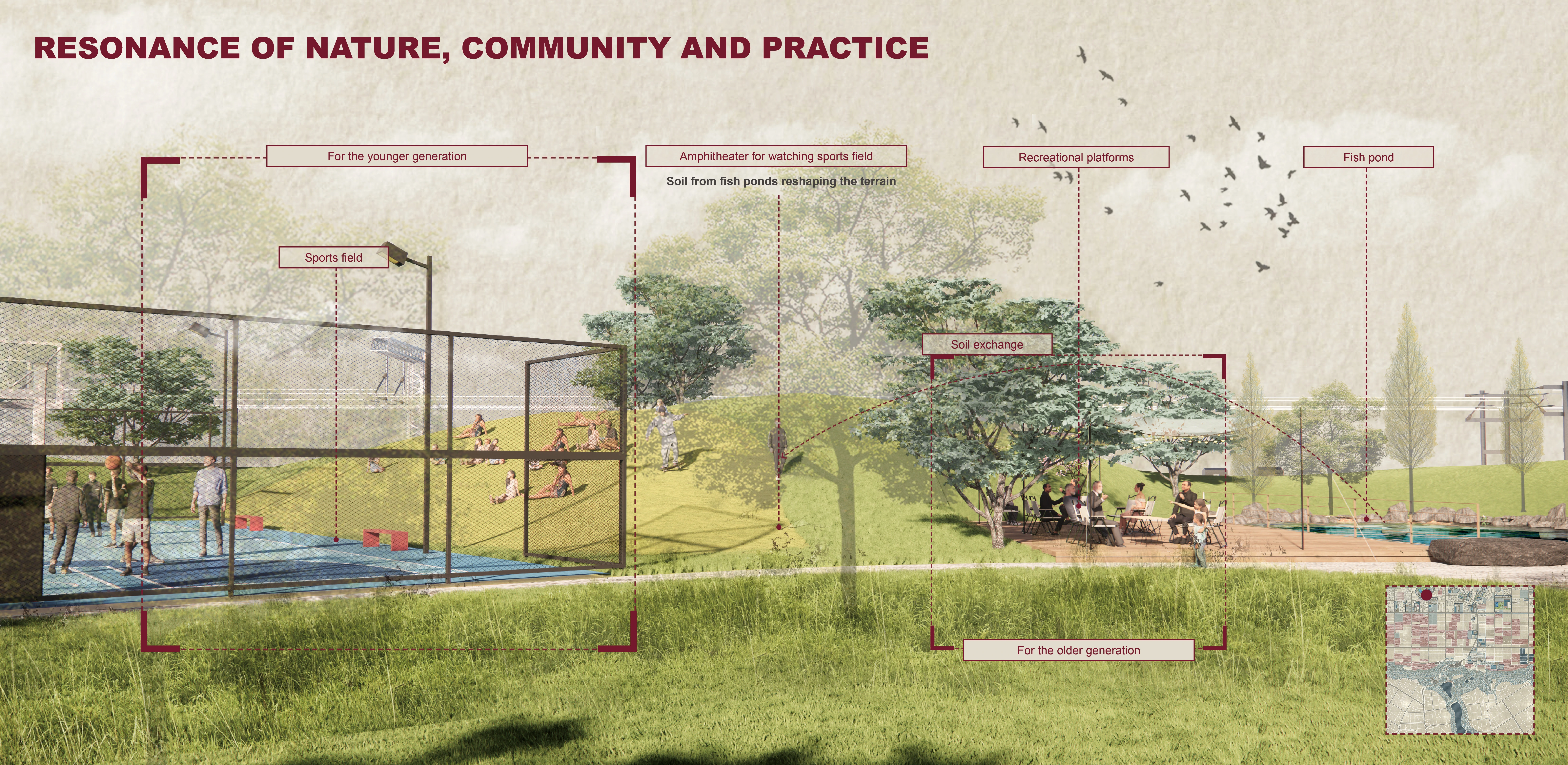
In the final stage, the government responds by providing more resources for inland fish farming. The project utilizes terraced landscapes to enhance fish taste and establish an integrated fishery system from small to large ponds. The "Choshi Fish" certification enables these fish to be sold in major cities. Fish ponds also become multifunctional spaces for elderly residents. As the fishing village prospers, next-generation landscapes like sports fields and open-air theaters gradually appear.
In conclusion, the project underscores not only the economic benefits for residents but also the crucial importance of ecological enhancements along the coastal area. In the costal fishing villages in Japan, density will serve as an intangible force driving the evolution, creating a resonance among all these seaside communities in a way that is more than human. It will give rise to a new pattern of density that transcends human boundaries, delving into realms of practice, society, ecology, and landscape.
-
- Alopecurus pratensis
- Lycopersicon seculentum
- Phragmites Australias
- Glycine max
- Acer palmatum akane
- Prunus campanulata
- Cinnamomum camphora
- Camellia japonica
- Pinus thunbergii
- Podocarpus macrophyllus
Related Awards
Honor Award, Urban Design
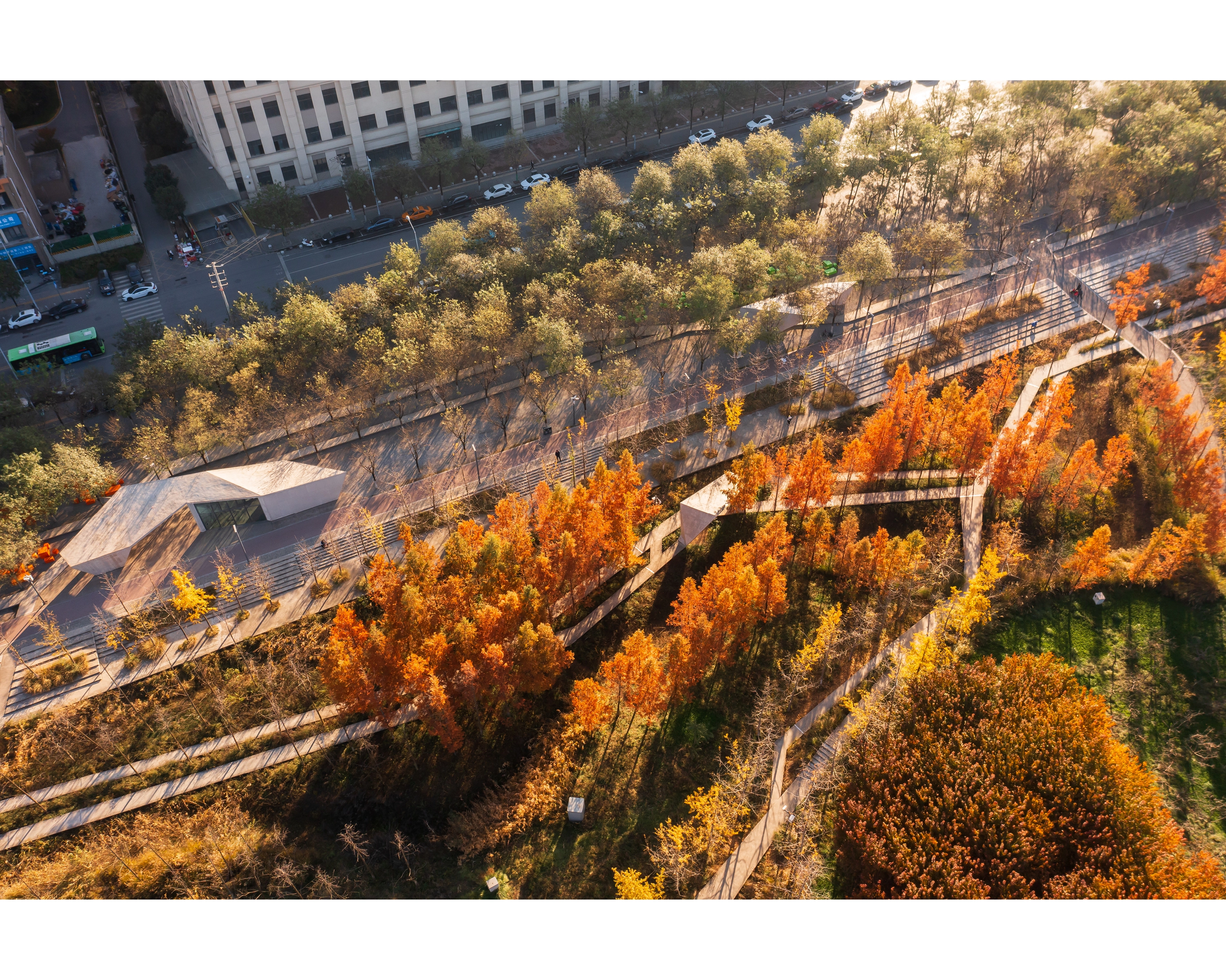
Urban Balcony Embracing Rewilded Nature
In a densely populated urban setting, this project unveils a rewilded natural area, revitalizing a former concrete waterway through innovative stormwater management. The design introduces a linear activity zone extending over four residential blocks, tailored for diverse social interactions. It underscores the vital role of landscape architecture in enriching the social and ecological aspects of urban living.
Related Articles

Awards
ASLA 2026 Professional Awards: Early Bird Deadline Approaching January 9
Submit your best work by the January 9 Early Bird deadline to save. Student and other professional deadlines to come.
Dec 16 2025